IPL Photofacial in Encino for sun spots, brown spots, facial redness, visible vessels, and uneven tone with a personalized intense pulsed light treatment plan.
IPL Photofacial at NPMD, also called IPL / Phototherapy, is an intense pulsed light procedure planned for sun spots, brown spots, visible redness, and uneven tone. It can be a strong option when the concern is pigment or vascular color rather than deeper texture, volume loss, or laxity.
Best for: Sun spots, brown spots, redness, visible vessels, uneven tone
Typical visit: 45-60 min
Category: Treatments / Device-Based Treatments
What IPL Photofacial Can Help Improve
IPL is commonly chosen when patients want a more even-looking complexion after sun exposure, freckles, brown spots, redness, or visible vessel concerns. It is a color-focused treatment, which means candidacy depends heavily on skin tone, pigment pattern, recent tanning, and whether the target is safe for light-based treatment.
Sun spots, brown spots, freckles, and photodamage-related discoloration
Facial redness, flushing appearance, and visible vessel patterns when appropriate
Uneven tone and a mottled complexion from mixed pigment and redness
Dull-looking skin when color irregularity is the main issue
Patients who want a corrective light-based option without jumping straight to ablative resurfacing
How IPL Differs From LED, Peels, and CO2 Laser
IPL Photofacial is stronger than LED Light Therapy. LED is a supportive, low-intensity light treatment for calming and glow; IPL uses higher-energy light pulses to target selected pigment and vascular color. That makes IPL more corrective, but it also means screening and sun precautions matter more.
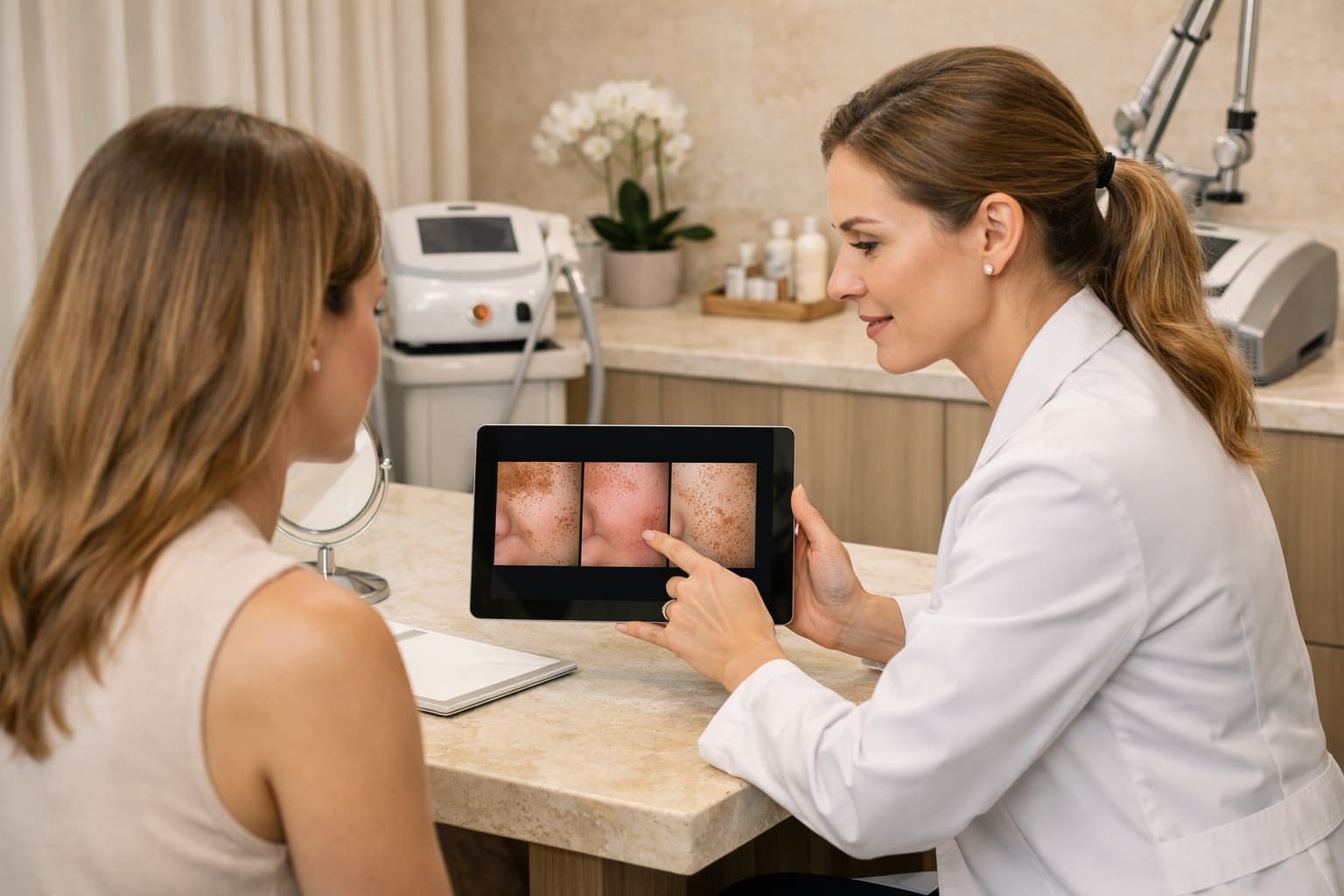
IPL planning should not be automatic. The consultation helps decide whether your pigment or redness pattern is appropriate for IPL, whether your skin needs preparation first, and whether another route would be safer or more effective.
Skin tone, tanning history, sun exposure, melasma tendency, and pigment-change risk
Whether the concern is brown pigment, red vascular color, acne redness, rosacea, melasma, or texture
Photosensitizing medications, topical actives, recent isotretinoin, recent procedures, or active irritation
History of cold sores, keloids, abnormal scarring, pigment complications, or light sensitivity
Any suspicious lesions that should be medically evaluated rather than cosmetically treated
What Treatment Usually Looks Like
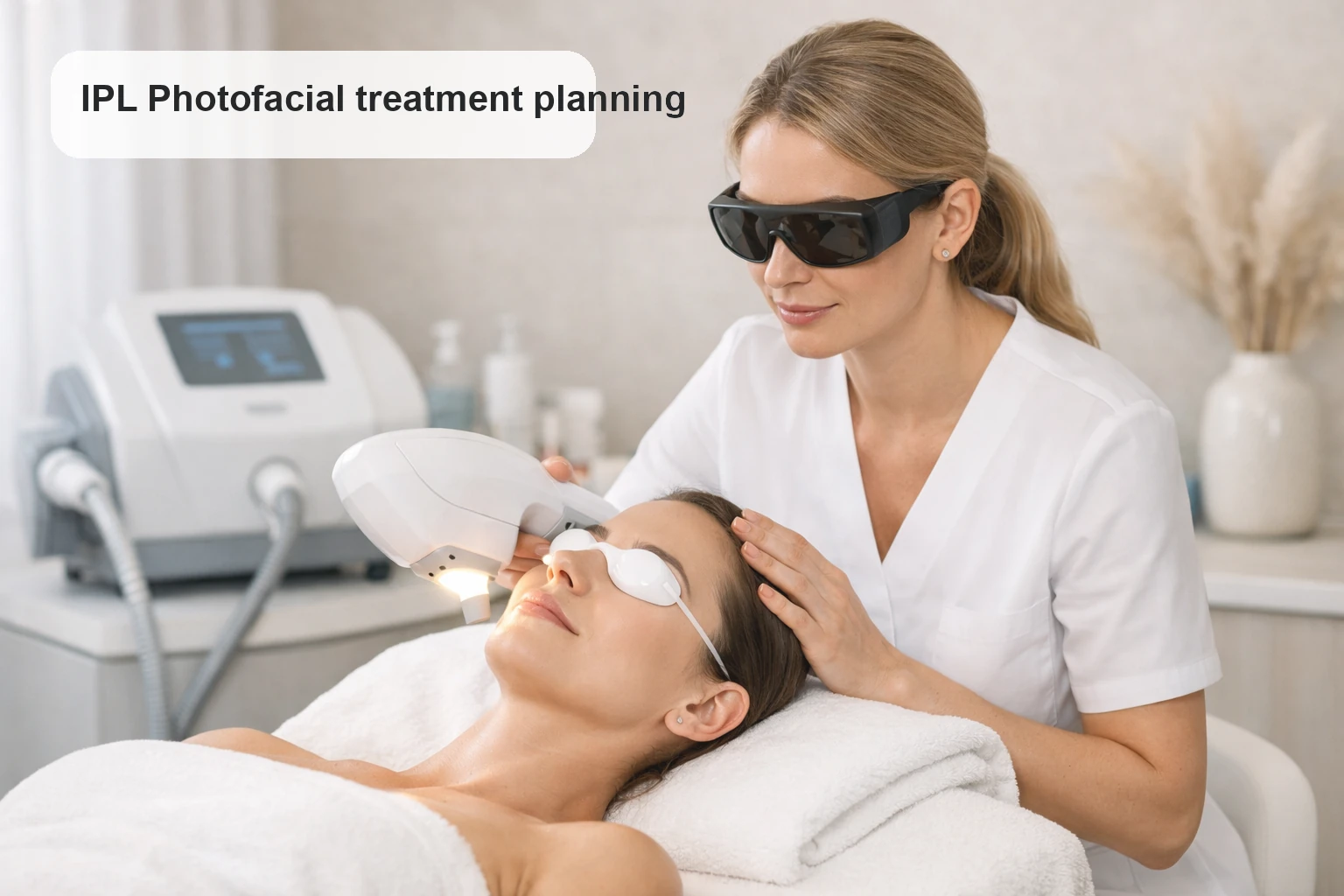
On treatment day, the skin is cleansed and protective eyewear is used. A cooling gel may be applied, and IPL pulses are delivered across the planned areas. Patients often describe the pulse as a quick snap of warmth. Settings are selected around the treatment goal, skin response, and safety profile.
Brown spots may temporarily darken or look bronzed before flaking away. Redness can look more pronounced right after treatment before settling. IPL results are gradual, and a series is often needed for visible tone improvement.
Discuss goals and expectations
Ask the clinic how the available options, candidacy, risks, limitations, and recovery may apply to your individual goals. No particular treatment result is guaranteed.
Recovery and Aftercare
Most IPL recovery is mild, but the skin can look red, warm, swollen, or temporarily darker in treated pigment areas. Brown spots may darken before they shed. Some patients notice dryness, light flaking, or sensitivity. More serious reactions, including blistering, burns, crusting, scarring, or pigment changes, are uncommon but possible.
Sun protection is not optional. Avoid tanning before and after IPL, use daily broad-spectrum sunscreen, avoid unnecessary heat and irritation during early recovery, and follow the specific skincare instructions provided for your treatment plan.
Results and Series Planning
IPL Photofacial is usually planned as a series. Sun spots, redness, and uneven tone often improve gradually as treated pigment sheds and vascular color calms. Maintenance depends on sunscreen, sun exposure, skincare, hormones, rosacea tendency, and how much pigment or redness returns over time.
If your concern is primarily Sun Damage, Blood Vessels & Redness, Rosacea, or Hyperpigmentation, NPMD can help compare IPL with skincare, facials, peels, microneedling, or CO2 resurfacing so the plan matches your actual skin pattern.
If you want to improve sun spots, redness, and uneven tone with a light-based treatment plan, a consultation can clarify whether IPL Photofacial is the right fit or whether another NPMD treatment would be safer, more effective, or better timed.
Share
Articles for IPL Photofacial
Practical reading selected for this service so patients can understand timing, options, and what to expect before booking.
BeautyNPMD Clinical Team
Sun-Damaged Chest: Treatments for Brown Spots, Redness, and Texture
Chest sun damage can include brown spots, persistent redness, visible vessels, roughness, and precancerous changes. Learn why a skin exam comes first and how IPL, peels, resurfacing, and daily protection target different problems.
Visible veins, volume loss, brown spots, crepey texture, and hand wrinkles are different concerns. Learn when hand filler, light treatment, resurfacing, or skin care may fit—and why combinations should be staged.
IPL vs CO2 Laser: Which Treatment Fits Pigment, Redness, Texture, or Fine Lines?
IPL and CO2 laser are often grouped together as light-based treatments, but they solve different problems. The right choice depends on whether your main concern is pigment, redness, texture, scars, or deeper resurfacing.
Clear answers to the most common questions before and after your appointment.
Good candidates usually want improvement in sun spots, brown spots, visible redness, broken capillary appearance, or uneven tone without the recovery of deeper resurfacing. Consultation is important because recent tanning, darker or pigment-prone skin, melasma, active irritation, certain medications, photosensitivity, pregnancy-related concerns, and suspicious skin lesions can change whether IPL is appropriate.
IPL Photofacial is commonly used for sun-related discoloration, freckles, brown spots, redness, visible vessel appearance, and uneven tone. It is not the same as CO2 resurfacing, RF microneedling, or injectables, and it is not the best answer for every pigment concern. NPMD reviews whether IPL, skincare, peels, microneedling, laser resurfacing, or medical rosacea care is the better fit.
IPL uses broad-spectrum pulses of light that create heat in selected pigment and vascular targets, so it is usually stronger than LED and more corrective for sun spots and visible redness. LED Light Therapy is gentler, lower intensity, and better suited for supportive redness, acne-prone skin, and glow plans with minimal downtime.
Downtime is usually mild, but it depends on skin sensitivity and treatment settings. Temporary redness, warmth, swelling, darkening or bronzing of treated pigment, dryness, and flaking can happen. Sun avoidance and sunscreen are important before and after treatment because tanning increases the risk of burns and pigment changes.
Many patients need a series rather than one treatment, especially when treating sun damage, redness, or uneven tone across the face. The number of sessions depends on the amount of pigment or redness, skin type, past sun exposure, tolerance for downtime, and whether maintenance skincare is part of the plan.
Possible risks include redness, swelling, discomfort, bruising, blistering, burns, crusting, infection, scarring, eye injury without proper protection, temporary or persistent pigment changes, and poor response when the condition is not well matched to IPL. Proper screening and sun protection reduce avoidable risk.
Published feedback
Reviews are temporarily unavailable. You can contact NPMD with questions about a visit.