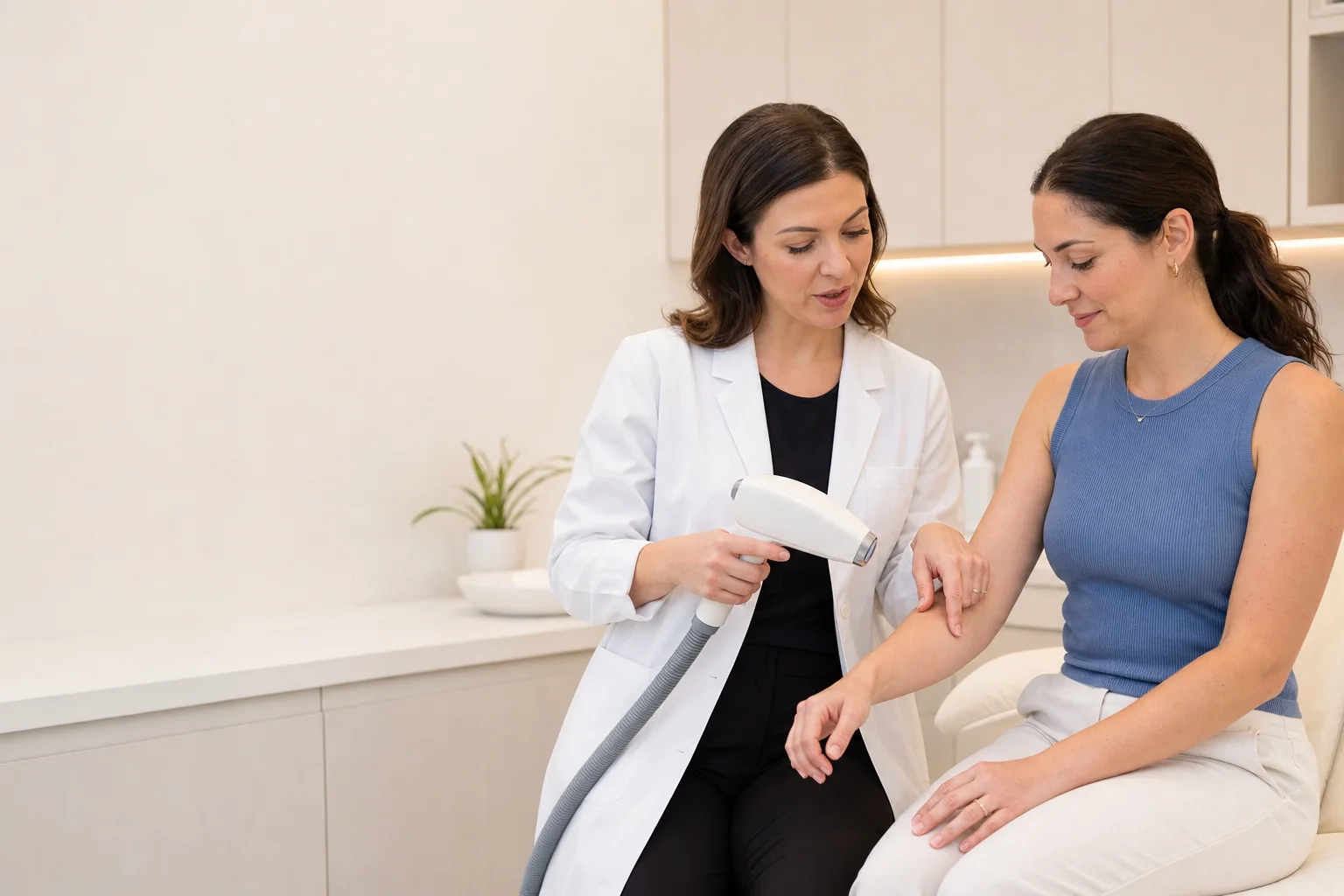
Laser hair removal works best as a planned series, not a one-visit promise. Learn how skin tone, hair color, sun exposure, shaving, session spacing, and aftercare shape safer, more useful results.
Answer First: Laser Hair Removal Is a Long-Term Reduction Plan
Laser hair removal can make unwanted hair grow back more slowly, sparsely, and finely, but it should not be presented as a guaranteed one-time removal. Hair grows in cycles, and a laser can only target follicles effectively during certain stages. That is why a thoughtful plan uses a series of visits, evaluates the skin after each one, and leaves room for future maintenance.
For patients comparing options in the San Fernando Valley, NPMD offers laser hair removal in Encino within its broader device-based treatments, with consultation planning around the treatment area, skin tone, hair characteristics, comfort, and sun exposure.
How Laser Hair Removal Works
The device sends light energy toward pigment in the hair. That energy becomes heat in and around the follicle, reducing its ability to produce a strong new hair. The goal is selective treatment of the follicle while protecting the surrounding skin. Device choice, wavelength, settings, cooling, and technique all matter.
Because pigment is the target, the contrast between hair and skin helps guide treatment. Modern devices can be used across a wider range of skin tones than older systems, but darker skin requires appropriate technology and conservative settings to reduce the risk of burns or unwanted lightening or darkening. A consultation should never assume that one setting fits everyone.
Hair Color and Skin Tone Both Affect Candidacy
Coarse, dark hair usually absorbs laser energy more efficiently. Gray, white, very light blond, and many red hairs contain too little target pigment for predictable reduction. Fine facial hair may also respond differently from coarse underarm or leg hair. A clinician should examine the actual area instead of estimating results from a general description.
Skin history is equally important. Tell the treating team about recent tanning, sunburn, melasma, post-inflammatory hyperpigmentation, vitiligo, keloids, active rashes, cold sores, or previous reactions to light-based procedures. If pigment change is already a concern, a broader hyperpigmentation evaluation may need to come before or alongside hair-reduction planning.
Why Growth Cycles Require Repeat Sessions
Not every follicle is actively growing on the same day. A session treats the hairs that are in a responsive phase, while dormant follicles may become active later. Spacing visits allows a new group of hairs to reach the right stage. The interval varies by body area because facial hair cycles differently from leg, back, underarm, or bikini-area hair.
More sessions do not automatically mean faster progress if they are scheduled too close together. A useful follow-up records skin response, shedding, density, and regrowth before deciding when to treat again. The American Academy of Dermatology notes that treatment plans and results vary with hair color, thickness, body area, device, and skin color, reinforcing why a personalized series matters.
How to Prepare Before Treatment
Follow the clinic's instructions for shaving. Shaving usually preserves the follicle below the skin while removing surface hair that could absorb heat. Waxing, threading, tweezing, and epilating pull the hair from the follicle, so they are commonly stopped before and during a laser series. Do not bleach the hair unless the treating team says it will not interfere with assessment.
Avoid tanning and sunless tanner for the recommended window. Use broad-spectrum sunscreen on exposed treatment areas. Bring a complete list of prescriptions, over-the-counter medicines, and supplements, including acne treatments and anything that may increase light sensitivity. Mention recent peels, microneedling, IPL, or other laser treatments so timing can be coordinated safely.
What the Appointment Usually Feels Like
The area is reviewed and cleaned, and protective eyewear is used. Depending on the device, built-in cooling, chilled air, or another comfort method may be part of treatment. Patients often describe each pulse as a brief warm snap. Sensitive areas may feel sharper, while larger areas can take longer simply because more skin must be covered methodically.
A stronger sensation is not proof that a treatment is more effective. Settings should be chosen for the hair target, skin response, and safety margin. Tell the clinician immediately if heat feels excessive or pain continues building rather than resolving between pulses.
Redness, Shedding, and Aftercare
Temporary redness, warmth, tenderness, or small swollen bumps around follicles can occur after a session. Treated hairs may look as if they are still growing before they loosen and shed. Scrubbing or plucking them out can irritate the skin; let shedding happen on the schedule your clinician recommends.
Aftercare may include cool compresses, bland moisturizer, sun protection, and a short pause from hot tubs, saunas, intense heat, vigorous friction, fragranced products, or strong exfoliants. Follow instructions for shaving between visits. Contact the clinic for blistering, crusting, severe pain, spreading redness, or a pigment change that does not begin settling.
Risks and Reasons to Postpone
Burns, blisters, infection, scarring, cold-sore reactivation, and temporary or lasting pigment changes are possible. Risk rises when skin is recently tanned, settings are poorly matched, or medical and medication history is missed. Active infection, open skin, a new rash, or a recent sunburn usually deserves reassessment rather than proceeding automatically.
Pregnancy policies vary, and hormonal changes can affect hair growth. A new pattern of coarse facial or body hair may also deserve medical review for medication, endocrine, or hormonal contributors. Laser can reduce visible hair, but it does not diagnose or correct the reason that a new growth pattern appeared.
Planning by Treatment Area
The face and neck need special care because paradoxical stimulation, pigment change, and hormonally influenced regrowth may affect expectations. Underarms and bikini areas often contain coarse hair but can be sensitive and prone to friction. Legs, chest, and back cover more surface area and require realistic appointment timing and sun planning.
Describe ingrown hairs, shaving bumps, and dark marks separately. Reducing hair may reduce a trigger for ingrowns, but active inflammation or pigment may need its own plan. Avoid using a laser directly over a suspicious mole or lesion until it has been appropriately assessed.
Maintenance and Hormonal Regrowth
After the initial series, some patients have long periods with little visible growth. Others notice gradual return in smaller amounts or finer texture. Genetics, age, hormones, medications, and body area all influence regrowth. Occasional maintenance is normal and should not automatically be treated as failure.
Track results with consistent photographs and the same shaving interval. Useful progress includes fewer dense patches, slower return, fewer ingrowns, and less time spent on temporary removal. A consultation should define success in practical terms instead of promising perfectly hair-free skin forever.
Questions to Ask at an Encino Consultation
Which device and settings fit my skin tone and hair?
Ask about experience with patients who have a similar skin tone and hair pattern, how test spots are used, and what pigment precautions apply.
How many visits should I plan?
Expect a range, not a guarantee. Ask how the interval will change by area and how maintenance is decided.
Where can I start?
Review the AAD's laser hair removal preparation guidance, then request an NPMD consultation for a plan based on your own skin and hair.