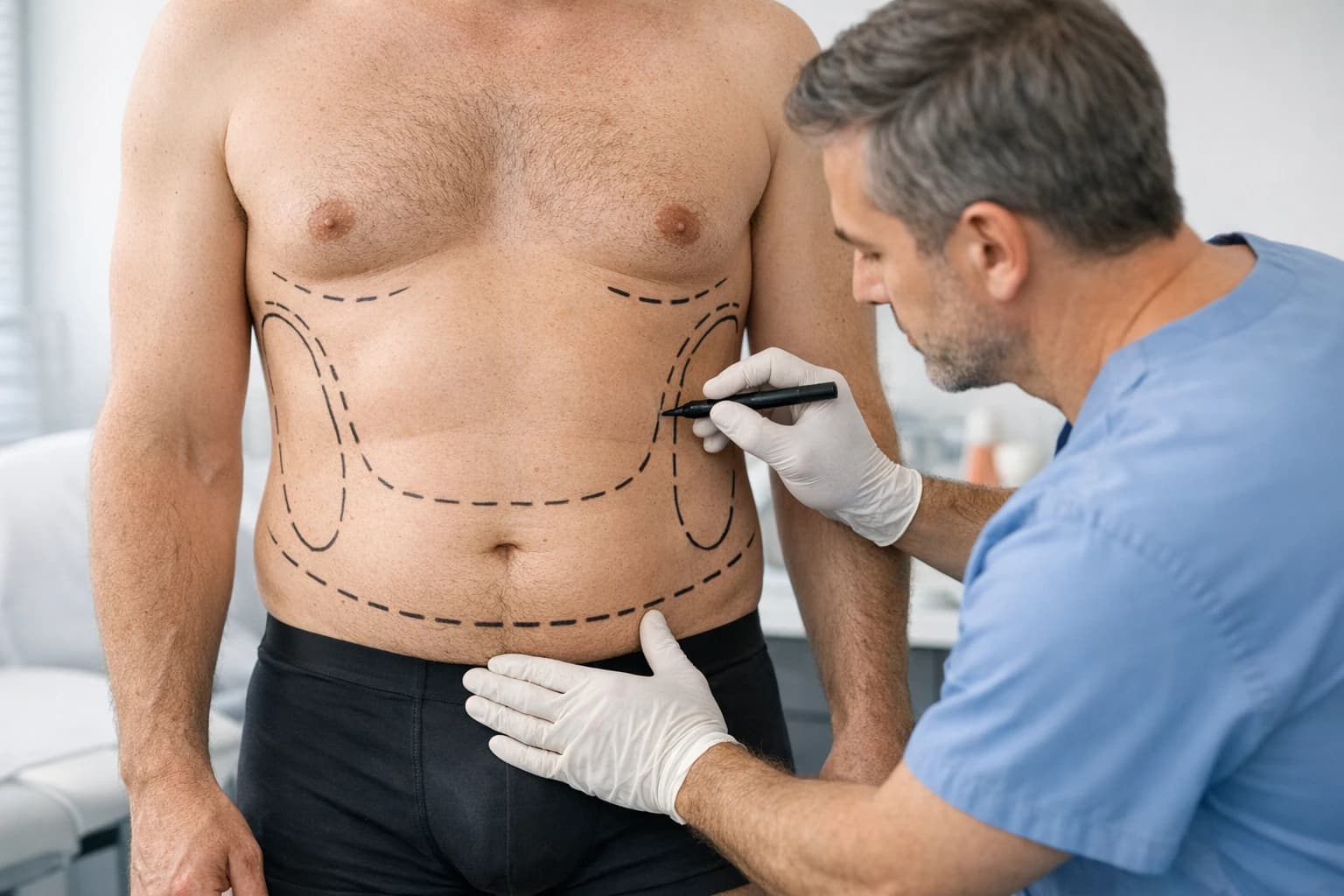
Typical procedure time
4–5 hrs
Facelift is usually the right conversation when jowling, jawline loss, or neck laxity has moved beyond what filler, devices, or skincare can reasonably improve and the goal is a more rested structure, not a different face.
The consultation should clarify whether the main issue is lower-face support, neck definition, or broader facial aging, and whether surgery belongs alone or with another focused facial procedure.

Ask about candidacy, recovery, and how any related procedures might affect planning before you make a decision.
A quick orientation to procedure timing, downtime planning, and the way this conversation usually fits into broader surgical decision-making.
Facelift is usually explored when the main goal is stronger jawline definition, softer jowling, or a better lower-face and neck transition rather than only skin-quality improvement.
Facelift is usually considered when lower-face descent and neck laxity have moved beyond what non-surgical upkeep can realistically support. The goal is not to chase youth. It is to restore structure in a way that still looks like you.
Depending on the concern, patients may also compare facelift with Eyelid Surgery or combine facial planning with Rhinoplasty only when the features are affecting harmony in different ways.
Before your visit, consider reading our article on facial balance and natural-looking harmony and our guide to medical-grade skincare planning.
The strongest candidates usually want structural improvement, understand that surgery changes recovery expectations, and care more about looking refreshed than dramatically different.
The right plan usually comes from matching the procedure to your anatomy, tolerance for downtime, and the kind of change you are actually trying to make.
This consultation should define the areas that need support, incision strategy, whether the neck is part of the plan, and how subtle or visible the change should feel.
Review which facial changes bother you most in motion and at rest
Discuss how much of the goal involves the neck versus the lower face
Clarify what kind of refreshed result still feels like you
Plan downtime, swelling expectations, and whether another facial procedure should be considered
Facelift planning should stay focused on structure and restraint so the result feels refreshed, supported, and in proportion to the rest of the face.
The consultation identifies whether the main issue is lower-face descent, neck laxity, or a combination of both.
The procedure approach is discussed in terms of natural support, not surface-only tightening.
Scar placement and whether the neck or another facial area should be addressed are reviewed together.
Bruising, swelling, social downtime, and follow-up rhythm are explained before you decide whether to move forward.
Even when the procedure name is the same, incision strategy, staging, and combination-procedure decisions should be tailored to your proportions and the kind of result you want to live with long term.
Patients usually need to plan around bruising, swelling, tenderness, and social downtime while the face settles into a more rested contour.
This phase is mostly about rest, swelling management, and letting the face recover without forcing normal routines too quickly.
Many patients begin to feel more comfortable being seen, though the face is still settling.
The outline looks calmer and the result starts feeling more like part of your normal expression.
Swelling continues to soften and the refreshed structure looks more integrated.
Facelift planning often overlaps with a few other facial conversations, especially when the goal is a more balanced overall refresh.
Patients usually respond well to facelift planning when the discussion is calm, restrained, and more focused on support than dramatic anti-aging promises.
That means candidacy, downtime, staging, and the reasons for choosing surgery should all feel clear enough that you are not relying on marketing language to make a medical decision.
The plan is built around looking more rested and supported, not obviously altered.
We make it clear whether the real issue is lower-face descent, neck laxity, or a combination of both.
Social downtime, swelling, and the slower refinement window are made visible early so the choice stays realistic.
The best facelift outcomes usually come from clarity about what the procedure improves, what it does not, and how the face changes gradually while swelling resolves.
Patients usually feel most satisfied when the result reads rested and stronger, not stretched or over-corrected.
Facelift can improve support and contour, but skin quality, pigment, and texture often require their own conversation.
The first weeks are not the final result. Subtle refinement continues as swelling softens over time.
Consultation, anatomy, and recovery perspectives for facelift.
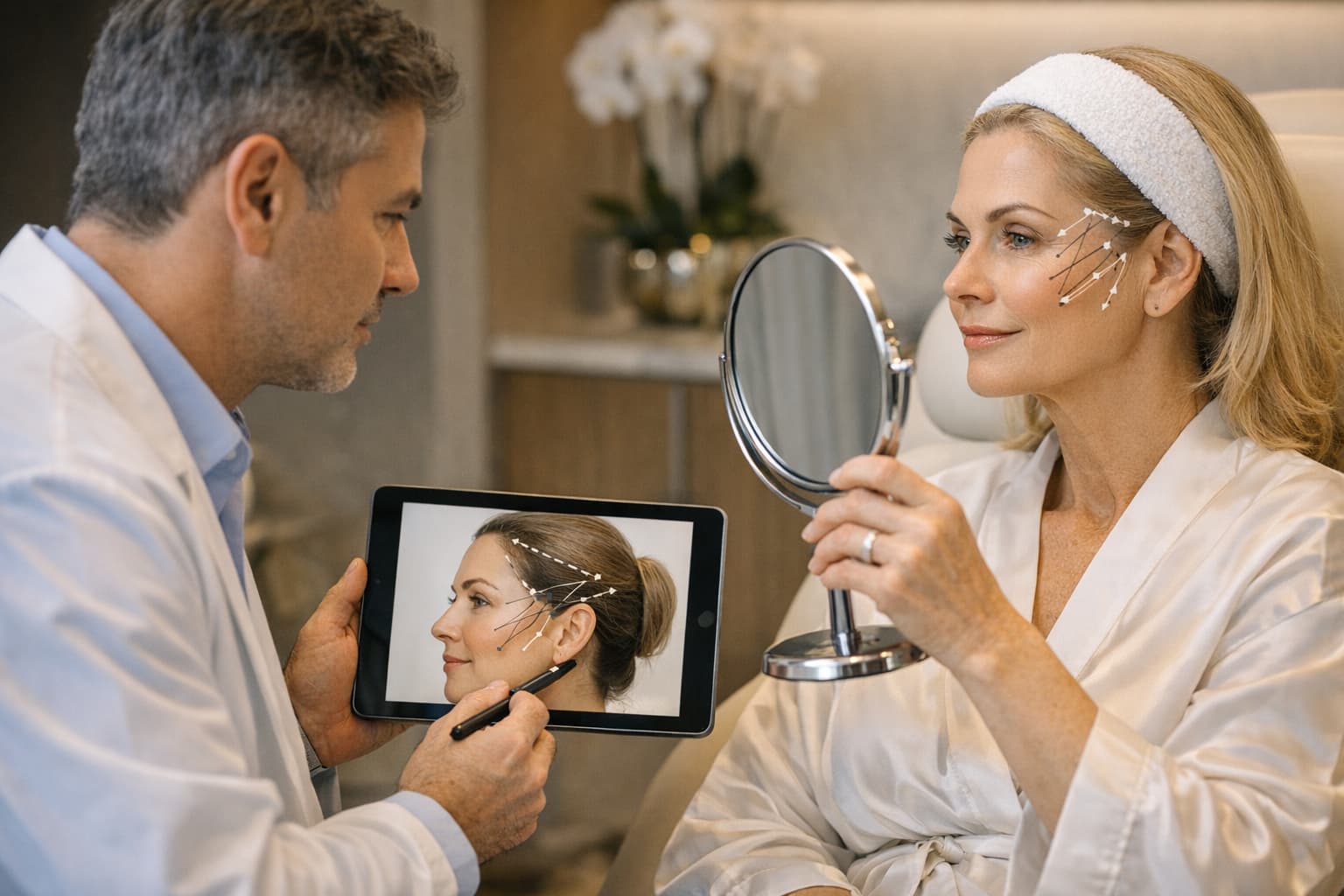
Illustrative facelift planning discussion with facial support lines

Illustrative person resting with a face and neck bandage
These answers are meant to make the first conversation sharper and more useful, not replace a personal consultation.
That usually becomes clear when lower-face descent, jowling, or neck laxity has moved beyond what filler, devices, or skincare can realistically support. The consultation is meant to sort that out honestly, not push surgery prematurely.
A well-planned facelift should look like a more supported, more rested version of you rather than a different identity. That is why restraint and proportion are central to the consultation.
Swelling, bruising, tenderness, social downtime, and patience while facial contours settle are usually the most important recovery themes to prepare for.
The goal is clarity: what this procedure can improve, what recovery really asks of you, and whether it should stand alone or be part of a broader plan.