Typical procedure time
1–2 hrs
Eyelid surgery is usually the right conversation when the eyes look tired, heavy, or chronically puffy in ways that non-surgical treatments are no longer meaningfully improving.
The planning question is usually not whether the eye area can change, but whether the concern is upper lids, lower lids, or both, and how to refresh the eyes without making them look hollow or overdone.
Ask about candidacy, recovery, and how any related procedures might affect planning before you make a decision.
A quick orientation to procedure timing, downtime planning, and the way this conversation usually fits into broader surgical decision-making.
Eyelid surgery is usually explored when hooding, excess skin, or lower-lid puffiness makes the eyes look heavier or more tired than you feel.
Eyelid surgery should make the eye area look lighter and clearer without changing how you read as yourself. The strongest plans preserve natural expression while refining heaviness or puffiness that has become distracting.
Some patients compare eyelid surgery with broader facial support such as Facelift, while others are really focused on facial harmony questions that also come up in Rhinoplasty consultations.
For better context on natural-looking balance and skin support around the face, start with our facial balancing guide and our skincare planning article.
The strongest candidates usually want a cleaner, less heavy eye area and are open to conservative planning that protects natural expression.
The right plan usually comes from matching the procedure to your anatomy, tolerance for downtime, and the kind of change you are actually trying to make.
This consultation should define which lid area truly needs attention, where scars will live, and how to keep the result open and natural instead of hollow or over-corrected.
Review what makes the eyes look heavy, puffy, or fatigued to you
Clarify whether the concern is mostly upper lids, lower lids, or both
Discuss scar placement, symmetry, and how much change should still feel natural
Plan early healing around visible swelling, bruising, and social timing
Eyelid surgery planning is strongest when tissue, contour, and expression are discussed together so the eye area looks clearer without losing softness.
The consultation identifies where heaviness, puffiness, or extra skin is actually coming from.
The plan is shaped around enough change to refresh the eyes without making them look hollow or altered.
Incision placement and visible healing are explained early so the decision feels honest.
Swelling, bruising, and return-to-routine timing are organized before you move toward scheduling.
Even when the procedure name is the same, incision strategy, staging, and combination-procedure decisions should be tailored to your proportions and the kind of result you want to live with long term.
Most patients need to plan around visible bruising, swelling, and a short but important period of careful healing around the eyes.
Early healing centers on rest, cool care, and protecting the eye area while the first swelling peaks.
Many patients already look less heavy, though bruising or puffiness may still be present.
Most social swelling softens and the refreshed outline becomes easier to appreciate.
The eye area continues settling into a look that feels lighter, not newly altered.
Eyelid surgery is often part of a broader facial-support or harmony discussion, especially when more than one feature is contributing to a tired look.
Patients usually trust eyelid planning most when the consultation stays conservative, expression-aware, and honest about the visible early recovery window.
That means candidacy, downtime, staging, and the reasons for choosing surgery should all feel clear enough that you are not relying on marketing language to make a medical decision.
The goal is to open and lighten the eyes without turning them into a different feature.
A precise consultation avoids overtreating the wrong part of the eye area.
Bruising, swelling, and timing around public-facing life are discussed before the decision is made.
The best eyelid-surgery outcomes usually come from subtle planning, realistic healing expectations, and clarity about which eye-area problem truly needs correction.
Most patients feel best when the eye area looks rested and clearer rather than dramatically changed.
The healing window is often manageable, but it usually matters for social timing and work planning.
Small surgical choices make a big visible difference, which is why precision matters so much here.
Consultation, anatomy, and recovery perspectives for eyelid surgery.
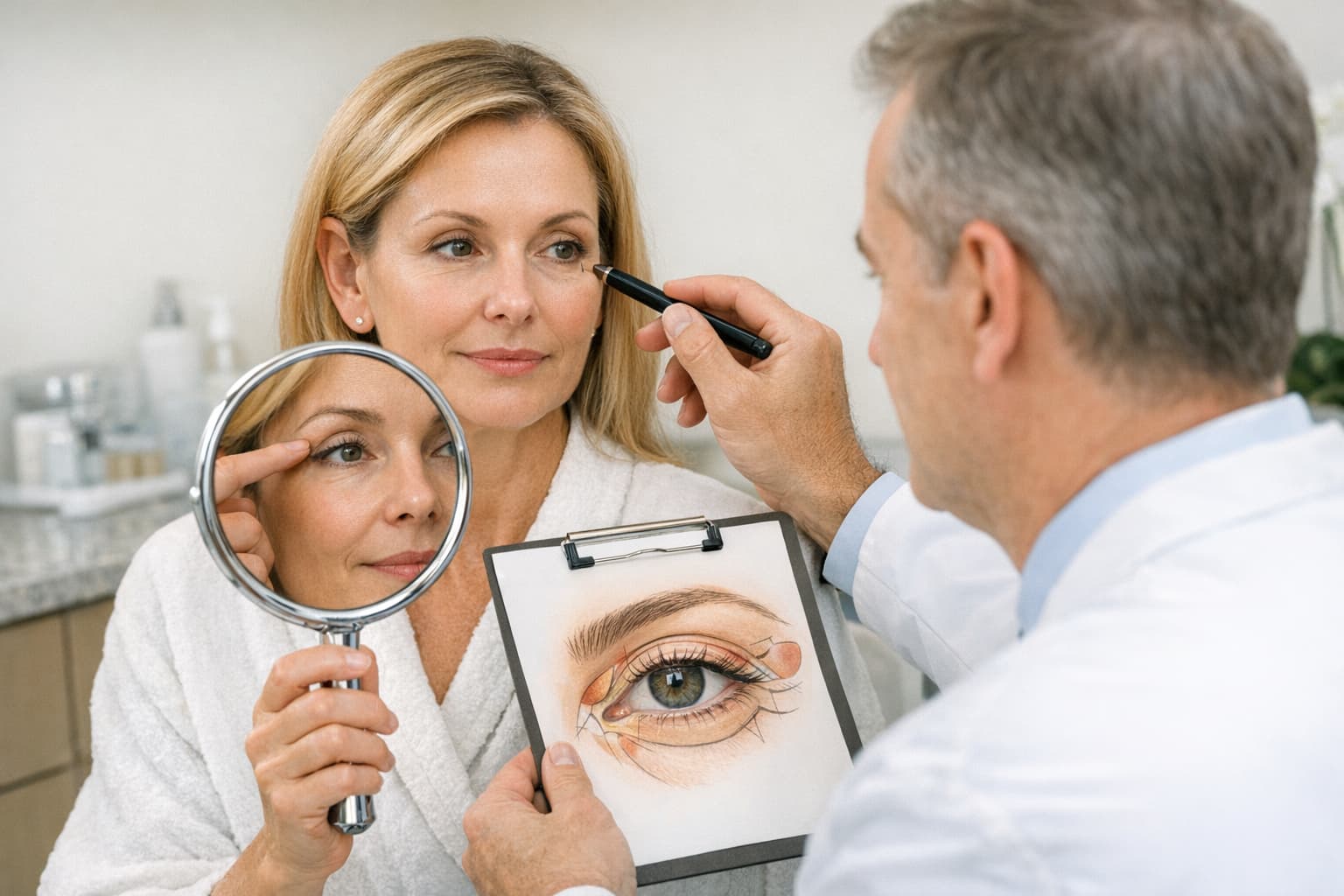
Illustrative discussion of upper and lower eyelid anatomy

Illustrative person holding a cool compress over one eye
These answers are meant to make the first conversation sharper and more useful, not replace a personal consultation.
That is one of the main jobs of the consultation. Some patients are mostly bothered by upper-lid heaviness, while others are reacting to lower-lid puffiness or a combination of both.
A well-planned procedure should not. The strongest plans are conservative and focus on refreshing the eye area while protecting natural expression and softness.
Bruising, swelling, social timing, and patience with the visible early healing period are usually the biggest recovery themes to plan around.
The goal is clarity: what this procedure can improve, what recovery really asks of you, and whether it should stand alone or be part of a broader plan.