Typical procedure time
2–4 hrs
Liposuction is most useful when you want sharper transitions through areas like the abdomen, flanks, back, arms, or thighs and you are looking for contour refinement rather than a scale-based change.
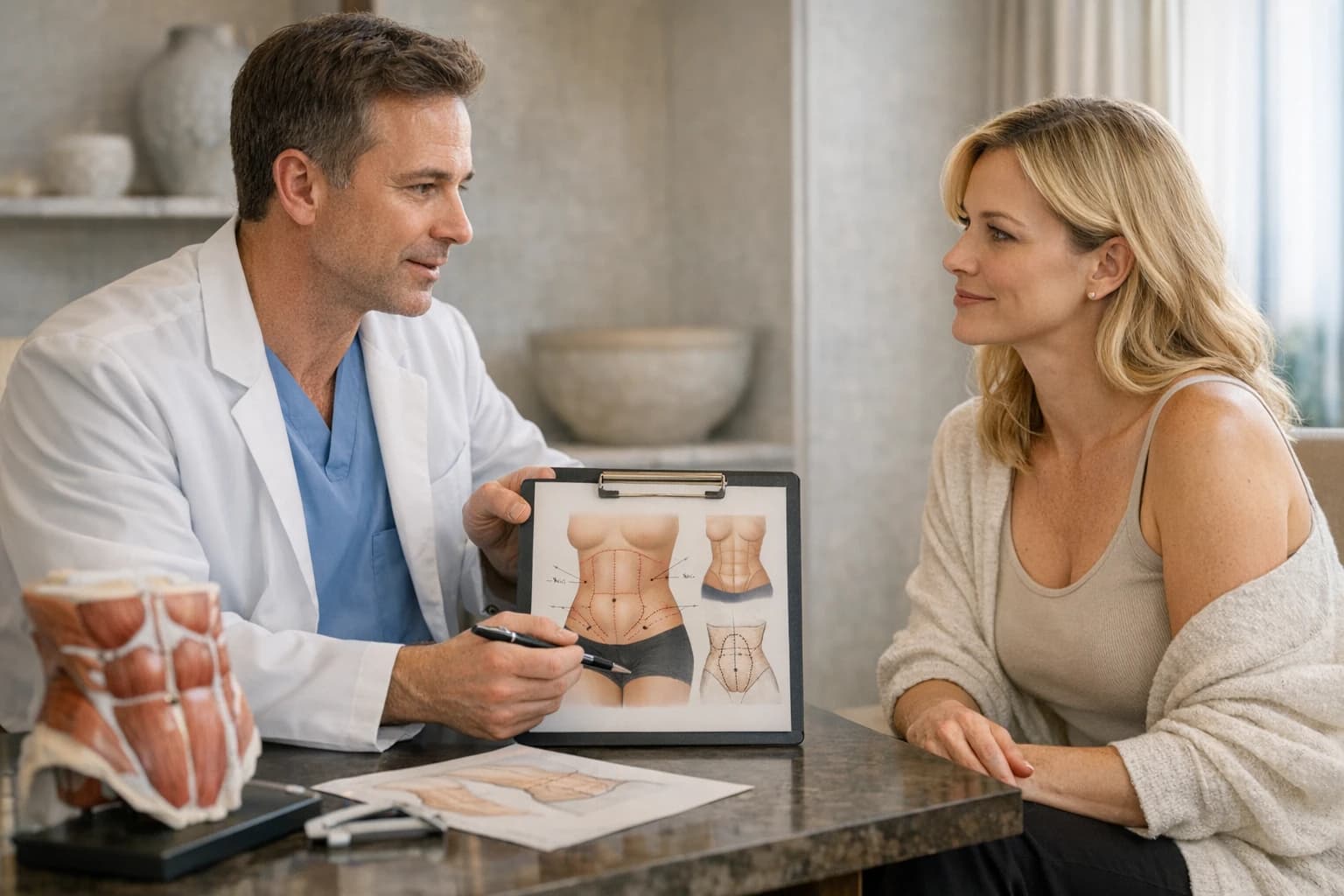
The consultation is where we decide whether the procedure should stay focused on one area or whether it should be sequenced with skin tightening, tummy tuck planning, or a more global body-contouring strategy.
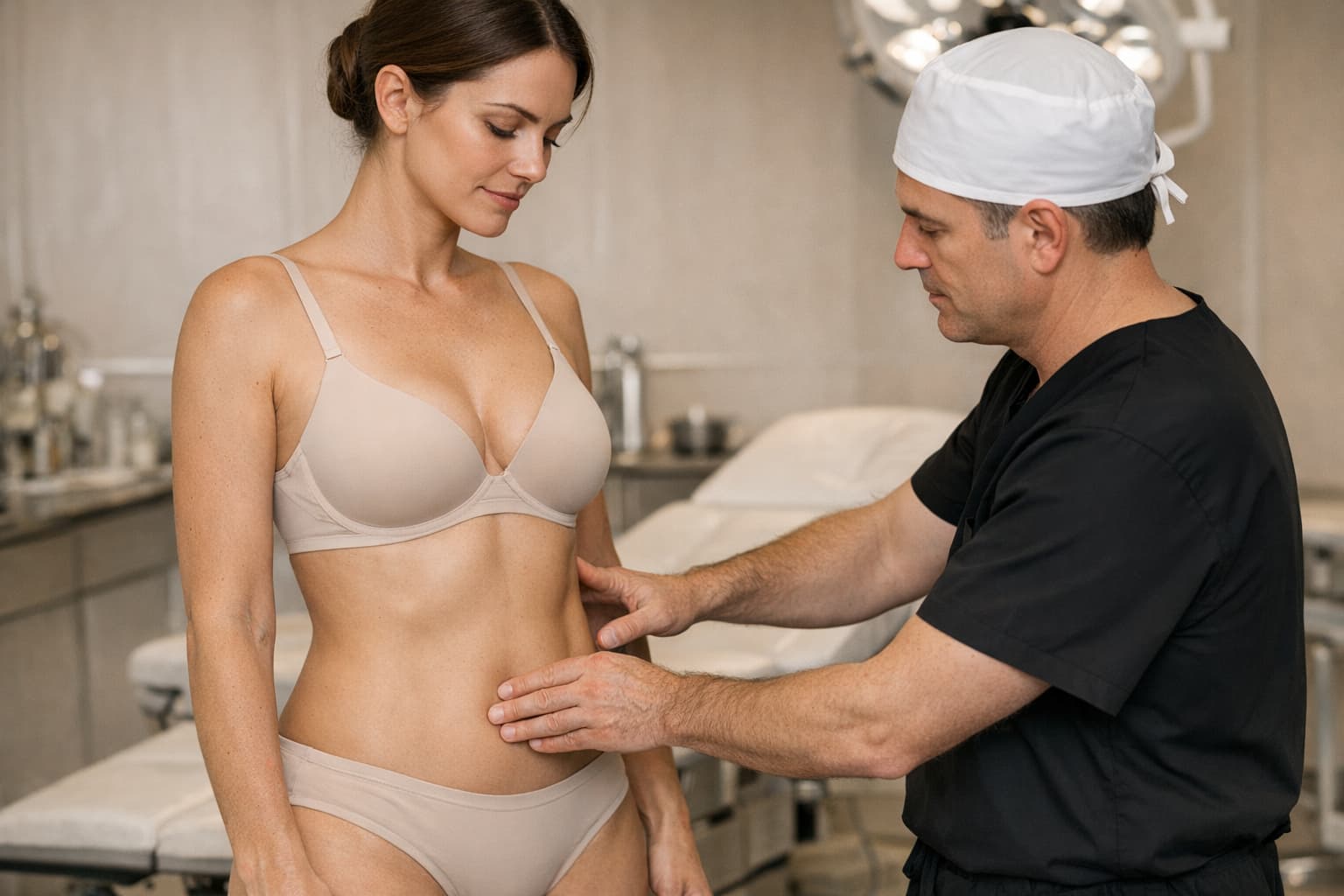
Ask about candidacy, recovery, and how any related procedures might affect planning before you make a decision.
A quick orientation to procedure timing, downtime planning, and the way this conversation usually fits into broader surgical decision-making.
Liposuction is usually discussed when certain areas hold volume out of proportion to the rest of the body and the goal is a cleaner outline rather than a dramatic total-body change.
Liposuction works best when the question is shape, not overall body weight. The goal is to reduce stubborn fullness, create cleaner transitions, and improve proportion in a way that still looks natural on your frame.
If the main issue is both fullness and loose skin, the better discussion may include Tummy Tuck planning or a broader contour conversation rather than liposuction alone. Patients who want lower-body shape change may also compare the procedure with Brazilian Butt Lift planning.
If you are deciding how to approach recovery or how to ask sharper questions before any procedure, start with our practical recovery timeline and five consultation questions worth bringing to your visit.
A strong liposuction candidate is usually near a stable baseline, focused on shape, and prepared for swelling, garments, and patience while contour settles.
The right plan usually comes from matching the procedure to your anatomy, tolerance for downtime, and the kind of change you are actually trying to make.
The consultation should map treatment areas, skin behavior, scar placement, garment use, and whether liposuction should stand alone or support a larger contour goal.
Review the exact areas you want refined and how those areas affect the whole silhouette
Discuss whether one visit or a staged contour plan makes more sense
Clarify how much change is realistic for each zone
Talk through recovery logistics, compression, and timing around work or travel
The procedure plan is built around preserving smooth transitions and symmetry rather than chasing the maximum possible volume reduction.
Treatment zones are outlined according to where contour change will create the cleanest visual shift.
Small access points and treatment sequencing are chosen to keep the plan efficient and controlled.
Fat reduction is directed toward balance, not overcorrection, so the result still reads like your body.
Compression, swelling management, and return-to-activity guidance are defined before the date is finalized.
Even when the procedure name is the same, incision strategy, staging, and combination-procedure decisions should be tailored to your proportions and the kind of result you want to live with long term.
Most patients need to plan around swelling, bruising, compression, and a gradual return to workouts while the shape continues to settle.
Early movement matters, but the focus stays on swelling control, garment wear, and rest.
You may already see outline improvement, but the shape still looks fuller than the final result because of swelling.
Many patients return to regular routines gradually while keeping compression and follow-up instructions in place.
The contour reads cleaner as swelling softens and the area settles into a more stable outline.
Liposuction often sits inside a larger body-planning discussion. These are the procedures most often compared or combined with it.
Patients usually choose NPMD for liposuction planning when they want a more measured, proportion-aware conversation instead of aggressive before-and-after sales language.
That means candidacy, downtime, staging, and the reasons for choosing surgery should all feel clear enough that you are not relying on marketing language to make a medical decision.
We frame liposuction around silhouette and balance so the plan stays proportional to your frame.
If tummy tuck, BBL, or staged contouring would create a better outcome, that gets discussed early instead of after a rushed booking.
Compression, swelling, and activity pacing are treated as part of the surgical plan, not an afterthought.
The most satisfying liposuction results usually come from realistic goals about line, proportion, and how long swelling can influence the final look.
The procedure can sharpen a contour, but it should still look like your body and move naturally with the rest of your shape.
Early photos and day-one mirror checks do not represent the settled contour. Time matters.
Stable routines, weight consistency, and good skin care habits help preserve the cleaner outline long after recovery.
Consultation, anatomy, and recovery perspectives for liposuction.
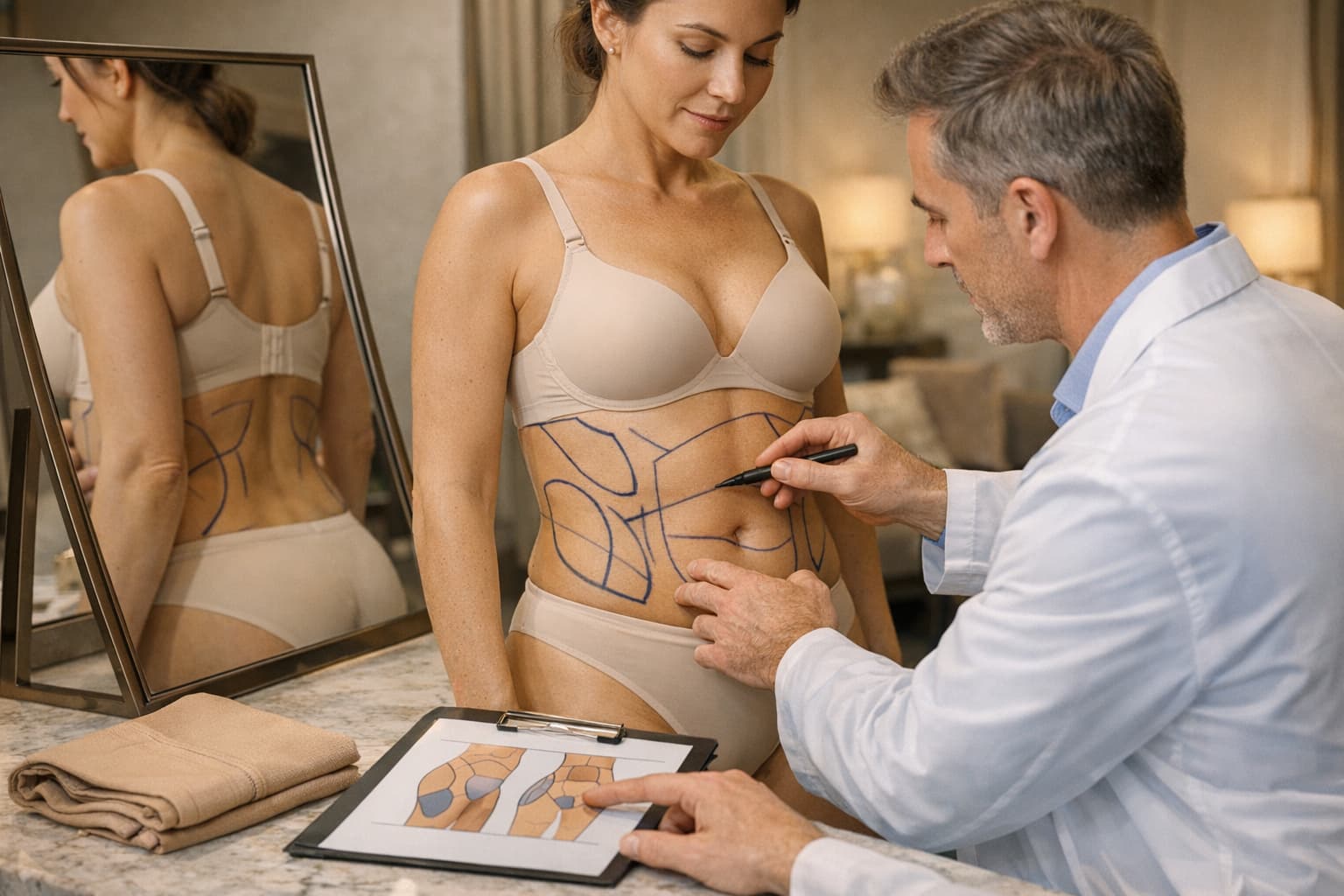
Illustrative liposuction area markings on the abdomen and flanks

Illustrative person resting in an abdominal compression garment
These answers are meant to make the first conversation sharper and more useful, not replace a personal consultation.
No. It is typically used for contour refinement in targeted areas where fullness remains out of proportion despite stable routines. The consultation should confirm whether your goal is really shape, skin tightening, or a broader body plan.
If loose skin, abdominal laxity, or a larger post-pregnancy change is part of the concern, liposuction alone may not be the most complete answer. That is why we compare it with tummy tuck and other body-planning options during consultation.
Compression, swelling control, realistic activity pacing, and patience while the contour settles are usually the biggest recovery themes. Most patients benefit from planning those details before they schedule anything.
The goal is clarity: what this procedure can improve, what recovery really asks of you, and whether it should stand alone or be part of a broader plan.