Typical procedure time
2–3 hrs
Breast lift is usually the right conversation when the concern is position, shape, or support rather than only volume. The planning should define what kind of lifted look still feels natural for your body.
Patients often come in saying they want more fullness, but the underlying issue can be descent, skin stretch, or loss of structure. The consultation is where that difference becomes clear.
Ask about candidacy, recovery, and how any related procedures might affect planning before you make a decision.
A quick orientation to procedure timing, downtime planning, and the way this conversation usually fits into broader surgical decision-making.
Breast lift is usually discussed when the issue is position, shape change, or loss of support rather than only wanting more volume.
Many breast lift consultations are not really about making the chest larger. They are about restoring support, re-centering shape, and creating a result that feels lighter and more balanced in clothing.
If upper-pole fullness matters as much as position, the more accurate comparison may be with Breast Augmentation or a combined lift-and-volume strategy. Post-pregnancy patients may also compare the plan with Mommy Makeover.
We recommend these five consultation questions and our recovery planning article if you want more structure before the visit.
The strongest candidates usually care more about position and support than dramatic size increase and are comfortable discussing scar tradeoffs honestly.
The right plan usually comes from matching the procedure to your anatomy, tolerance for downtime, and the kind of change you are actually trying to make.
This consultation should define the shape goal, nipple position changes, scar planning, and whether upper-pole fullness should be part of the same surgical conversation.
Review where support has changed and what kind of lifted outline you want
Discuss whether volume loss is really part of the concern
Clarify scar placement and how healing should be expected to progress
Plan early recovery, support garments, and return-to-routine timing
Breast lift planning is strongest when support, shape, and scar pattern are discussed together rather than as separate aesthetic decisions.
The consultation begins with what kind of lifted result still feels proportionate and natural on your chest.
If fullness matters as much as position, that is addressed early so the recommendation stays accurate.
Incision placement and expected healing are discussed openly as part of the overall decision.
Garments, swelling, activity pacing, and comfort planning are organized before anything is scheduled.
Even when the procedure name is the same, incision strategy, staging, and combination-procedure decisions should be tailored to your proportions and the kind of result you want to live with long term.
Patients usually need to plan for swelling, support garments, chest sensitivity, and a measured return to upper-body activity while the shape settles.
The chest is supported carefully while swelling and tenderness are still active.
Many patients feel more functional, though the shape is still evolving and garments may still be part of the plan.
More routine activity becomes realistic as sensitivity softens and swelling continues to settle.
The lifted outline looks more natural and the final support becomes easier to judge.
Breast lift is rarely evaluated in isolation. These are the related procedures patients compare most often.
Patients usually feel most confident in a breast lift consultation when the conversation is clear about support, scars, and whether more volume is actually part of the goal.
That means candidacy, downtime, staging, and the reasons for choosing surgery should all feel clear enough that you are not relying on marketing language to make a medical decision.
The plan is built around what lifted structure should look like on your body, not generic beauty language.
If volume is the bigger issue, that gets discussed. If it is not, the recommendation stays focused.
Scar pattern and healing expectations are part of the main decision, not a hidden detail.
The most satisfying breast lift results usually come from a clear understanding of what the procedure improves, what scars it requires, and whether volume needs to be added separately.
It does not always create the same kind of fullness that augmentation provides, which is why comparison matters.
The lifted shape settles over time, so the first impression is not the final one.
Garments, activity pacing, and realistic expectations all help the result feel worth the tradeoff.
Consultation, anatomy, and recovery perspectives for breast lift.
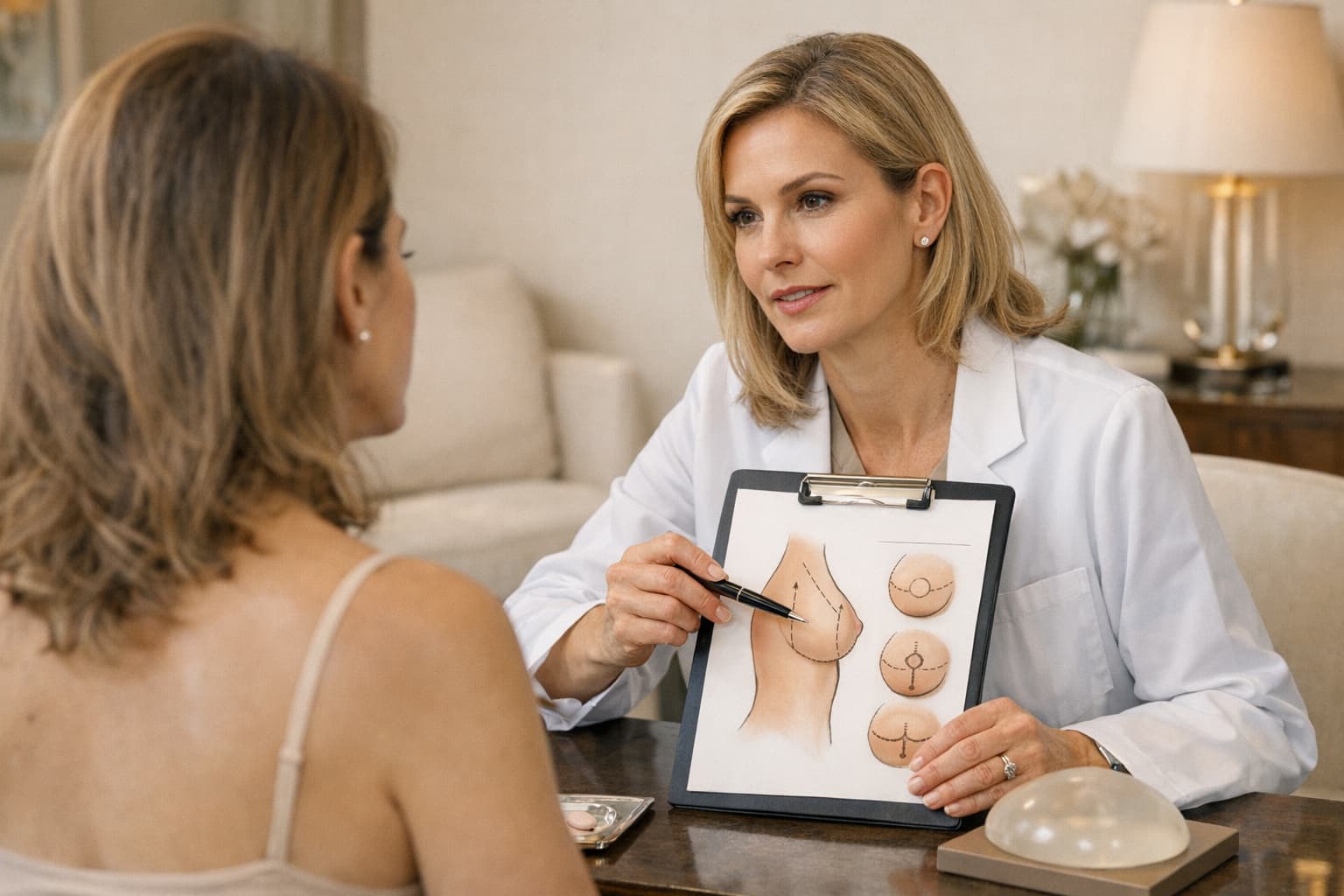
Illustrative breast lift incision diagrams during consultation

Illustrative person resting in a support bra with dressings
These answers are meant to make the first conversation sharper and more useful, not replace a personal consultation.
If the main issue is descent or shape support, lift may be the better fit. If upper-pole fullness or added volume matters just as much, augmentation may need to be part of the plan. The consultation is where that difference becomes clear.
Yes. Scar placement and healing are central to the decision, because the result has to be weighed against the visible tradeoffs in an honest way.
Support garments, swelling, upper-body activity limits, and patience while shape settles are usually the biggest planning themes during recovery.
The goal is clarity: what this procedure can improve, what recovery really asks of you, and whether it should stand alone or be part of a broader plan.