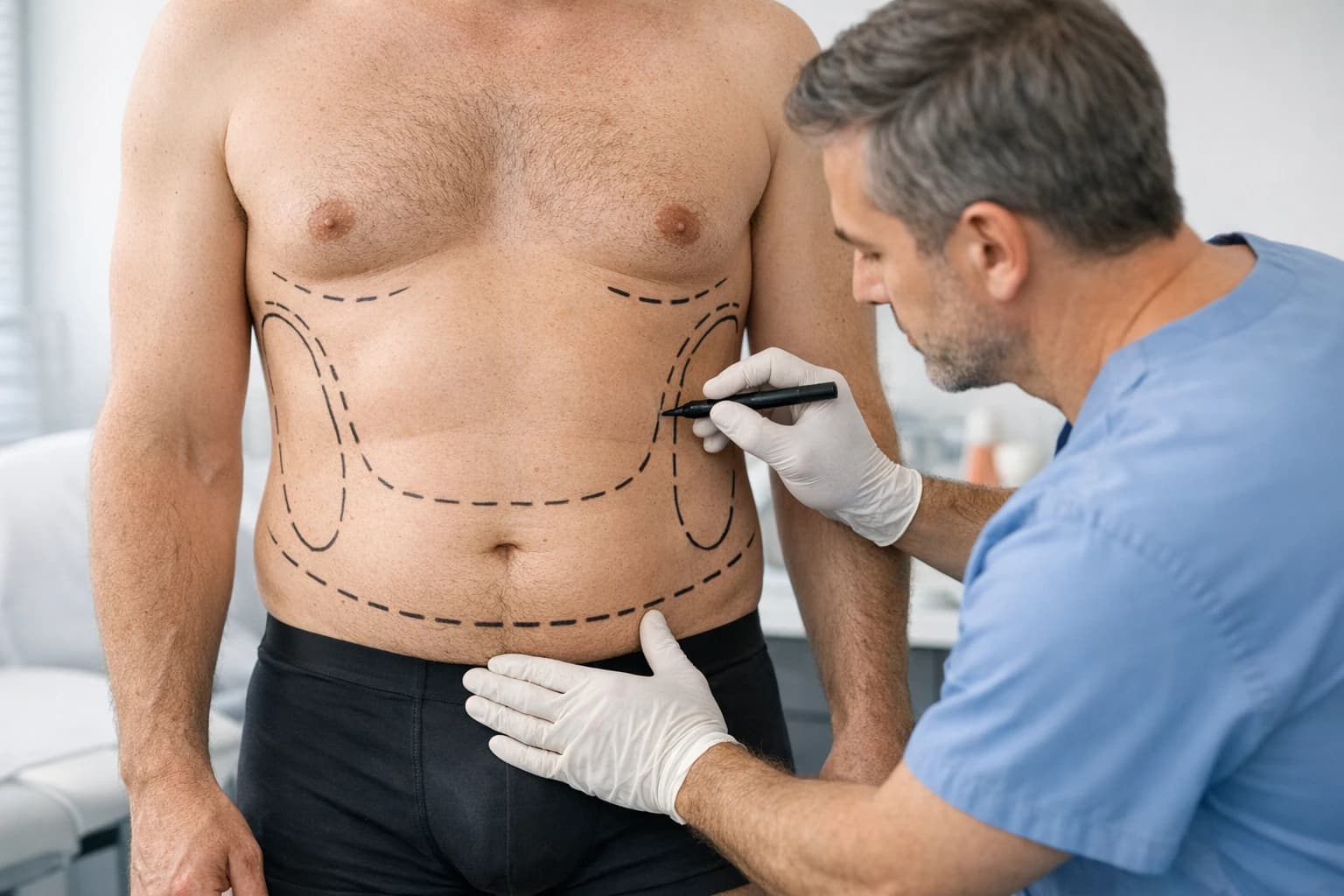
Typical procedure time
3–5 hrs
Tummy tuck is usually considered when loose abdominal skin, stretched tissue, or post-pregnancy changes are doing more than creating fullness and the goal is smoother structure through the midsection.
The best plan is rarely just about removing skin. It is about understanding abdominal support, scar tradeoffs, contour balance, and whether other procedures should be done at the same time or saved for later.

Ask about candidacy, recovery, and how any related procedures might affect planning before you make a decision.
A quick orientation to procedure timing, downtime planning, and the way this conversation usually fits into broader surgical decision-making.
Tummy tuck is usually explored when the abdomen looks or feels loose, folded, or unsupported in a way that training, weight stabilization, or simple contouring has not corrected.
Tummy tuck enters the conversation when the abdomen feels loose, folded, or unsupported in a way that contouring alone cannot fix. Patients often compare it with Liposuction first, but the real question is whether skin quality and abdominal wall change are part of the problem.
Some patients only need abdominal correction. Others are really looking at a bigger body reset and compare abdominoplasty with Mommy Makeover or lower-body contour work. The right plan depends on goals, timing, and recovery support.
If you want to think through recovery pacing or how to evaluate your options, start with our recovery planning guide and five consultation questions that sharpen decision-making.
The best candidates are usually focused on abdominal structure, understand the scar tradeoff, and can plan for a slower recovery window than smaller contour procedures require.
The right plan usually comes from matching the procedure to your anatomy, tolerance for downtime, and the kind of change you are actually trying to make.
This consultation should define scar placement, contour goals, muscle-support questions, garment use, and how much support you will need in the first weeks of recovery.
Review abdominal shape, skin behavior, and where the result needs the most change
Talk through the difference between abdominoplasty and liposuction alone
Map out recovery logistics around work, children, travel, and exercise
Decide whether a combined or staged surgery path is more practical and realistic
Tummy tuck planning should balance tightening, contour, and scar placement so the final shape reads intentional rather than over-corrected.
The consultation identifies where laxity, skin redundancy, and contour issues are actually coming from.
Incision placement is discussed in relation to clothing lines, lower-abdomen visibility, and the amount of correction required.
If liposuction or neighboring contour work will improve the final result, it is built into the discussion early.
Movement restrictions, support at home, and return-to-activity milestones are planned before scheduling.
Even when the procedure name is the same, incision strategy, staging, and combination-procedure decisions should be tailored to your proportions and the kind of result you want to live with long term.
Tummy tuck recovery usually needs more deliberate planning than smaller body procedures because swelling, mobility, lifting, and support at home matter early.
Gentle movement matters early, but the first priority is protecting the abdomen and keeping recovery organized.
The contour is visible, but the abdomen still feels tight and looks fuller than the final result.
Many patients begin returning to more regular routines once the early healing window is behind them.
The abdomen settles further and the final contour becomes easier to judge in clothing and movement.
Patients rarely compare tummy tuck in isolation. These are the procedures most often discussed alongside it.
Patients usually respond well to a tummy tuck consultation when it feels practical, scar-aware, and honest about what recovery will actually require.
That means candidacy, downtime, staging, and the reasons for choosing surgery should all feel clear enough that you are not relying on marketing language to make a medical decision.
We do not treat scar placement like a footnote. It is part of the decision itself.
The plan is built around support, smoothness, and waist balance instead of one exaggerated promise.
Home support, lifting limits, and timing are built into the consultation instead of left vague.
The strongest tummy tuck outcomes usually come from understanding what the procedure can improve, where scars live, and how swelling changes the early recovery picture.
Patients usually feel happiest when they define the result around shape, fit, and confidence rather than a dramatic overnight change.
The first few weeks often look tighter and more swollen than the settled result will eventually feel.
Weight stability, recovery patience, and a realistic return to activity all affect how the result holds up over time.
Consultation, anatomy, and recovery perspectives for tummy tuck.
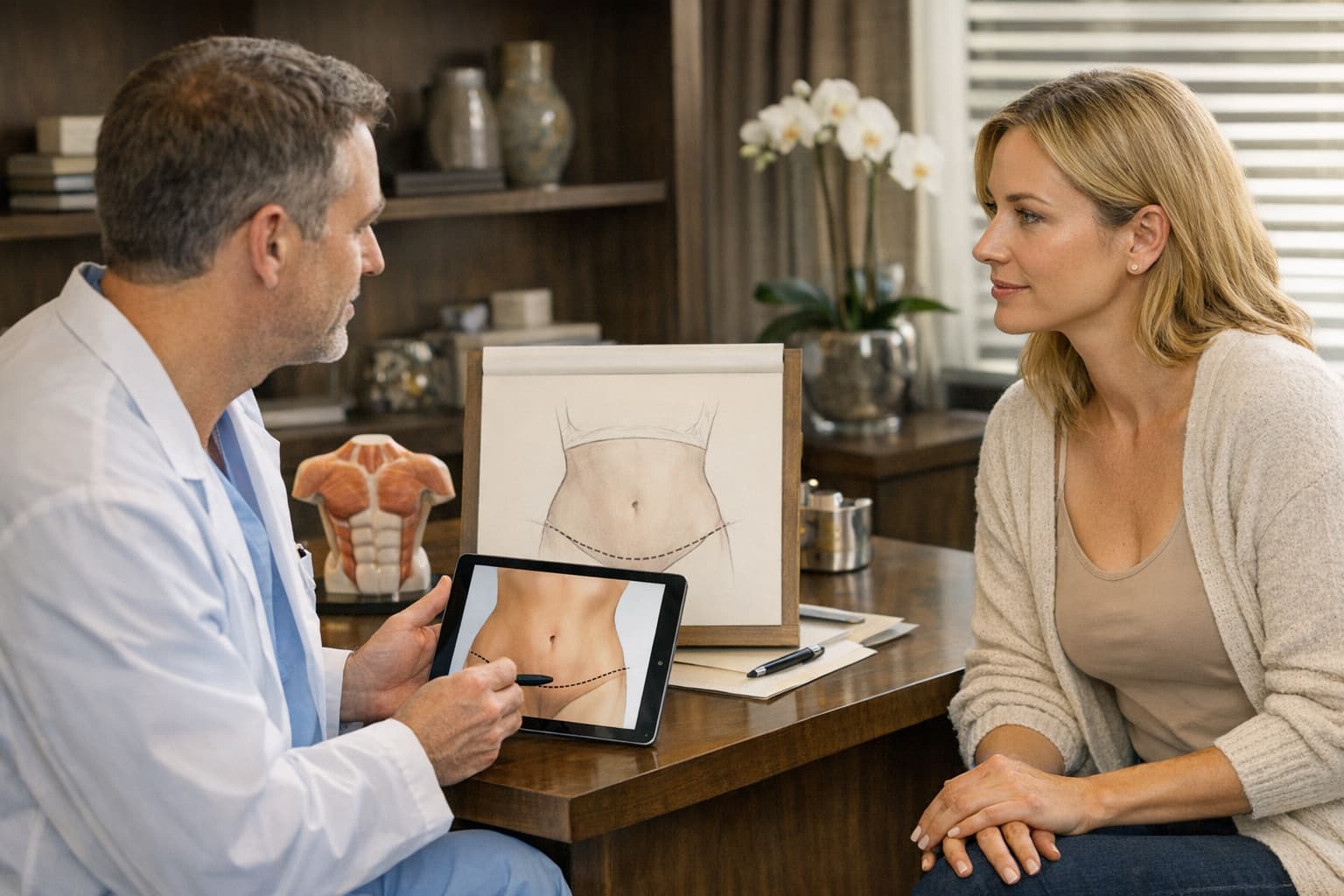
Illustrative discussion of abdominal diagrams for tummy tuck planning

Illustrative person wearing an abdominal support garment
These answers are meant to make the first conversation sharper and more useful, not replace a personal consultation.
Liposuction is usually about reducing localized fullness. Tummy tuck is more relevant when loose skin, stretched tissue, or abdominal support issues are the bigger concern. Many consultations are really about deciding which of those problems matters most.
No. Some patients need only abdominal correction, while others compare it with mommy makeover or contouring work in nearby areas. The right answer depends on your priorities, anatomy, and recovery bandwidth.
Expect swelling, movement restrictions, support garments, and a more deliberate return to lifting and exercise than smaller procedures require. Most patients benefit from mapping that support before they choose a date.
The goal is clarity: what this procedure can improve, what recovery really asks of you, and whether it should stand alone or be part of a broader plan.