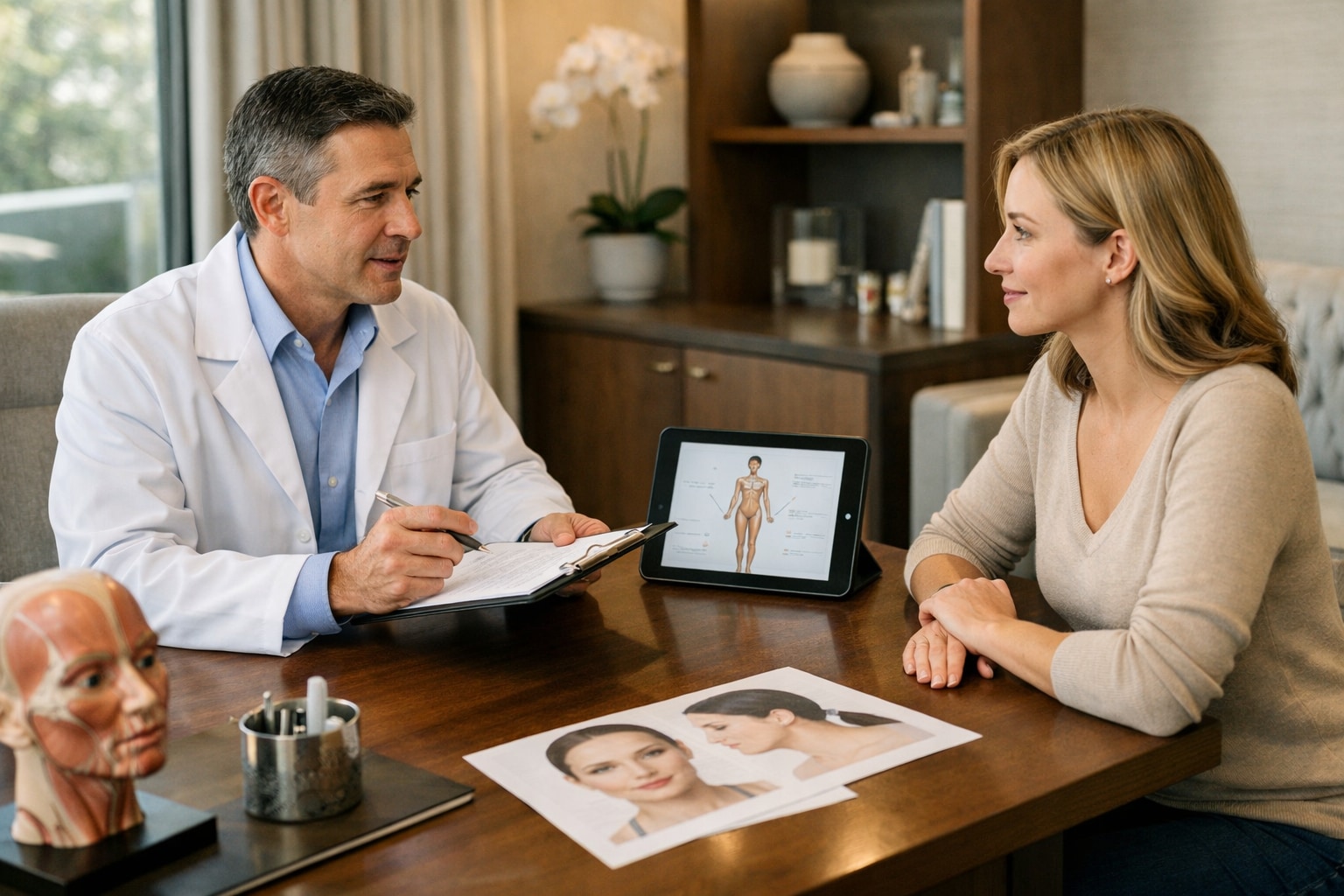
A cosmetic surgery consultation should clarify candidacy, recovery, alternatives, risks, and realistic expectations before you decide on a procedure. Use these questions to make the visit more productive.
Answer First: The Consultation Should Slow the Decision Down
A cosmetic surgery consultation is not just a sales conversation about a procedure. It is the visit where candidacy, goals, risks, recovery, alternatives, and expectations should become clear. If the appointment makes everything sound simple without discussing trade-offs, it is not doing enough work.
Whether you are considering liposuction, tummy tuck, facelift, eyelid surgery, rhinoplasty, breast surgery, or another procedure, better questions lead to safer decisions.
Start With Candidacy
Ask what makes someone a good candidate for the procedure and what would make the provider recommend waiting or choosing a different option. Candidacy may include health history, medications, smoking status, weight stability, skin quality, anatomy, prior procedures, and recovery support at home.
A strong consultation should be honest about limitations. Wanting a procedure does not automatically mean it is the best next step right now.
Ask About Alternatives
Ask whether non-surgical treatments, skincare, injectables, body contouring devices, or a different surgical approach could better match the goal. Alternatives are not always replacements, but they help clarify why surgery is or is not appropriate.
For example, skin laxity, fat volume, muscle separation, and facial aging can require different strategies. The procedure should match the anatomy, not just the area of concern.
Clarify Recovery Before Scheduling
Recovery is often the deciding factor. Ask how long you may need help at home, when you can return to desk work, when exercise may resume, what garments or restrictions are expected, and which symptoms should prompt a call. Also ask how follow-up is handled.
Planning around childcare, work, travel, events, and sleep setup matters. A beautiful surgical plan can still be a bad idea if the recovery window does not fit your real life.
Understand Risks and Trade-Offs
Every procedure has risks and trade-offs. Ask about scars, swelling, asymmetry, revision possibility, anesthesia considerations, numbness, healing variability, and what could limit the result. The goal is not to scare yourself; it is to understand what you are consenting to.
Be cautious if the conversation avoids risk or guarantees a specific outcome. Surgical planning should feel confident but never casual.
Discuss Realistic Outcomes
Ask what improvement is realistic for your anatomy and what the procedure will not fix. A tummy tuck does not replace weight loss. Liposuction does not tighten loose skin in every case. A facelift does not change skin texture the way resurfacing can. Understanding those boundaries prevents disappointment.
If you are preparing for a cosmetic surgery consultation in Encino, bring photos of your goals, a medication list, your questions, and your calendar. The right procedure decision should feel informed, not rushed. You can also start by reviewing NPMD's surgery services before your visit.