Body Contouring Consultation in Encino at NPMD for natural, non-surgical silhouette refinement, smoother contour transitions, mild tightening support, and realistic treatment planning.
Review the service overview, visit location, questions to ask, and timing before requesting an appointment for Body Contouring Consultation.
Visit location: NPMD's contact page lists its Encino clinic address. Confirm the appointment location when booking.
Questions to ask: Ask about eligibility, alternatives, possible risks, costs, preparation, and any follow-up that may apply to Body Contouring Consultation.
Timing: Listed appointment timing: 45-60 min. Confirm the length when scheduling.
Body Contouring Consultation at NPMD helps patients in Encino build a realistic plan for non-surgical shape refinement, smoother contour transitions, mild tightening support, and natural-looking body balance.
The consultation is designed to answer a practical question first: what is actually causing the concern? Localized fullness, loose skin, cellulite texture, posture, muscle tone, recent weight change, and surgical-level skin excess all need different planning. Patients comparing options can also review Evolve X, Fat Reduction, Skin Tightening, Cellulite Reduction, Abdomen Treatments, and Arms Treatments.
Best for: Body-shape planning, stubborn fullness, mild laxity, texture, and treatment sequencing
Typical visit: 45-60 min
Category: Treatments / Body Treatments
What Body Contouring Consultation Helps Clarify
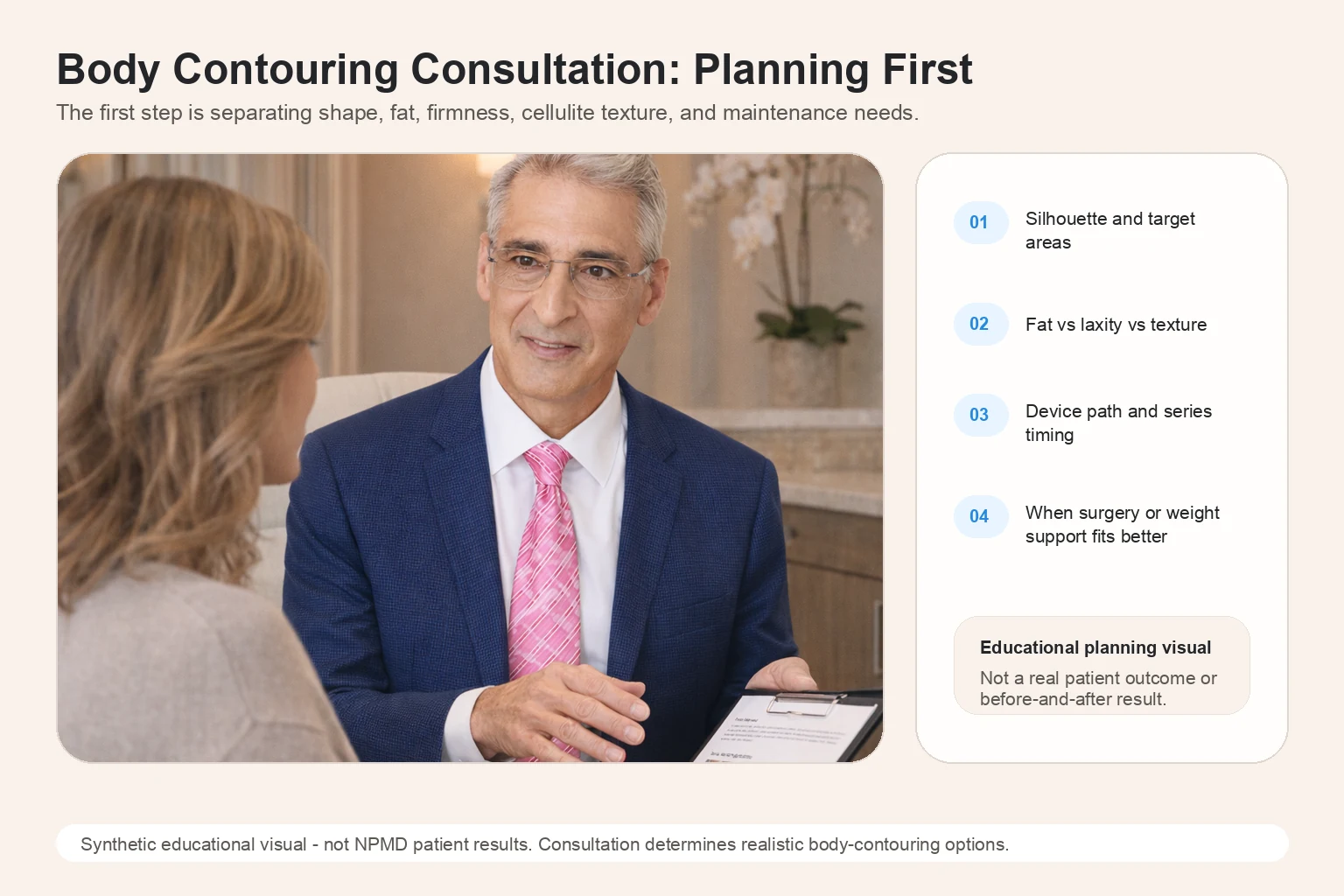
A good body-contouring plan starts before any device or treatment room. NPMD reviews the area you want to change, the kind of change you want, and whether the concern is mostly fat, skin, texture, muscle tone, or proportions. That keeps the plan medically responsible and avoids overpromising from the wrong treatment category.
Whether localized fullness, mild laxity, cellulite texture, or contour imbalance is the main driver
Which areas are realistic for non-surgical refinement and which may require a different approach
How weight stability, pregnancy history, medications, prior surgery, scars, and medical history affect planning
Whether a staged plan should start with fat reduction, skin tightening, Evolve X, cellulite reduction, or maintenance
When a surgical consultation is more honest than a non-surgical body-contouring plan
Body Contouring, Fat Reduction, Skin Tightening, and Evolve X Are Different
Patients often use body contouring as one phrase, but the plan can involve several different goals. Fat Reduction is focused on localized fullness. Skin Tightening is focused on firmness and laxity. Evolve X may be discussed when body-focused contouring and tone support are part of the plan.
This distinction matters. If loose skin is the primary concern, fat-focused treatment alone may not improve the problem. If fullness is the main issue, tightening alone may be too subtle. If cellulite texture is driving the concern, a texture-focused option may matter more than general contouring. The consultation is where those choices get sorted out.
Who Usually Makes a Good Candidate
Body contouring is usually best for patients who are close to a stable baseline and want refinement rather than major weight loss. It can fit people who have stubborn areas despite consistent habits, want help deciding between devices, or need a realistic plan after weight change, pregnancy, aging, or prior treatment.
It may not be the right first step if your weight is actively changing, the area has significant loose skin, a hernia or structural concern is possible, you are pregnant, there is an active skin condition in the area, or the desired change requires liposuction, tummy tuck, lift surgery, or another surgical path. NPMD keeps those limits clear during consultation.
What the Consultation Reviews
Your consultation reviews both the visible concern and the context around it. The goal is to decide what is appropriate, what is not appropriate, and how to sequence care if more than one issue is present.
Whether your plan should include Evolve X, fat reduction, skin tightening, cellulite reduction, or referral
How results should be monitored so improvement is judged in a realistic, non-exaggerated way
Treatment Paths We May Compare
NPMD does not treat body contouring as a one-size-fits-all service. A consultation may compare focused or combined paths depending on anatomy, goals, safety, and timeline.
Evolve X for body-focused contouring support when tone, shape, or staged planning are priorities
Fat Reduction when selected stubborn areas of fullness are the primary concern
Skin Tightening when mild laxity, firmness, or crepey texture need more attention
Ask the clinic how the available options, candidacy, risks, limitations, and recovery may apply to your individual goals. No particular treatment result is guaranteed.
Timing, Recovery, and Maintenance
Timing depends on the selected treatment category. Some non-surgical plans have minimal downtime, while others can involve temporary soreness, redness, bruising, swelling, warmth, firmness, numbness, tenderness, or activity adjustments. A staged plan may also require multiple sessions before the final result can be judged.
Maintenance matters because body contouring works best when the baseline stays reasonably stable. Weight changes, muscle tone, skin aging, pregnancy, medications, and lifestyle can all affect how long a result remains visible. NPMD reviews what to expect before treatment begins.
Risks, Limits, and When Surgery or Weight Support May Fit Better
Non-surgical body contouring is not a substitute for weight loss, and it cannot remove a large amount of loose skin. If the desired change is surgical-level tightening, fat removal, or body reshaping, the most responsible recommendation may be surgery consultation instead of a device-based plan. If the main goal is weight loss or metabolic health, medical weight or wellness support may need to come first.
Risks vary by technology and patient factors. Possible risks can include discomfort, redness, swelling, bruising, burns, blisters, pigment change, nodules, contour irregularity, delayed healing, poor cosmetic result, or rare device-specific complications. Some treatments may not be appropriate with pregnancy, certain implanted devices, active skin infection, recent surgery, uncontrolled medical conditions, or other contraindications reviewed during consultation.
Results and Maintenance Planning
The most satisfying body-contouring results usually come from matching the treatment category to the actual concern and judging progress in stages. NPMD focuses on realistic contour planning, safety, and conservative expectations rather than overpromising a dramatic transformation from a non-surgical service.
If you are comparing non-surgical body contouring options, a consultation can clarify whether your best next step is fat reduction, skin tightening, Evolve X, cellulite reduction, area-specific treatment, wellness support, or a surgical opinion. The goal is a plan that fits your anatomy and timeline before any treatment begins.
Share
Articles for Body Contouring Consultation
Practical reading selected for this service so patients can understand timing, options, and what to expect before booking.
TreatmentsNPMD Clinical Team
Cellulite Reduction vs Fat Reduction: What Each Treatment Targets
Cellulite dimples and localized fat bulges are related to different tissue structures. Learn why a device that reduces circumference may not smooth cellulite—and why neither option is weight-loss treatment.
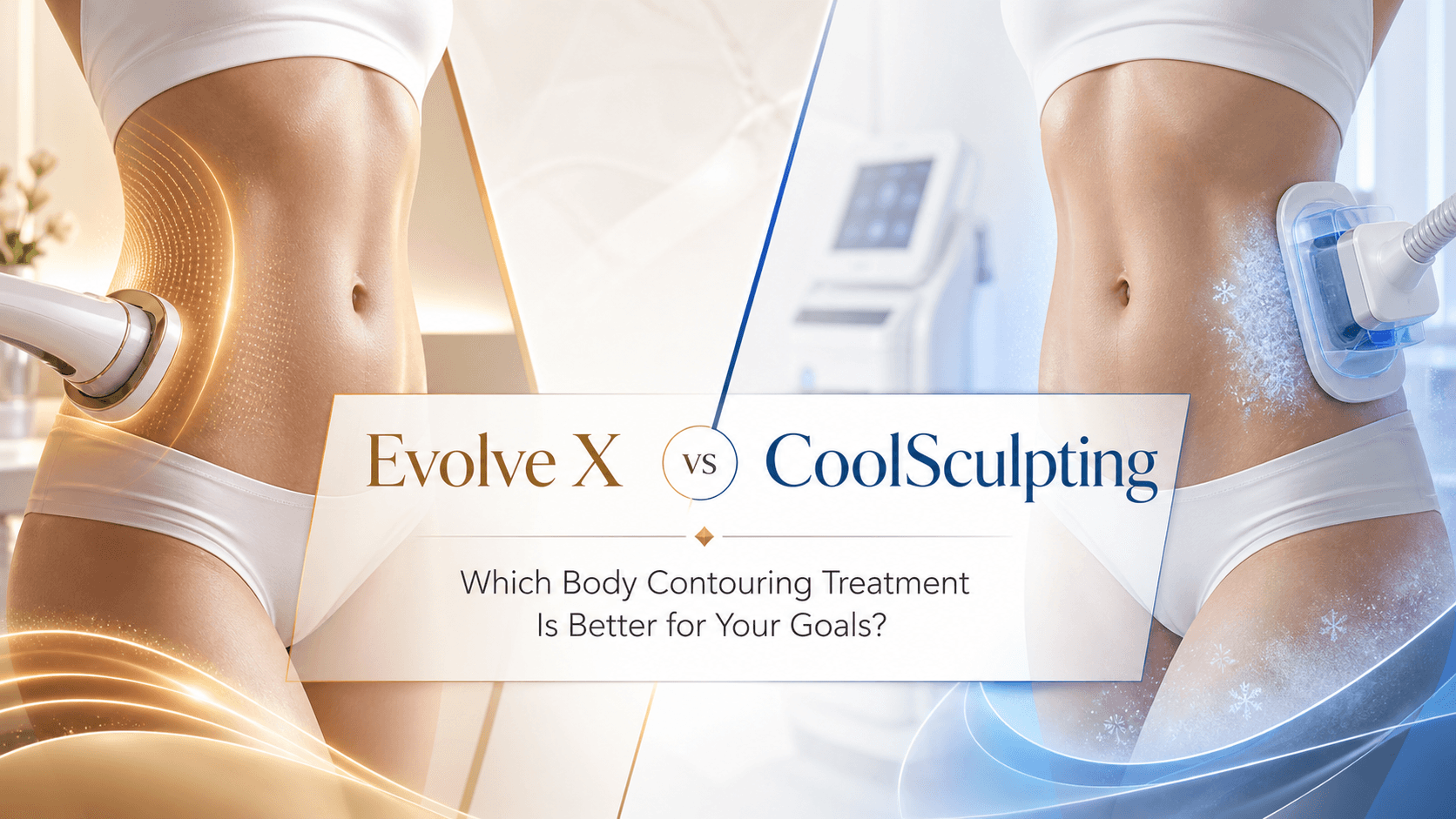
Evolve X vs CoolSculpting: Which Body Contouring Treatment Is Better for Your Goals?
Trying to choose between Evolve X and CoolSculpting? Learn how these non-surgical body contouring treatments differ for fat reduction, skin firmness, muscle tone, comfort, downtime, and long-term planning.
Shoulder Slimming Botox: Trapezius Candidacy, Results, and Risks
Trapezius Botox is an off-label aesthetic use intended to reduce selected muscle activity, not a posture or pain cure. Learn who may be considered, how long change takes, and why weakness screening matters.
Clear answers to the most common questions before and after your appointment.
Good candidates are usually close to a stable weight and want help refining areas of localized fullness, mild laxity, uneven contour transitions, or texture concerns. A consultation is especially useful when you are not sure whether fat reduction, skin tightening, Evolve X, cellulite reduction, or a surgical opinion is the better fit. NPMD reviews medical history, goals, treatment areas, skin quality, and expectations before recommending a plan.
No. Body contouring is not a weight-loss treatment. It is used for shape refinement, selected areas of stubborn fullness, mild tightening support, or contour balance after the main weight-change goal is already reasonably stable. If the priority is weight loss or metabolic support, NPMD may recommend starting with medical weight, wellness, or primary-care guidance before a contouring plan.
Depending on your anatomy and goals, the consultation may compare Evolve X, fat reduction, skin tightening, cellulite reduction, RF-based options, treatment-area planning, or referral for surgery when a non-surgical path would not match the amount of change requested. The goal is to choose the right category before starting treatment, not force every patient into one device.
Realistic results are usually gradual and natural-looking: smoother contour transitions, subtle fat-focused refinement, mild firmness support, or better proportional balance in selected areas. Results vary by device, area, number of sessions, tissue quality, lifestyle, weight stability, and baseline anatomy. Non-surgical body contouring cannot remove large amounts of skin or replace a tummy tuck, lift, or liposuction when surgery is the appropriate level of correction.
Downtime depends on the treatment selected. Some non-surgical plans have little interruption to normal routines, while others can involve temporary warmth, redness, swelling, tenderness, bruising, soreness, firmness, numbness, or activity adjustments. NPMD reviews expected aftercare and timing before treatment so you can plan around work, exercise, travel, and events.
Risks depend on the technology used and your medical profile. Possible issues can include discomfort, redness, swelling, bruising, burns, blisters, pigment change, nodules, contour irregularity, poor cosmetic result, delayed healing, or rare device-specific complications. Body contouring may not be appropriate with some implanted devices, pregnancy, active skin infection, unstable medical conditions, recent surgery, or goals that are better matched to surgical care.
Published feedback
Reviews are temporarily unavailable. You can contact NPMD with questions about a visit.