Jowls Treatment: Filler, Skin Tightening, or Facelift?
Jowls can reflect volume shifts, ligament support, skin laxity, and anatomy. Compare when filler, tightening, threads, or facelift surgery may—or may not—fit the concern.
Read article
Skin Tightening Treatment in Encino at NPMD for mild-to-moderate laxity, smoother texture, and firmer skin support with realistic device-based planning.
Review the service overview, visit location, questions to ask, and timing before requesting an appointment for Skin Tightening Treatment.
Explore more: Treatments services, Body Treatments, Doctors, Reviews, FAQs, Contact, and Request an appointment.
Skin Tightening Treatment at NPMD is designed for patients who want firmer, smoother-looking skin and a more supported contour without jumping straight to surgery. In Encino, we focus on mild-to-moderate laxity, crepey texture, and gradual collagen-support planning rather than promising dramatic lift from a non-surgical device.
Patients comparing related options may also review Evolve X, Body Contouring, Fat Reduction, RF Microneedling, Agnes, and area-specific planning for the neck, abdomen, or arms.
Skin tightening is usually strongest when the concern is mild looseness, reduced firmness, or texture change rather than heavy skin excess. The goal is a gradual, natural-looking improvement in support and smoothness, not an instant surgical lift.
Patients often use skin tightening, body contouring, and fat reduction interchangeably, but they are not the same. Skin tightening focuses on firmness, laxity, and collagen-support changes. Fat Reduction focuses on localized fullness. Body Contouring may combine shape, firmness, cellulite texture, and muscle-tone planning.
This distinction matters because the wrong category can disappoint. If the issue is loose skin, removing fat may make laxity more noticeable. If the issue is localized fullness, tightening alone may not change shape enough. If the skin excess is significant, surgery may be more honest than overpromising a device-based result.
Good candidates usually have mild or moderate laxity and understand that tightening builds gradually. The best fit is often a patient who wants visible improvement but does not need a surgical level of skin removal or lift.
Skin tightening may not be the right lead treatment if the tissue is very loose, heavy, or folded; if there is a hernia or structural concern in the treatment area; if the desired change requires major fat reduction; or if a medical condition, implant, recent tanning, active skin issue, or pregnancy makes treatment inappropriate. NPMD uses consultation to decide whether tightening should lead, support another service, or wait until another step is completed first.
A strong skin-tightening consultation starts with the treatment area itself: how much laxity is present, whether the concern is skin, fat, muscle tone, cellulite texture, or a combination, and what kind of timeline is realistic.
Skin tightening is a category, not one universal machine. Depending on the area and goal, NPMD may compare energy-based tightening, RF microneedling, body-focused device treatments, or staged contour support.
Ask the clinic how the available options, candidacy, risks, limitations, and recovery may apply to your individual goals. No particular treatment result is guaranteed.
Most device-based tightening treatments use controlled energy delivered through the skin surface or through a specialized applicator. The area may feel warm, tight, tingly, or mildly uncomfortable depending on the technology and settings. Comfort planning and treatment boundaries are reviewed before the session begins.
The treatment may be focused on one zone or staged across several areas. NPMD avoids pushing intensity beyond what makes sense for your skin, anatomy, recovery window, and risk profile.
Recovery depends on the selected device and treatment intensity. Some patients have little interruption to daily routines, while others need more aftercare if the plan includes RF microneedling or a more intensive device-based treatment. Temporary warmth, redness, swelling, bruising, tenderness, dryness, or sensitivity can happen.
Visible tightening is usually gradual because collagen remodeling takes time. NPMD reviews when to judge early changes, when to reassess, and whether a series is more realistic than expecting one session to do all the work.
Skin tightening is useful for the right patient, but it has limits. Significant loose skin, heavy folds, major tissue descent, or a goal that requires skin removal may be better suited for surgical consultation. Non-surgical tightening should not be presented as a substitute for tummy tuck, arm lift, neck lift, facelift, or other surgery when the anatomy calls for that level of correction.
Possible risks depend on the technology used and may include discomfort, redness, swelling, bruising, blistering, burns, nodules, pigment changes, scarring, delayed healing, or poor cosmetic result. Certain devices may not be appropriate for patients with active implants, metal in the treatment area, active skin disease, recent tanning, pregnancy, photosensitivity, or other risk factors reviewed during consultation.
Results vary by area, device, settings, number of sessions, age, collagen response, weight stability, skin quality, and maintenance habits. Some patients use skin tightening as a focused treatment. Others use it as part of a broader plan with body contouring, RF microneedling, cellulite reduction, weight-management support, or surgical referral when needed.
The most satisfying results usually come from matching the treatment category to the actual concern and judging progress in stages instead of chasing an instant transformation.
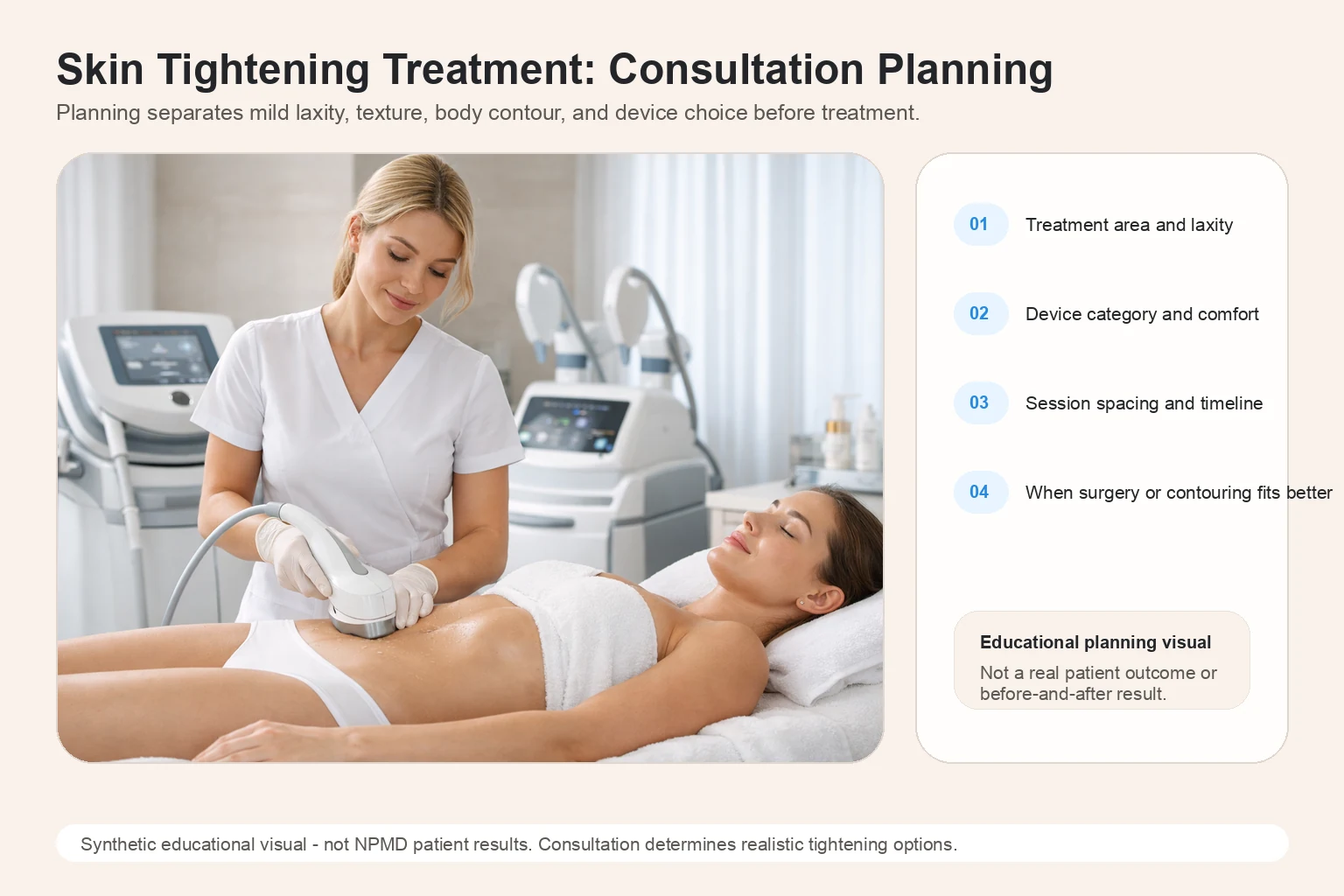
Illustrative planning visual showing that treatment selection starts with laxity pattern, device fit, and realistic timeline.
If you are considering Skin Tightening Treatment in Encino for mild-to-moderate laxity, smoother skin, or firmer body or neck contours, a consultation can clarify whether tightening is the right lead step and what level of visible improvement is realistic.
Practical reading selected for this service so patients can understand timing, options, and what to expect before booking.
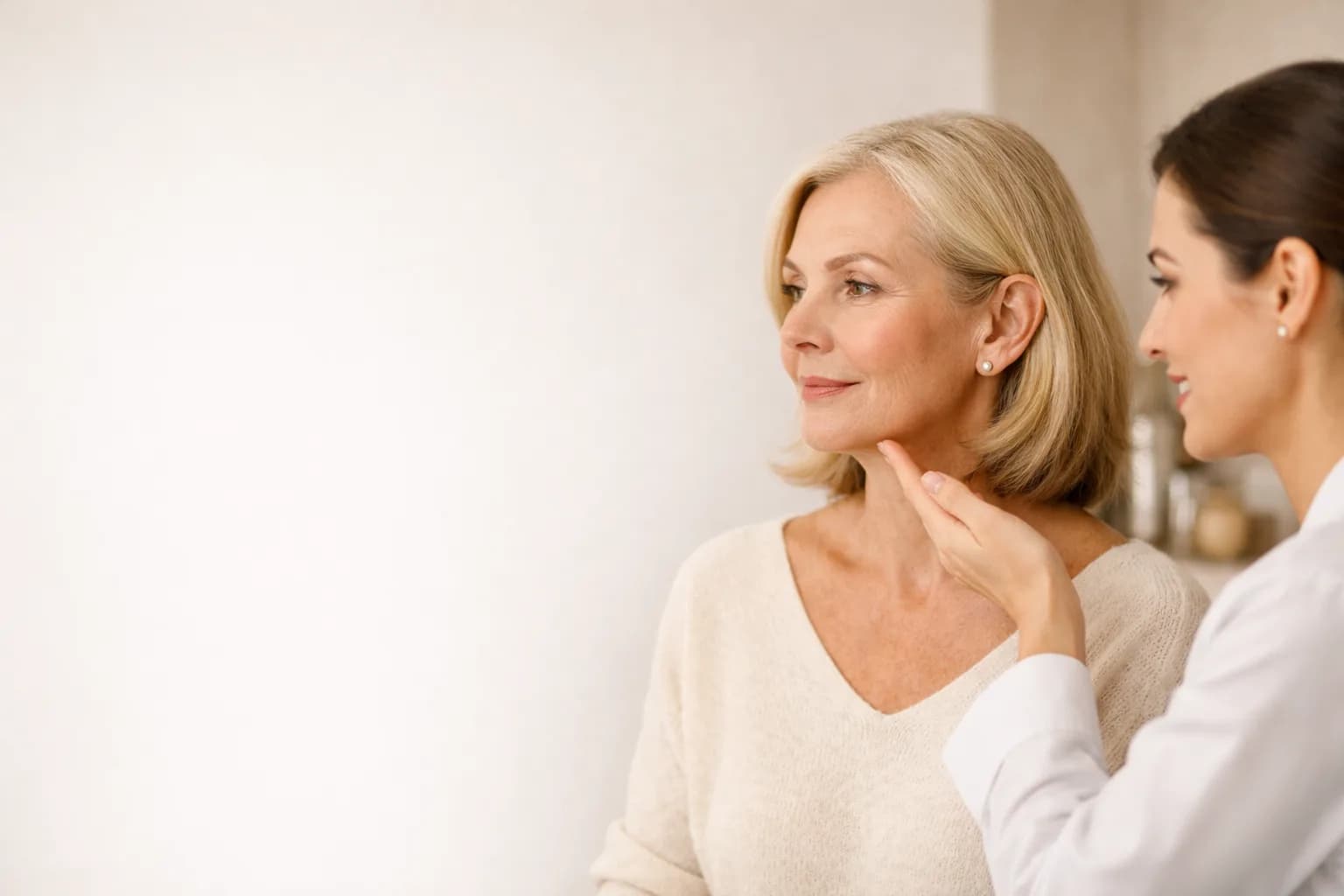
Jowls can reflect volume shifts, ligament support, skin laxity, and anatomy. Compare when filler, tightening, threads, or facelift surgery may—or may not—fit the concern.
Read article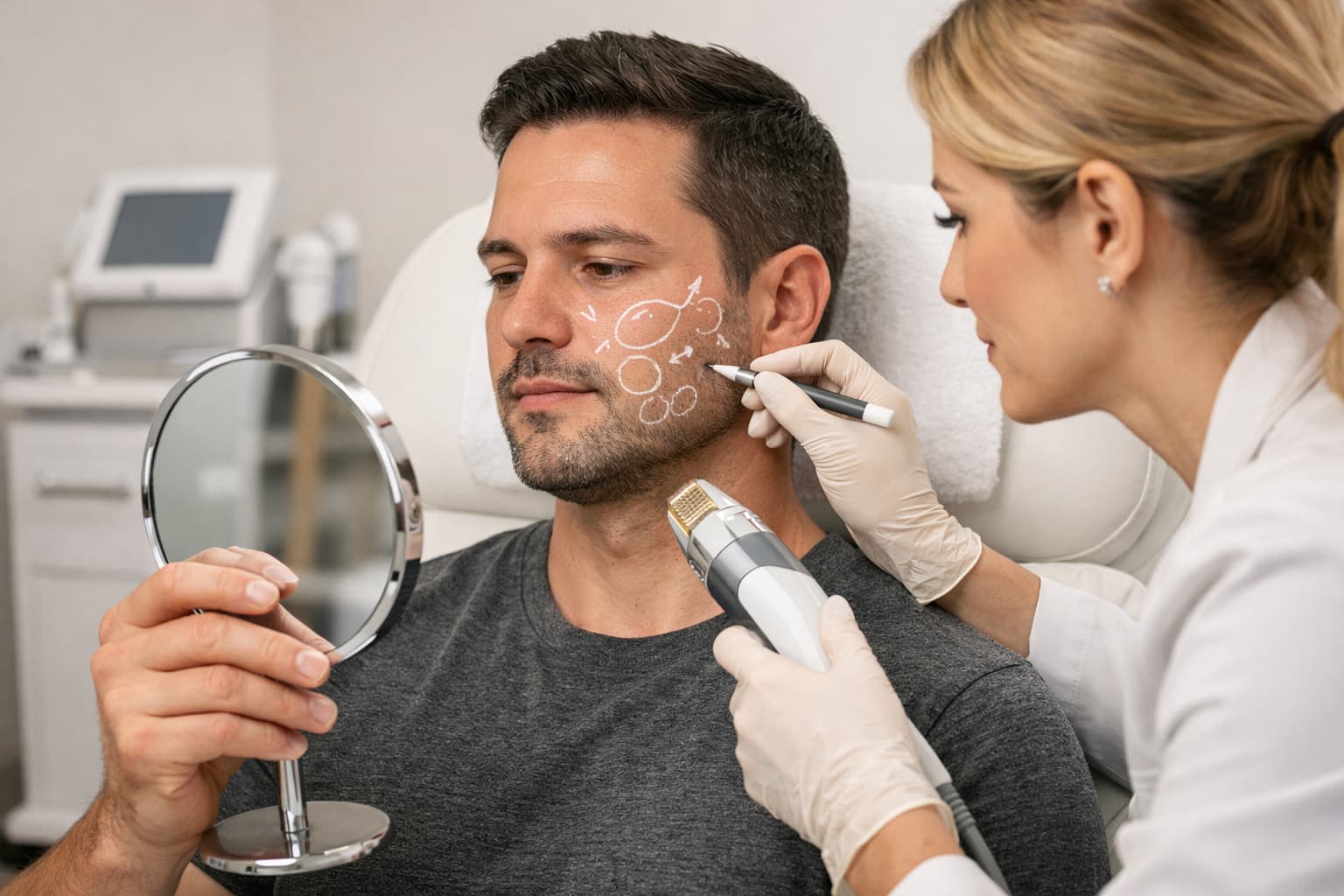
RF microneedling can be useful when acne scars, enlarged pores, and mild laxity overlap. Learn what a consultation should clarify before choosing it over microneedling, laser, or a staged skin plan.
Read article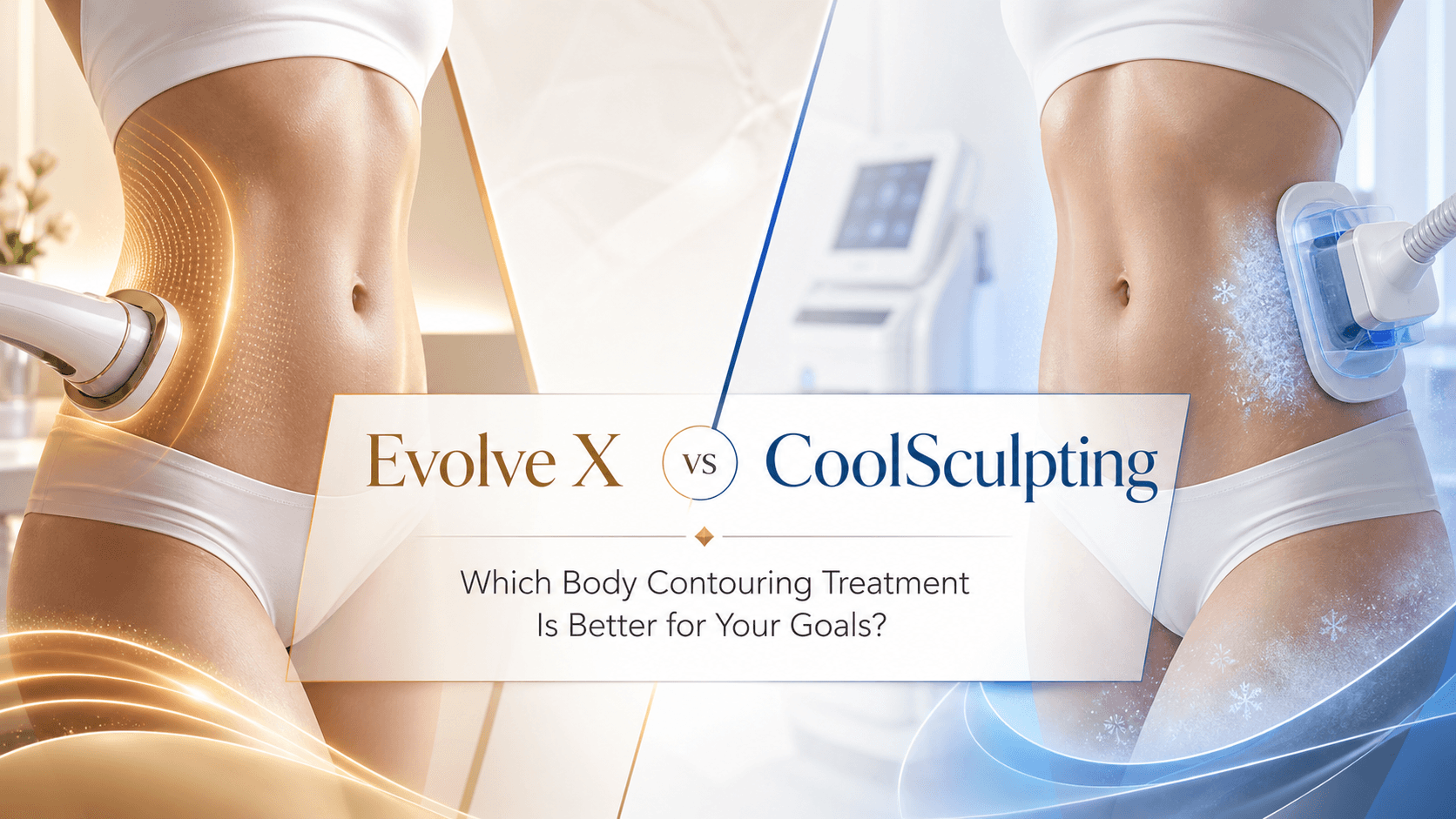
Trying to choose between Evolve X and CoolSculpting? Learn how these non-surgical body contouring treatments differ for fat reduction, skin firmness, muscle tone, comfort, downtime, and long-term planning.
Read articleClear answers to the most common questions before and after your appointment.
Good candidates usually have mild to moderate laxity, early looseness, crepey texture, or reduced firmness and want gradual improvement without surgery. Candidacy depends on the treatment area, skin quality, tissue heaviness, prior procedures, medical history, implanted devices, pregnancy status, medications, skin tone, and whether tightening is realistic for the level of laxity present.
Reviews are temporarily unavailable. You can contact NPMD with questions about a visit.