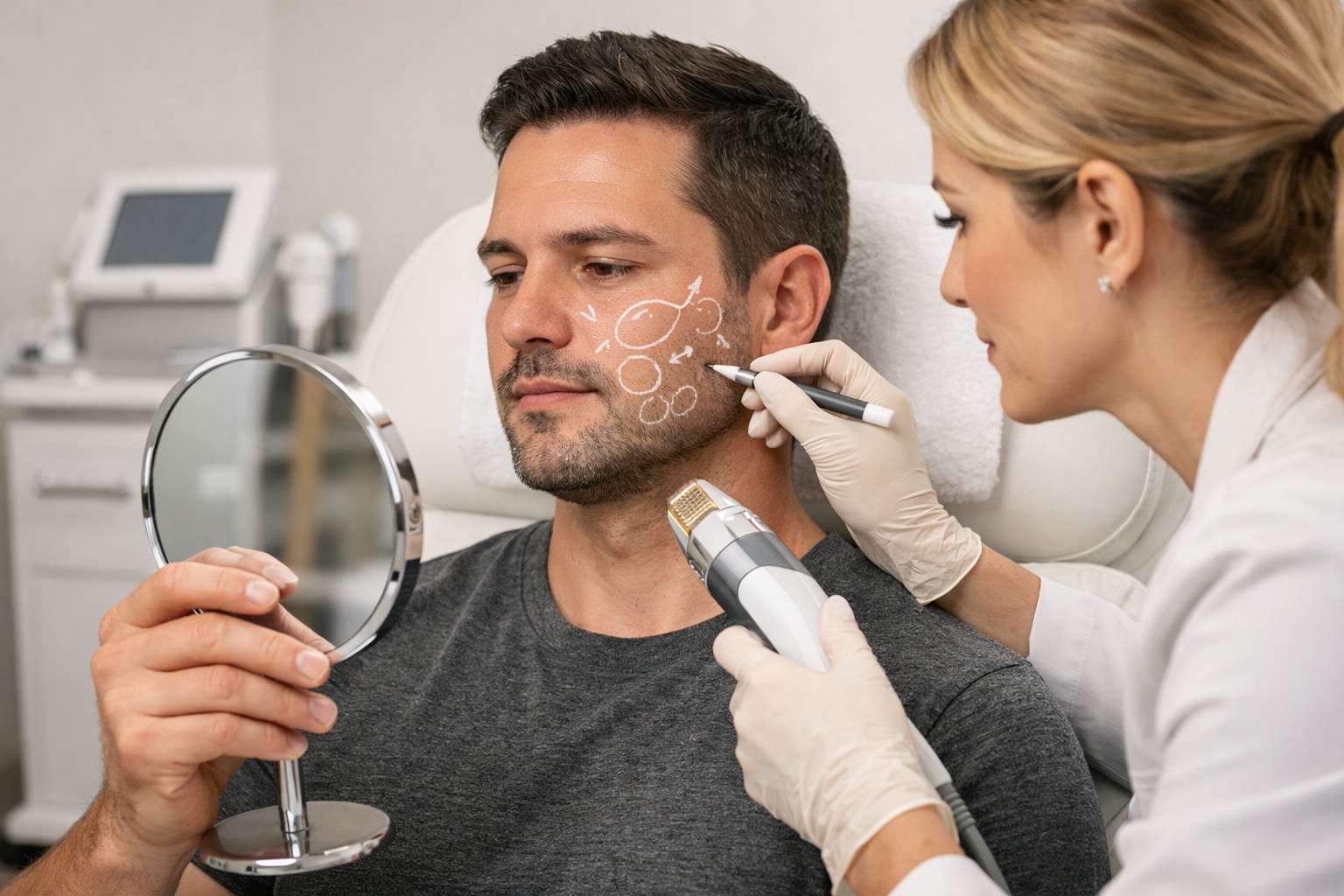
RF microneedling can be useful when acne scars, enlarged pores, and mild laxity overlap. Learn what a consultation should clarify before choosing it over microneedling, laser, or a staged skin plan.
Answer First: RF Microneedling Is a Texture Tool, Not a Magic Eraser
RF microneedling can be a strong option when acne scars, enlarged pores, rough texture, and mild skin looseness overlap. The treatment combines controlled microneedling with radiofrequency energy, which means it is designed to stimulate remodeling at more than one level of the skin.
That does not make it the automatic answer for every acne scar. Icepick scars, boxcar scars, rolling scars, active acne, pigment, and redness all behave differently. The consultation should identify the scar pattern before deciding whether RF microneedling, laser, peels, subcision, skincare, or a staged combination makes the most sense.
What RF Adds to Traditional Microneedling
Traditional microneedling creates controlled microchannels that can help stimulate repair and improve texture over time. RF microneedling adds radiofrequency heat through the device, which can be useful when the goal includes collagen remodeling and mild tightening support in addition to surface texture.
The added energy also means settings matter. Depth, heat, spacing, and number of passes should be matched to the treatment area and skin type. A one-size-fits-all approach can create unnecessary irritation or under-treat the actual scar pattern.
Which Acne Scars May Respond
Rolling scars and broader texture irregularities are often part of the RF microneedling conversation because collagen remodeling may help soften unevenness over a series. Boxcar scars may need a more customized plan, and narrow icepick scars can be stubborn enough to require different procedures or combination strategies.
A good consultation should include close visual evaluation, a discussion of how long the scars have been present, whether acne is still active, and whether pigment or redness is also a concern. Treating active inflammation first can be more important than resurfacing too soon.
Why a Series Is Usually Discussed
RF microneedling results are gradual. Collagen remodeling takes time, and acne scars rarely change dramatically after one session. Many plans involve a series spaced weeks apart, followed by reassessment before deciding whether to continue, switch tools, or focus on maintenance.
This is where expectations matter. Improvement can be meaningful, but the goal is usually softening and smoothing, not perfectly airbrushed skin. Patients who understand the timeline tend to make better decisions about budget, downtime, and whether they are comfortable committing to a series.
Recovery and Aftercare
After RF microneedling, patients may notice redness, warmth, swelling, pinpoint marks, or roughness for a few days. The exact recovery window depends on the settings and the area treated. Gentle cleansing, bland hydration, sun protection, and avoiding aggressive actives are common parts of early aftercare.
Because the skin barrier is temporarily more sensitive, post-treatment skincare should be simple. Retinoids, acids, scrubs, and heavy exfoliation usually need to wait until your provider clears them. If you are acne-prone, the plan should also consider how to avoid clogging or irritating the skin during healing.
When Another Treatment May Fit Better
RF microneedling may not be the first step if active acne is uncontrolled, pigment is the dominant issue, or scars are very deep and narrow. In those cases, the better plan may start with acne control, pigment management, chemical peels, laser resurfacing, or a more procedural scar strategy.
If you are considering RF microneedling for acne scars in Encino, ask what scar types you have, why RF is being recommended, how many sessions are realistic, and what improvement would count as a good result for your skin. That conversation is what separates a device appointment from a real treatment plan.