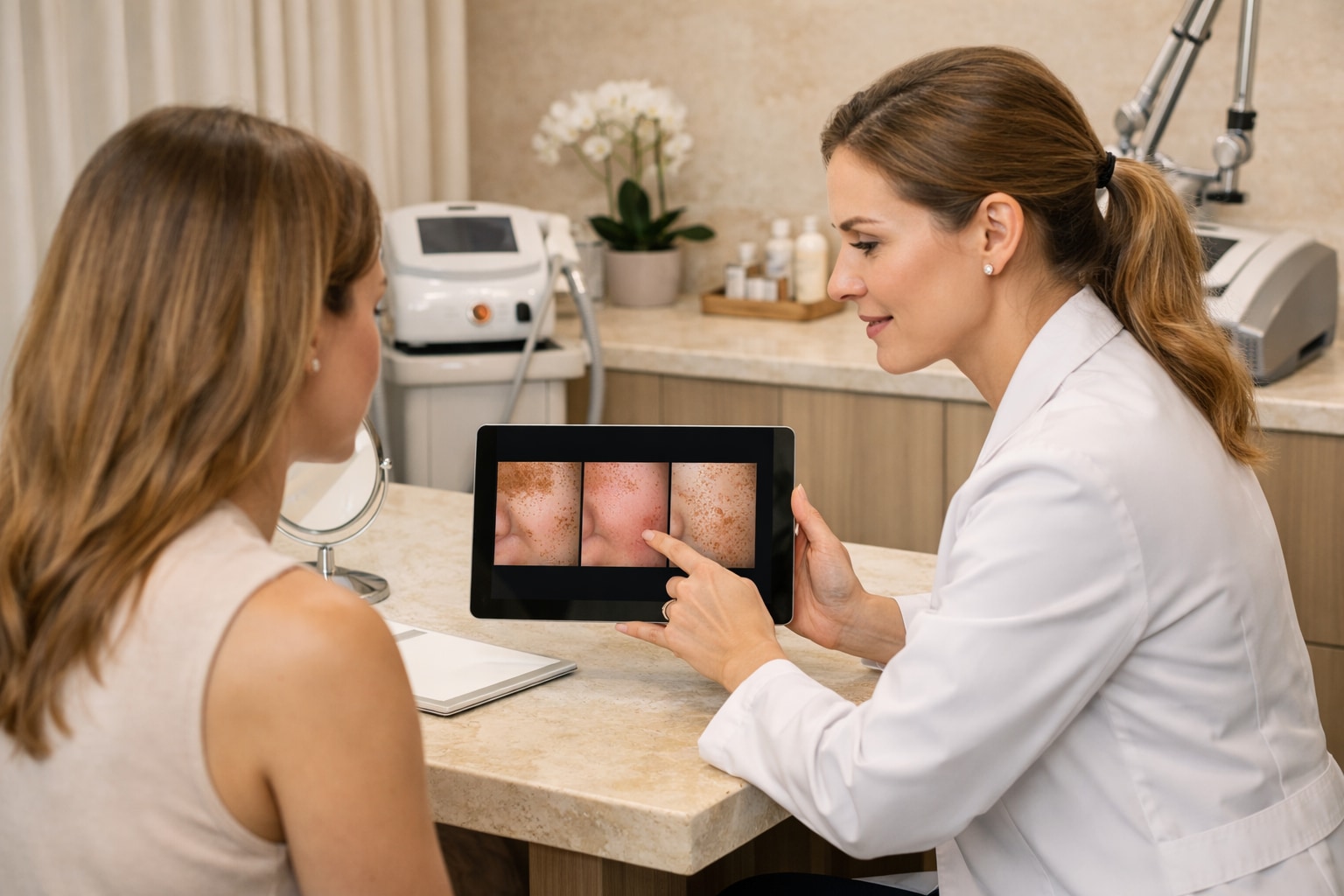
IPL and CO2 laser are often grouped together as light-based treatments, but they solve different problems. The right choice depends on whether your main concern is pigment, redness, texture, scars, or deeper resurfacing.
Answer First: Start With the Problem, Not the Device
IPL and CO2 laser both live in the world of energy-based skin treatments, but they are not different versions of the same appointment. IPL, or intense pulsed light, is often used for visible redness, brown spots, sun damage, and uneven tone. CO2 laser resurfacing is more focused on controlled skin renewal for texture, fine lines, acne scars, and more significant resurfacing goals.
The better question is not which device is stronger. It is which problem you are trying to solve, how much downtime you can accept, and whether your skin is a safe candidate right now.
When IPL May Fit Better
IPL may be a better conversation when the main concerns are sun spots, scattered brown pigment, facial redness, flushing, or visible photoaging without major surface irregularity. It can be appealing because downtime is usually lighter than ablative resurfacing, though patients still need sun protection and realistic expectations.
IPL is not a universal pigment fix. Melasma, deeper discoloration, recent tanning, and certain skin tones require extra caution. A careful provider should look at the pattern of pigment before recommending IPL because treating the wrong pigment pattern can make discoloration worse instead of better.
When CO2 Laser May Fit Better
CO2 laser may enter the conversation when the concern is texture: acne scarring, etched lines, crepey skin, roughness, or more visible sun-damaged skin quality. Because it resurfaces the skin more directly, it can create a stronger recovery process than IPL and requires more planning.
That does not mean CO2 is automatically better. It means it is a different tool. A patient with mild redness and no texture concern may not need CO2. A patient with acne scars and rough texture may be disappointed if they choose a lighter pigment-focused treatment and expect resurfacing-level change.
Downtime and Skin Tone Considerations
Downtime is one of the biggest practical differences. IPL may involve temporary darkening of pigment, mild redness, or sensitivity. CO2 can involve visible redness, swelling, peeling, and a longer aftercare window. Work schedule, events, travel, and sun exposure should all be part of the decision.
Skin tone and pigment history matter too. Patients with melasma, post-inflammatory hyperpigmentation, or a tendency to darken after irritation may need pre-treatment skincare, modified settings, or a different strategy. Good device selection is not just about what the device can do; it is about how your skin is likely to respond.
Can They Be Combined?
Sometimes patients benefit from a staged plan that addresses different concerns over time. For example, pigment and redness may be managed separately from texture. That does not mean stacking procedures into one aggressive visit. It means sequencing treatments in a way that respects the skin barrier and recovery timeline.
If a provider recommends multiple devices, ask what each one is supposed to accomplish, how far apart treatments should be spaced, and what would make the plan too aggressive. A thoughtful plan should have a reason for every step.
How to Choose at NPMD
At NPMD, the most useful consultation starts with diagnosis of the concern: pigment type, redness pattern, texture depth, acne scar type, sensitivity, and sun history. From there, the device conversation becomes much clearer.
If you are comparing IPL and CO2 laser in Encino, bring your goals, your timeline, and your tolerance for downtime. The right answer should sound specific to your skin, not like a generic menu recommendation.