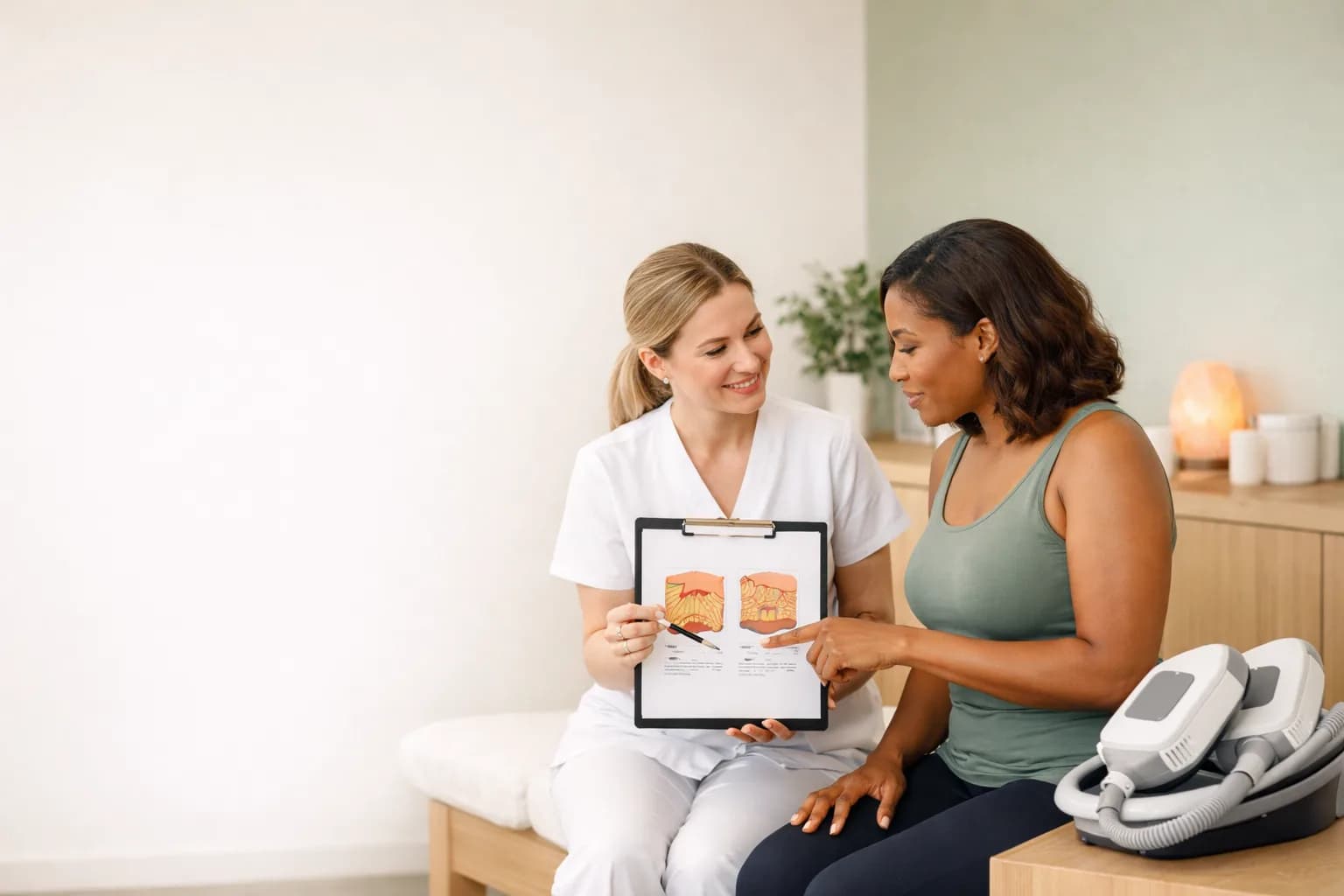
Cellulite dimples and localized fat bulges are related to different tissue structures. Learn why a device that reduces circumference may not smooth cellulite—and why neither option is weight-loss treatment.
Answer First: Dimples and Bulges Are Different Targets
Cellulite appears as dimples or uneven texture caused partly by fibrous bands that tether skin while soft tissue pushes between them. Localized fat creates a broader bulge or change in circumference. A person can have one without the other, and many people have both.
NPMD separates cellulite reduction from fat reduction because each goal requires different tissue analysis, technology, expectations, and measurement.
How Cellulite Forms
Cellulite involves relationships among skin thickness, connective-tissue septae, fat, circulation, and hormones. The tethered pattern creates depressions beside small raised areas. It is extremely common and is not proof of poor fitness or unhealthy weight.
Treatment may target the bands, temporarily shift fluid, heat tissue, stimulate collagen, or mechanically massage the area depending on the device. Results can be partial or temporary because no single mechanism explains every dimple.
How Non-Invasive Fat Reduction Works
Non-invasive fat-reduction technologies may use controlled cooling, heat, light, ultrasound, or other energy to reduce small amounts of fat in a selected area. The body clears affected cells over time, so contour change is gradual rather than visible the day of treatment.
These procedures are intended for localized bulges, not whole-body weight loss. The FDA's body-contouring guidance states that non-invasive body contouring does not treat obesity or provide the health benefits of weight loss.
Why Fat Loss May Not Smooth Cellulite
Reducing the volume beneath skin can improve a bulge yet leave tethering intact. In some cases, dimpling can remain visible or seem more noticeable when skin laxity is present. Likewise, releasing or heating cellulite structures may smooth texture without changing measurements.
Define the primary outcome before choosing a device: fewer discrete dimples, smaller circumference, a smoother silhouette through clothing, or tighter-looking skin. Each outcome should be photographed and measured differently.
Expectations should also account for the treatment area. A device evaluated for the abdomen may not have the same authorization, applicator fit, or evidence for thighs or arms. Ask the clinician to explain why the selected technology fits the exact site.
Skin Laxity Is a Third Concern
Loose or crepey skin can coexist with fat and cellulite. Removing volume without accounting for skin quality may not create the desired contour. A skin-tightening treatment targets a different layer and may need to be staged.
Age, pregnancy, weight change, genetics, sun damage, smoking, and prior procedures influence elasticity. No non-surgical treatment recreates the amount of tissue removal possible with surgery, so severe laxity may warrant a surgical consultation.
Technology-Specific Risks Matter
Body-contouring devices can cause discomfort, redness, swelling, bruising, nodules, burns, blisters, nerve symptoms, pigment changes, or scars. Fat freezing has a rare risk called paradoxical adipose hyperplasia, in which fat grows rather than shrinks and may require surgery.
Radiofrequency and magnetic devices can be unsuitable with certain implants or metal. Cold sensitivity conditions can rule out cryolipolysis. Ask for the exact device, FDA-cleared indication, treatment area, contraindications, emergency plan, and patient labeling.
Candidacy and Stable Weight
Ideal candidacy depends on the device, but these treatments generally address a defined aesthetic area in a person with realistic goals. Hernias, pregnancy, recent surgery, poor circulation, skin disease, cold disorders, implants, scars, medicines, and altered sensation may change safety.
A stable weight makes contour change easier to evaluate. Future weight gain, weight loss, pregnancy, aging, and lifestyle can change the area after treatment. Maintenance should be discussed without promising permanent resistance to normal body change.
How to Compare Results Honestly
Assess cellulite while standing and under consistent lighting because dimples can change with position and muscle contraction. Assess fat with standardized circumference, photographs, clothing fit, and clinician measurements. A posed, flexed, or differently lit image can exaggerate either result.
NPMD's body treatment overview can help separate cellulite, fat, laxity, and stretch marks. A combination plan should still assign one clear purpose to each treatment and allow recovery between modalities.
Questions to Ask at a Body-Contouring Consultation
What tissue is creating what I see?
Ask the clinician to identify dimpling, fat volume, skin laxity, muscle, and any hernia or medical issue before recommending a device.
What can this exact device change?
Request its cleared use, expected sessions, maintenance, risks, photographs, and alternatives.
Where can I begin?
Compare body contouring, review results planning, and request an assessment.