Fractional CO2 laser resurfacing in Encino for overall skin texture, acne-scar texture, fine lines, pores, sun damage, and tone improvement with physician-guided downtime and aftercare planning.
Review the service overview, visit location, questions to ask, and timing before requesting an appointment for Fractional CO2 Laser Resurfacing.
Visit location: NPMD's contact page lists its Encino clinic address. Confirm the appointment location when booking.
Questions to ask: Ask about eligibility, alternatives, possible risks, costs, preparation, and any follow-up that may apply to Fractional CO2 Laser Resurfacing.
Timing: Listed appointment timing: 60-90 min. Confirm the length when scheduling.
Fractional CO2 laser resurfacing is a higher-impact skin renewal treatment used to improve visible texture, fine lines, acne-scar texture, enlarged pores, sun damage, and uneven tone. At NPMD, the recommendation starts with skin assessment and recovery planning, not with a device-first sales pitch.
CO2 resurfacing can create meaningful change because it treats controlled microscopic zones in the skin and stimulates a structured healing response. The same strength that makes it useful also means the plan has to respect skin tone, pigment risk, downtime, aftercare, and your ability to avoid sun exposure while healing.
Best for: Texture, acne scars, fine lines, pores, sun damage
Typical visit: 60-90 min
Recovery: Several days of visible healing, with pinkness possible longer
What Fractional CO2 Laser Resurfacing Can Improve
Fractional CO2 is usually considered when the concern is more about skin quality than facial volume or laxity. It may be part of a plan for rough texture, etched lines, acne-scar irregularity, visible pores, dullness, and sun-related surface damage.
Overall skin texture that looks rough, crepey, or uneven in light
Mild to moderate acne-scar texture or pitted-looking areas
Fine lines around the mouth, cheeks, or eyes when resurfacing is appropriate
Sun damage, dullness, and uneven tone that need more than a basic facial
Large-looking pores and skin quality concerns that respond to collagen remodeling
Who Is Usually a Better Candidate
A good fit is usually someone who wants visible skin-quality improvement and can follow a real prep and recovery plan. We look at pigment history, current irritation, active acne, recent sun exposure, medication use, cold sore history, prior procedures, and the amount of downtime you can take on.
Some patients should start with a gentler treatment, staged skincare prep, pigment control, acne management, or a different device category before CO2. That is especially important when skin is recently tanned, inflamed, highly reactive, or more prone to post-inflammatory hyperpigmentation.
What the Consultation Covers
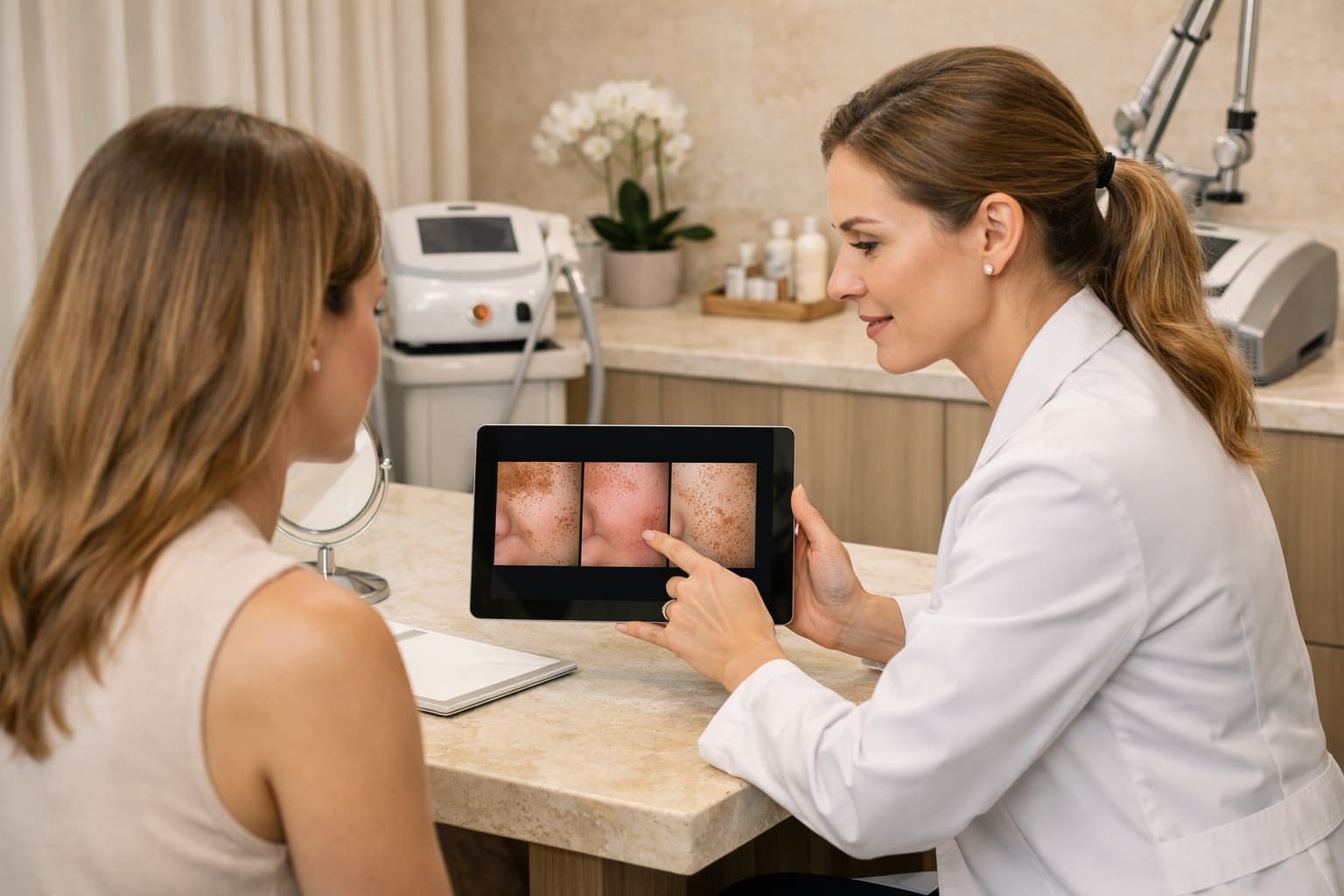
The consultation determines whether fractional CO2 should lead the plan, wait until the skin is better prepared, or be replaced with another resurfacing option. We review your goals, skin tone, scar pattern, skincare routine, recovery window, history of cold sores, and whether you are trying to improve texture, pigment, lines, or a combination.
Skin type, pigment risk, and recent sun or tanning exposure
Current prescriptions, exfoliating products, retinoids, acids, or acne treatments
Past resurfacing, lasers, peels, microneedling, or scar treatments
Comfort planning, aftercare expectations, and work or event timing
Whether one treatment, a staged series, or combination planning makes more sense
What Treatment Usually Looks Like
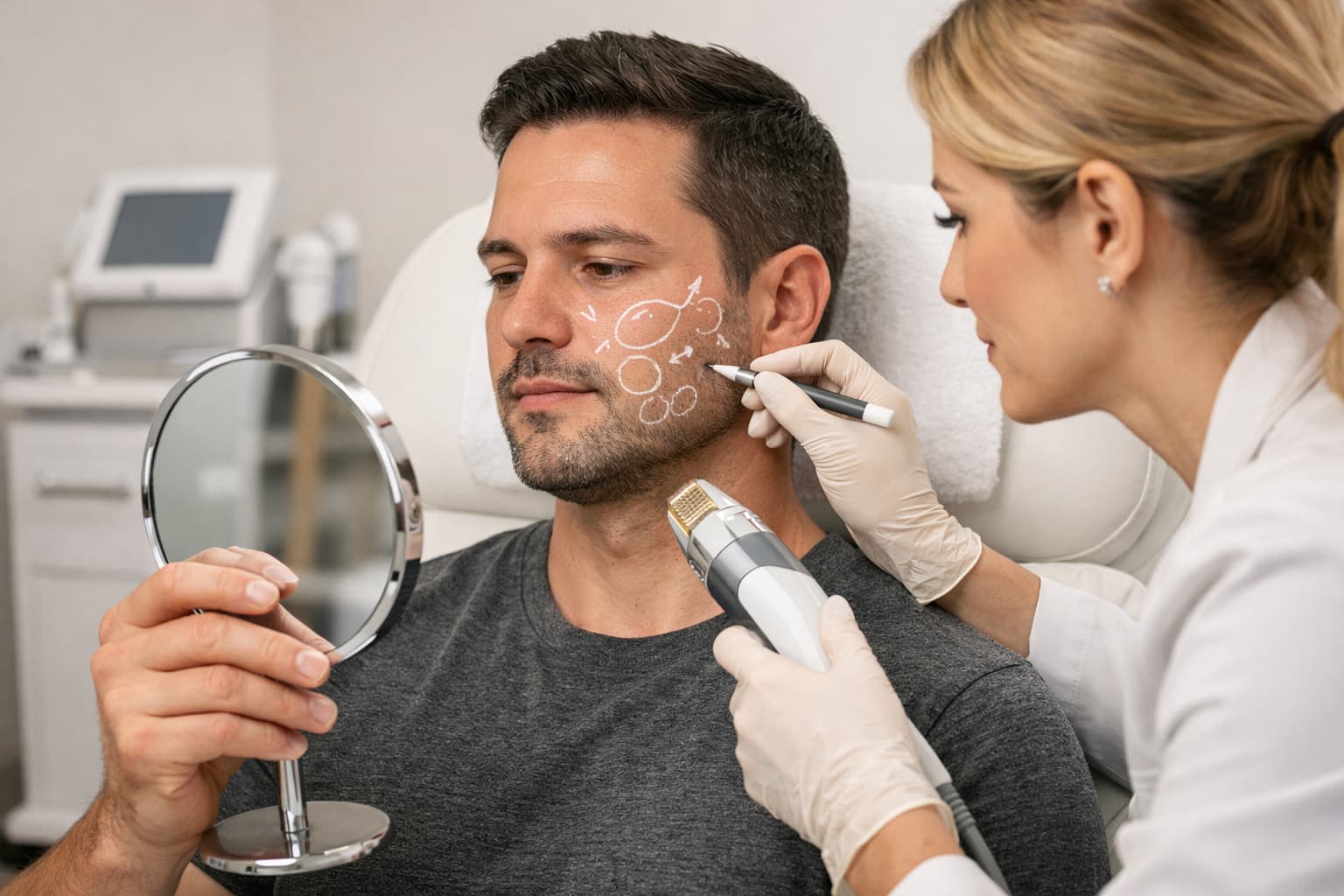
On treatment day, the skin is cleansed and prepared according to the plan reviewed in consultation. Comfort support may be used depending on treatment depth and the area treated. The device settings and treatment pattern are selected around your skin, your goals, and the amount of recovery that is appropriate.
After treatment, the skin can feel hot, swollen, tight, or sunburned. Redness, dryness, pinpoint crusting, peeling, and sensitivity are expected possibilities. The exact recovery instructions matter, because picking, scrubbing, heat, irritating products, and sun exposure can increase risk while the skin is rebuilding.
Discuss goals and expectations
Ask the clinic how the available options, candidacy, risks, limitations, and recovery may apply to your individual goals. No particular treatment result is guaranteed.
Recovery and Aftercare Planning
Recovery varies by depth, area, and skin response. Many patients need to plan around several days of visible redness, swelling, peeling, dryness, and sensitivity. Newer skin may remain pink longer, and pigment-prone skin may need additional preparation and follow-up.
We review cleansing, barrier support, product restrictions, exercise and heat restrictions, makeup timing, and sun protection. Daily sunscreen and strict avoidance of avoidable sun exposure are part of protecting the result and reducing pigment risk.
Results, Maintenance, and Combination Planning
Some improvement may be visible once early healing calms, while collagen remodeling and texture refinement can continue gradually. Depending on the starting point, one session may be appropriate, or a staged plan may be safer and more useful than trying to do everything in one visit.
If you are considering fractional CO2 laser resurfacing, the best next step is a consultation that reviews whether the treatment matches your skin, your recovery window, and your goals for texture improvement.
Share
Articles for Fractional CO2 Laser Resurfacing
Practical reading selected for this service so patients can understand timing, options, and what to expect before booking.
BeautyNPMD Editorial Team
Skin Texture, Pores, and Dullness: How to Choose a Beauty Consultation Starting Point
Texture, visible pores, dullness, and uneven glow can come from different causes. Learn how a beauty consultation can separate barrier issues, acne history, pigment, and treatment readiness before choosing a facial, peel, or device.
RF Microneedling for Acne Scars: When Texture and Tightening Goals Overlap
RF microneedling can be useful when acne scars, enlarged pores, and mild laxity overlap. Learn what a consultation should clarify before choosing it over microneedling, laser, or a staged skin plan.
IPL vs CO2 Laser: Which Treatment Fits Pigment, Redness, Texture, or Fine Lines?
IPL and CO2 laser are often grouped together as light-based treatments, but they solve different problems. The right choice depends on whether your main concern is pigment, redness, texture, scars, or deeper resurfacing.
Clear answers to the most common questions before and after your appointment.
Good candidates usually want meaningful improvement in rough texture, acne scarring, fine lines, enlarged pores, or sun-related skin damage and can plan for a real recovery window. The consultation also checks skin tone, pigment history, recent tanning, active breakouts, cold sore history, current products, medications, and whether a gentler resurfacing option would be safer first.
Downtime depends on treatment depth and the area treated. Many patients should expect redness, swelling, heat, dryness, peeling, and sensitivity for several days, with pinkness sometimes lasting longer. NPMD reviews aftercare, sun avoidance, product restrictions, and when makeup or normal skincare can safely resume before treatment begins.
Skin often looks brighter and smoother after the early healing phase, but collagen remodeling is gradual. Texture, fine lines, and scar softening can continue to evolve over the following weeks and months. Results vary based on starting skin quality, treatment depth, sun protection, aftercare, and whether a series or maintenance plan is recommended.
Possible risks include prolonged redness, swelling, itching, acne or milia during healing, infection, cold sore flare, pigment darkening or lightening, delayed healing, and rarely scarring. These risks are one reason the consultation, skin prep, recovery instructions, and strict sun protection are treated as part of the procedure, not an afterthought.
Published feedback
Reviews are temporarily unavailable. You can contact NPMD with questions about a visit.