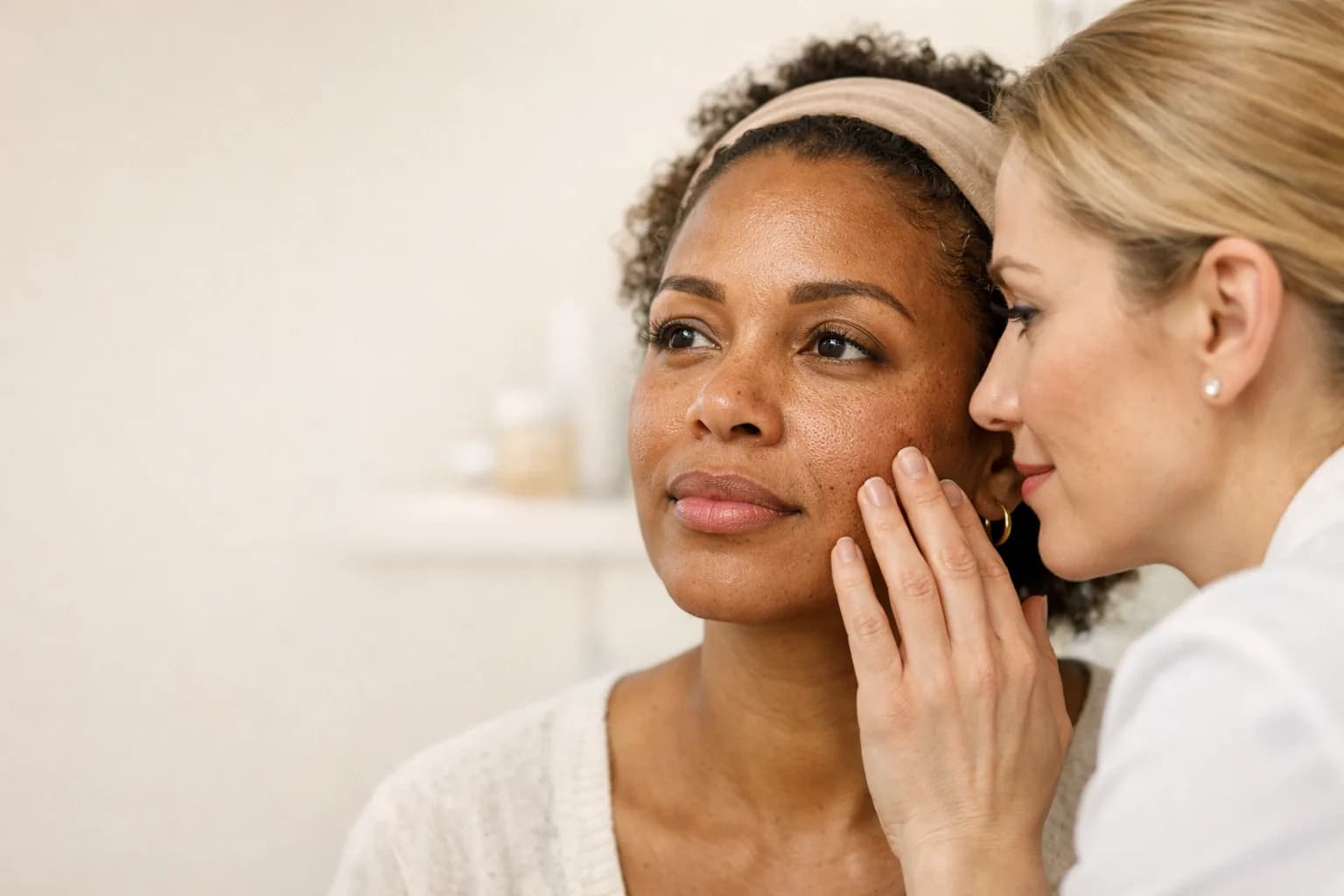
Chest sun damage can include brown spots, persistent redness, visible vessels, roughness, and precancerous changes. Learn why a skin exam comes first and how IPL, peels, resurfacing, and daily protection target different problems.
Answer First: Diagnose the Spots Before Treating the Color
Chronic ultraviolet exposure can create freckles, age spots, blotchy redness, visible small vessels, rough texture, fine lines, and uneven tone across the upper chest. It also increases skin-cancer risk. Cosmetic treatment should begin only after suspicious or uncertain lesions are identified and referred or evaluated appropriately.
NPMD's sun-damaged chest concern guide separates brown, red, vascular, and textural targets. The same device setting cannot safely and effectively treat every color and depth.
When a Spot Needs Medical Evaluation First
Do not assume every brown patch is an age spot. A lesion that changes size, shape, or color, has irregular borders, contains several colors, bleeds, crusts, does not heal, or looks different from neighboring spots warrants medical attention. Light treatment can alter appearance and complicate later tracking.
The American Academy of Dermatology notes that sun damage can lead to skin cancer and that an untrained observer may mistake cancer for an age spot. Review the AAD's sun-damaged skin guidance before pursuing purely cosmetic correction.
Brown Spots and Mottled Pigment
Selected sun spots may respond to topical brightening agents, chemical peels, IPL, or pigment-focused lasers. The diagnosis, pigment depth, natural skin tone, tanning, medicines, and history of dark marks influence the choice. Melasma-like or inflammation-related pigment can behave differently from a discrete solar lentigo.
NPMD may compare IPL phototherapy with chemical peels. A device that improves one brown spot can still trigger post-inflammatory pigment if settings and aftercare do not match the skin.
Redness and Visible Small Vessels
Persistent redness can reflect sun-related vascular change, irritation, rosacea extending onto the chest, medication effects, or another condition. IPL and selected vascular devices may reduce visible red and brown features, but not every red rash or flushing pattern is an aesthetic treatment target.
Tell the clinician about photosensitizing medicines, autoimmune conditions, recent sun, self-tanner, active rash, and prior burns. Protective eyewear and device-specific screening are required. Multiple sessions may be needed, and redness can temporarily intensify after treatment.
Rough Texture, Crepiness, and Fine Lines
Texture may lead to discussion of retinoids, microneedling, fractional laser, or resurfacing. The chest has fewer oil glands than parts of the face and can be slower or less forgiving in healing. Aggressive facial settings should not be automatically reused on the decolletage.
A CO2 laser may address selected texture concerns but involves meaningful downtime and risk of infection, scarring, prolonged redness, and pigment change. Conservative settings or another modality may be safer for some skin types.
Why One Appointment May Not Treat Every Layer
Brown pigment, red vessels, and dermal texture absorb or respond to different forms of energy. Combining modalities can be useful, but stacking them without a recovery plan increases inflammation. Staging makes it easier to judge response and adjust the next step.
For example, a clinician may first clear suspicious lesions, then address dominant pigment or redness, then reassess texture. The order depends on skin stability, season, sun exposure, medications, event timing, and tolerance for downtime.
Sun Protection Is Part of Treatment
Daily broad-spectrum SPF 30 or higher, protective clothing, shade, and avoiding tanning reduce continued injury. Apply sunscreen to the entire exposed chest rather than only visible spots. Reapply during prolonged outdoor exposure and account for sweat and clothing friction.
Without protection, new spots and redness can develop while existing damage is being treated. Recent tanning can also make light or laser procedures less safe. Sun avoidance should be planned before the appointment, not started only after the skin reacts.
Preparing for a Chest Treatment Series
Bring your skin-cancer history, prior biopsies, photos of changing lesions, medicines, supplements, topical products, history of cold sores, scars, pigment changes, and recent sun exposure. Ask which areas will be treated and which spots will be avoided or referred.
Follow instructions about retinoids, acids, self-tanner, waxing, exercise, heat, and aftercare. Do not pick darkened spots or crusts after light treatment. Use NPMD's skin concern library to compare color and texture goals before booking.
Questions to Ask About Chest Rejuvenation
Has every uncertain spot been assessed?
Ask which lesions are appropriate for cosmetic treatment and which need dermatology review first.
What is the main target?
Clarify whether the plan addresses brown pigment, red vessels, texture, or a staged combination and how progress will be photographed.
Where can I begin?
Explore med spa treatments, view planning examples, and request a skin consultation.