Cheek Filler in Encino at NPMD for subtle cheek volume, midface support, lift-like contour improvement, and natural facial balance with anatomy-led injectable planning.
Cheek Filler at NPMD is designed for patients who want subtle cheek volume, midface support, a softer contour transition, or a refreshed facial shape without looking overcorrected. In Encino, our approach is conservative and anatomy-led: cheek filler should support the whole face, not create oversized cheeks in isolation.
Best for: Subtle cheek volume, midface support, contour improvement, and natural facial balance
Typical visit: 30-45 min
Category: Treatments / Med Spa Treatments
What Cheek Filler Can Help Improve
Cheek filler is most useful when the concern is midface support, flattening, contour loss, or a transition that makes the lower face or under-eye area look more tired. The best results usually look like better structure and balance, not obvious filler.
Subtle cheek volume restoration when the midface looks flatter than before
Soft lift-like support in selected patients with mild contour descent
Improved cheek contour and a more refreshed facial shape
Softer transition between the cheek and under-eye area when anatomy allows
Better facial balance when the cheeks, jawline, and lower face are planned together
Patients who want refinement without looking overfilled or dramatically changed
Cheek Volume, Lift, and Contour Are Different Goals
Patients often ask for cheek filler because they want the face to look fresher or more lifted. In practice, cheek filler can support several different goals: replacing lost volume, improving contour, softening a hollow transition, or supporting facial balance. Those goals require different product choices, depths, and amounts.
Cheek filler can create a subtle support or lift-like effect in selected anatomy, but it is not a facelift and it should not be used to force correction when the main issue is skin laxity or heavier tissue descent. If the concern belongs more in skin tightening, laser planning, surgery, or broader facial balancing, NPMD explains that directly.
Who Usually Makes a Good Candidate
Good candidates usually want refined midface support and are comfortable with a conservative, staged approach. Many patients considering cheek filler are not asking for bigger cheeks. They want a softer tired look, improved contour, better support around the under-eye transition, or a more balanced shape in photos and profile.
Cheek filler may not be the right first step if old filler has migrated, if tissue feels heavy, if skin laxity is the dominant issue, if the medical history needs more review, or if the desired change is closer to surgery-level lifting. Consultation helps separate those situations before treatment.
What the Consultation Reviews
A careful cheek filler consultation starts with facial structure, not syringe count. NPMD reviews how cheek support relates to the under-eyes, nasolabial folds, jawline, lips, and profile so the result feels balanced.
Cheek shape, midface volume, bone support, tissue heaviness, and facial proportions
Whether the main goal is volume restoration, subtle lift support, contour, or facial balance
Under-eye hollowing, lower-face heaviness, nasolabial folds, and jawline relationship
Prior filler, neurotoxin, laser, surgery, dental work, trauma, or filler reversal history
Medication list, allergies, swelling or bruising tendency, and relevant medical history
Timing around photos, weddings, travel, dental work, workouts, and important events
What Treatment Usually Looks Like
Once the plan is confirmed, the treatment area is cleaned, comfort options are reviewed, and filler is placed in small, controlled amounts based on the agreed goal. Cheek filler may be placed to restore support, improve shape, or strengthen a contour transition depending on your anatomy.
The result can look visible right away, but early swelling and tenderness can make the first few days less representative of the final outcome. NPMD often favors measured treatment and reassessment instead of overcorrecting in one visit.
Discuss goals and expectations
Ask the clinic how the available options, candidacy, risks, limitations, and recovery may apply to your individual goals. No particular treatment result is guaranteed.
Swelling, Bruising, and Downtime Planning
Most patients return to normal routines quickly, but cheek filler can still cause temporary swelling, tenderness, bruising, firmness, small bumps, or early asymmetry while it settles. The cheeks may feel firm or tender for several days depending on the product, placement, and amount used.
NPMD reviews aftercare before treatment so expectations stay clear. Depending on your plan, this may include guidance around pressure on the treated area, heavy workouts, alcohol, heat exposure, dental work timing, facial massage, and major photos or events too soon after treatment.
Safety, Product Choice, and Filler Reversal Planning
Cheek filler is common, but it is still a medical injectable procedure. The midface has important vascular and structural anatomy, and safe treatment depends on screening, product choice, placement depth, technique, and knowing when not to treat.
If prior cheek or under-eye filler looks migrated, uneven, heavy, or overfilled, adding more product can make the concern worse. In that situation, NPMD may discuss Hylenex Filler Reversal or staged correction before new filler is considered.
Seek urgent medical evaluation after filler if you develop severe or escalating pain, skin blanching, mottling, dusky discoloration, ulceration, spreading swelling, signs of infection, or any visual symptoms. These complications are uncommon, but every filler consultation should address them clearly.
Results and Maintenance Planning
Cheek filler results are temporary and vary by product, dose, anatomy, metabolism, movement, placement depth, and maintenance pattern. Some patients need only a small amount for a more rested midface. Others benefit from staged refinement over time so facial balance stays natural.
For many patients, the most elegant cheek filler plan is the one that makes the surrounding face look better without calling attention to the cheeks themselves.
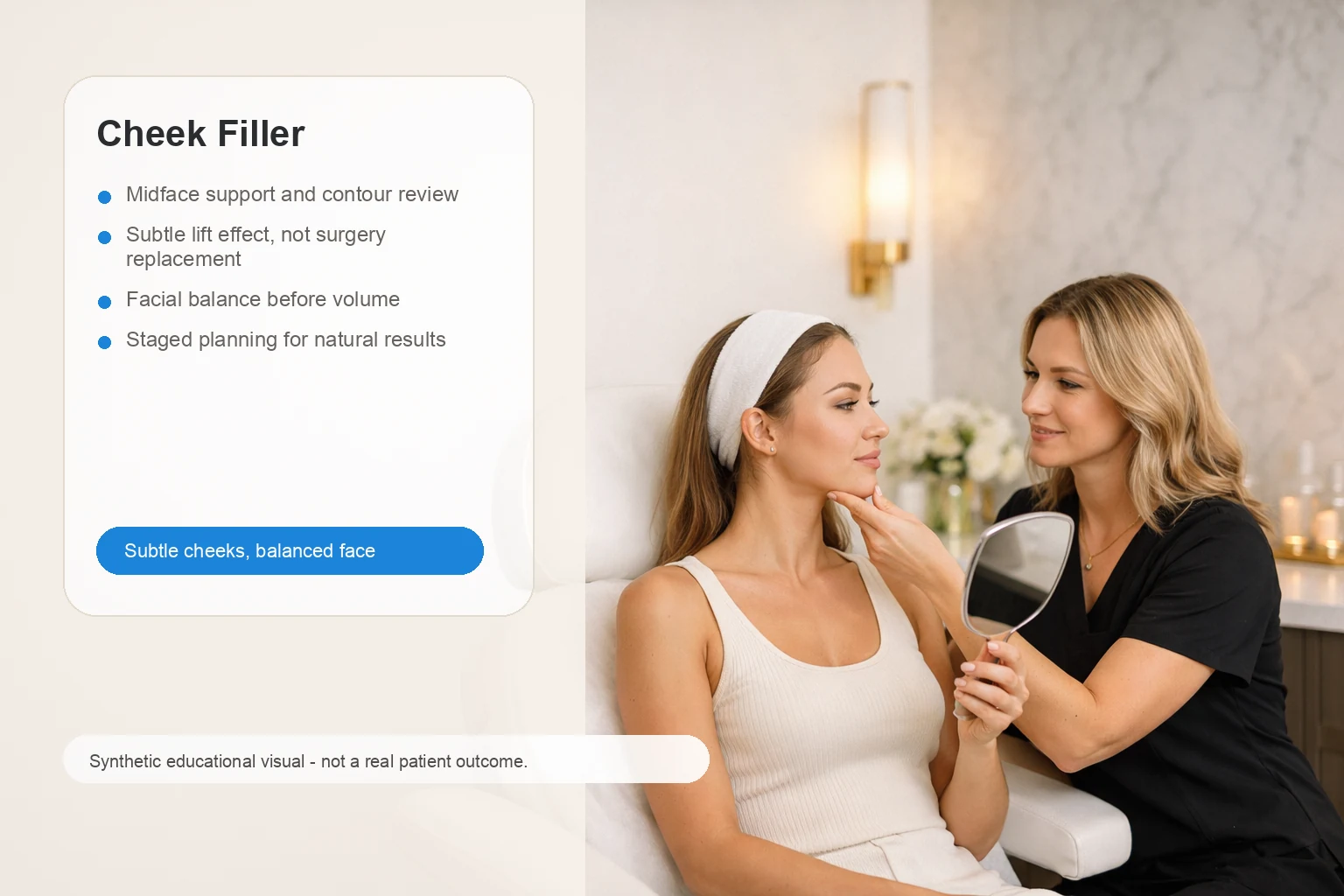
Illustrative consultation visual showing cheek filler planning, not a real patient outcome.
Book a Cheek Filler Consultation
If you are considering Cheek Filler in Encino for subtle cheek volume, lift-like support, midface contour, or refreshed facial balance, a consultation can clarify whether filler is appropriate and how to keep the result refined, safe, and natural-looking.
Share
Explore NPMD articles
Browse articles from NPMD on health, wellness, beauty, and treatment topics.
TreatmentsNPMD Clinical Team
How to Prepare for Dermal Filler If You Want a Conservative, Natural-Looking Result
A better filler appointment starts before treatment day. Learn how to plan timing, discuss prior filler and medications, and communicate subtle goals so the result stays conservative and well-paced.
PDO Thread Lift vs Dermal Filler: Laxity, Volume, and Realistic Results
Threads reposition selected tissue while filler restores or reshapes volume. Learn why mild laxity, facial deflation, skin quality, downtime, and surgical expectations should be separated before choosing.
Clear answers to the most common questions before and after your appointment.
Good candidates usually want subtle cheek volume, midface support, softer contour loss, or a more lifted-looking facial shape without surgery. Candidacy depends on anatomy, skin quality, bone structure, prior filler, medical history, medications, allergies, swelling tendency, event timing, and whether filler is truly the right category for the concern.
Cheek filler can create a subtle support or lift-like effect in selected patients by restoring midface volume and improving facial transitions. It does not replace a surgical lift and should not be used to overfill heavy or lax tissue. NPMD reviews whether the goal is volume restoration, contour support, skin tightening, or surgery-level correction.
Natural cheek filler is usually about restoring support, not building oversized cheeks. NPMD reviews facial proportions, cheek shape, under-eye transition, jawline balance, and prior filler history before choosing product amount or placement. Conservative staging can help keep the result refined.
Most patients return to normal routines quickly, but temporary swelling, tenderness, bruising, firmness, small bumps, or early asymmetry can happen while filler settles. Event timing matters, especially if you have photos, travel, dental work, or important social plans soon after treatment.
Cheek filler longevity varies by product, dose, anatomy, metabolism, facial movement, treatment depth, and maintenance pattern. Many hyaluronic acid filler results are temporary and may last several months to longer than a year, but the exact timeline is individualized and reviewed during consultation.
Possible risks include swelling, bruising, tenderness, infection, lumps, nodules, asymmetry, migration, overcorrection, poor cosmetic result, allergic reaction, delayed inflammation, vascular occlusion, skin injury or necrosis, and rare but serious vision complications. Severe pain, skin color changes, spreading blanching or mottling, or any vision symptoms after filler require urgent medical evaluation.
Published feedback
Reviews are temporarily unavailable. You can contact NPMD with questions about a visit.