Neurotoxin Wrinkle Treatment in Encino for softened forehead lines, frown lines, and crow's feet using Botox, Dysport, Xeomin, or another wrinkle relaxer plan when appropriate.
Review the service overview, visit location, questions to ask, and timing before requesting an appointment for Neurotoxin Wrinkle Treatment.
Visit location: NPMD's contact page lists its Encino clinic address. Confirm the appointment location when booking.
Questions to ask: Ask about eligibility, alternatives, possible risks, costs, preparation, and any follow-up that may apply to Neurotoxin Wrinkle Treatment.
Timing: Listed appointment timing: 20-30 min. Confirm the length when scheduling.
Botox, Dysport, Xeomin, and related wrinkle relaxers temporarily soften selected muscle activity that contributes to dynamic expression lines, including forehead lines, frown lines between the brows, and crow's feet.
Brand-specific pages such as Dysport and Xeomin remain available for patients comparing individual products.
Best for: Forehead lines, frown lines, crow's feet, expression-line softening
Typical visit: 20-30 min
Category: Treatments / Med Spa Treatments
What Neurotoxin Wrinkle Treatment Can Help Improve
Neurotoxin treatment is best suited for wrinkles that are driven by repeated facial movement. The goal is not to erase expression or freeze the face. The goal is to soften overactive movement patterns so the face looks more rested while still matching your natural expression.
Forehead lines caused by repeated brow lifting
Frown lines, sometimes called 11 lines, between the eyebrows
Crow's feet around the outer eye area
Early expression lines where a conservative plan may help slow deepening
Patients who want refreshed upper-face softening without adding facial volume
Botox, Dysport, Xeomin, and Product Selection
Botox, Dysport, and Xeomin are all neuromodulator products, but they are not interchangeable unit-for-unit and should not be treated as generic copies. Product choice can depend on your anatomy, prior response, timing goals, dosing strategy, and how much movement you want to keep.
Some patients are best served by this broader neurotoxin consultation. Others may want to compare dedicated options such as Dysport, Xeomin, or a more conservative Baby Botox approach. NPMD reviews these choices in plain language before treatment.
What the Consultation Reviews
A good neurotoxin consultation starts with facial movement, not a syringe. The provider should understand which lines bother you, whether they appear at rest or only during expression, and how much movement you want to preserve.
Forehead, brow, glabella, and eye-area movement patterns
Prior Botox, Dysport, Xeomin, filler, laser, or skin treatment history
Medication list, allergies, pregnancy or breastfeeding status, and medical history
History of neuromuscular disease, trouble swallowing, breathing issues, facial weakness, or eye symptoms
Whether the concern is dynamic muscle movement, volume loss, skin laxity, or etched texture
What Treatment Usually Looks Like
Treatment is usually quick. The skin is cleaned, facial movement is assessed, and small injections are placed into selected muscles according to the plan. The dose and placement are adjusted around anatomy, desired movement, asymmetry, and whether the goal is strong correction or subtle softening.
Results are not instant. Many patients notice softening over several days, with the more settled result appearing later. First-time patients should avoid same-week treatment before major photos, weddings, travel, or important events because timing and individual response can vary.
Discuss goals and expectations
Ask the clinic how the available options, candidacy, risks, limitations, and recovery may apply to your individual goals. No particular treatment result is guaranteed.
Recovery, Aftercare, and Timing
Most patients return to normal routines quickly. Temporary redness, swelling, pinpoint marks, tenderness, bruising, or headache can happen. NPMD reviews aftercare and timing, including when to avoid rubbing treated areas, intense heat, heavy workouts, or facial pressure depending on the plan.
Neurotoxin results are temporary. Movement gradually returns, and maintenance timing depends on the product, dose, muscle strength, area treated, and individual metabolism. A conservative approach can help keep results natural and reduce the chance of heaviness or a frozen look.
NPMD may recommend starting with a measured first treatment, then reassessing once the result settles. This is especially useful for patients new to Botox, Dysport, Xeomin, or any neurotoxin wrinkle treatment.
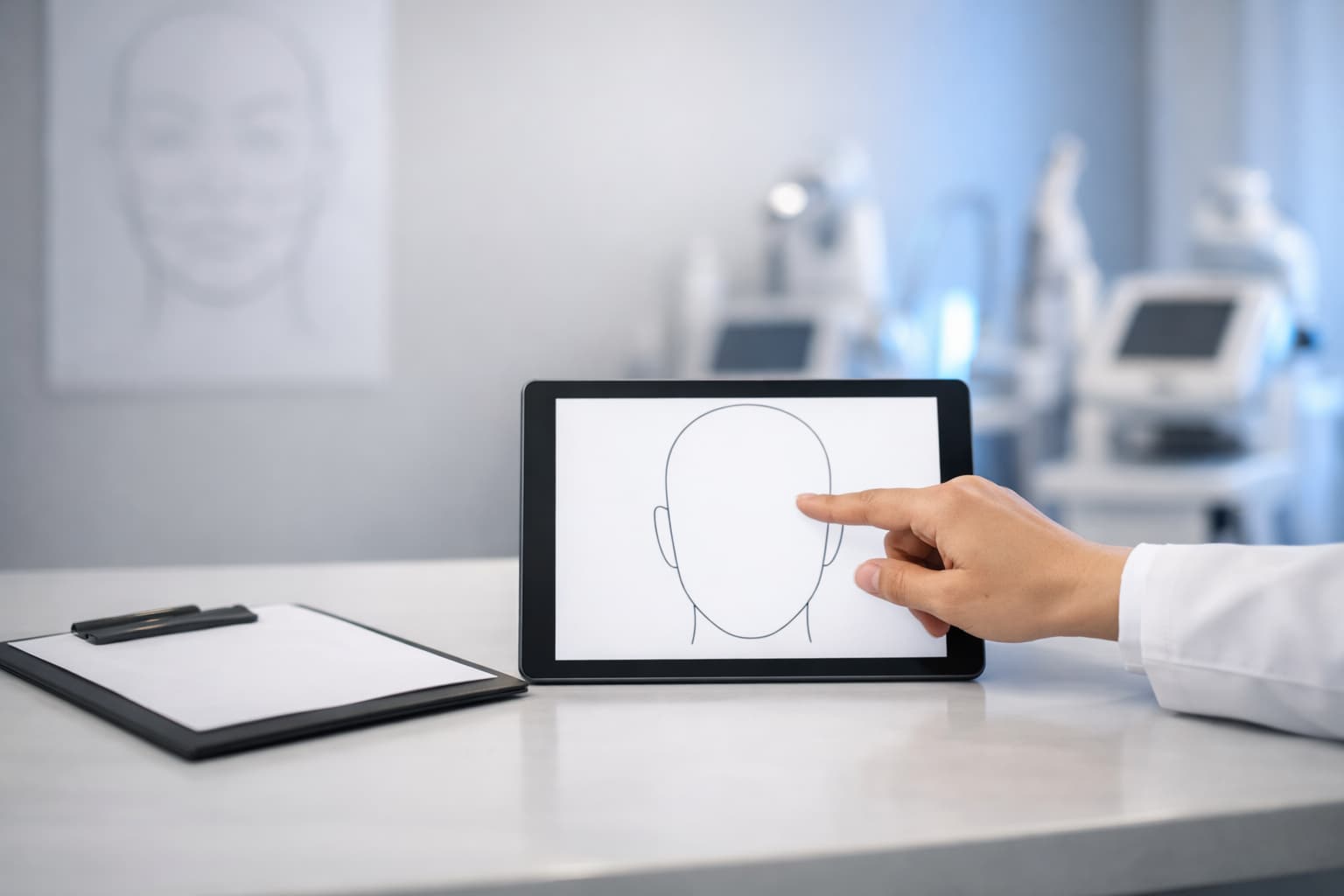
Illustrative consultation visual showing neurotoxin treatment planning, not a real patient outcome.
Book a Neurotoxin Wrinkle Treatment Consultation
If you are considering Botox, Dysport, Xeomin, or another wrinkle relaxer for forehead lines, frown lines, crow's feet, or early expression lines, a consultation can clarify product choice, dosing strategy, timing, and whether neurotoxin treatment is the right first step.
Practical reading selected for this service so patients can understand timing, options, and what to expect before booking.
TreatmentsNPMD Clinical Team
Botox for Forehead Lines, Frown Lines, and Crow's Feet: Why Each Area Needs a Different Plan
Forehead lines, frown lines, and crow's feet can all involve facial movement, but they should not be treated with the same map. Learn why careful Botox planning starts with expression patterns, anatomy, and realistic goals.
Expression Lines vs Skin Lines: Why Botox, Fillers, and Resurfacing Solve Different Problems
Not every line is treated the same way. Learn how expression lines, etched skin lines, volume changes, and texture concerns guide decisions between neurotoxins, fillers, resurfacing, and combination treatment plans.
Baby Botox vs Traditional Botox: How to Choose a Subtle First Treatment
Baby Botox is not a different medication. It is a lighter treatment style. Learn when a conservative neurotoxin plan makes sense, when it may be too subtle, and what to ask before treatment.
Clear answers to the most common questions before and after your appointment.
Good candidates usually want to soften muscle-driven expression lines such as forehead lines, frown lines, or crow's feet while preserving natural movement. Consultation is important if you are pregnant or breastfeeding, have a neuromuscular disorder, have a history of trouble swallowing or breathing, have an active infection near the treatment area, or have had a prior reaction to a botulinum toxin product.
Botox, Dysport, and Xeomin are all botulinum toxin wrinkle relaxers, but they are not identical products and are not dosed one-to-one. The best choice depends on the treatment area, your prior response, desired movement, timing, and provider assessment. NPMD reviews product selection during consultation rather than treating every patient with the same formula.
Common cosmetic areas include forehead lines, frown lines between the brows, and crow's feet. Some patients also ask about other advanced or off-label uses, but those require separate candidacy review. Neurotoxins soften muscle movement; they do not replace filler, resurfacing, surgery, or skincare when the main issue is volume loss, skin laxity, or etched texture.
Results are gradual. Some softening may start within several days, but the more settled result usually takes longer. Timing varies by product, dose, area, and individual response. First-time patients should avoid booking treatment too close to an important event because the result needs time to settle.
Results are temporary. Many patients notice movement gradually returning over several months, but duration varies by product, dose, muscle strength, metabolism, treatment area, and maintenance pattern. NPMD plans maintenance conservatively so results look refreshed rather than overtreated.
Possible risks include bruising, swelling, tenderness, headache, asymmetry, eyelid or brow heaviness, dry eye, unwanted muscle weakness, allergic reaction, and rare spread-of-toxin symptoms such as trouble swallowing, speaking, or breathing. These risks are why dosing, placement, medical history, and follow-up planning matter.
Published feedback
Reviews are temporarily unavailable. You can contact NPMD with questions about a visit.