Red light in a recovery lounge and medical LED treatment can use related technology but serve different goals. Learn how wavelength, device indication, screening, treatment setting, and expectations change the plan.
Answer First: The Same Color of Light Can Serve Different Goals
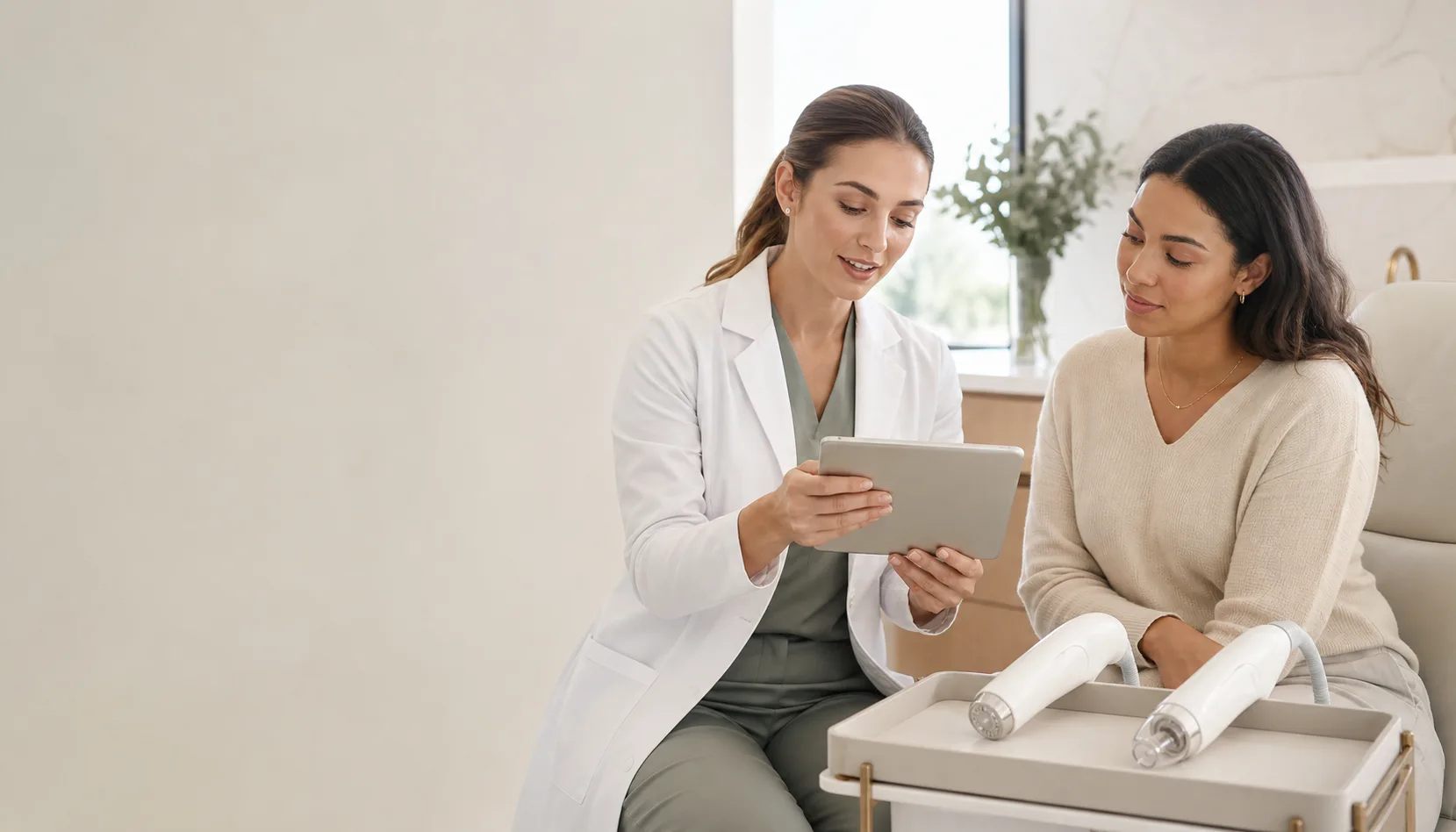
Red light therapy and LED light therapy are often used as interchangeable terms, but the treatment setting matters. A recovery-lounge experience may use red or near-infrared light for comfort and a calm wellness session. A medical or aesthetic LED protocol may select specific wavelengths and dosing for a defined skin goal such as inflammatory acne support or the appearance of fine lines.
NPMD deliberately separates red light therapy in the Spa & Recovery lounge from LED Light Therapy under Treatments. That distinction helps patients choose by goal and avoids treating every illuminated panel as the same procedure.
Red Light, Near-Infrared Light, and Blue Light
Red light is visible, while near-infrared wavelengths sit just beyond visible red. Both may be used in photobiomodulation devices. Blue visible light is used in some acne-focused devices. The biological effect depends on wavelength, irradiance, total dose, treatment time, distance, and tissue target—not color alone.
A device that looks bright is not necessarily stronger, better, or appropriate for a particular concern. Ask for the device's intended use and protocol. Home masks, spa panels, and clinical equipment can deliver very different doses even when they all glow red.
Recovery Lounge Use vs Corrective Skin Treatment
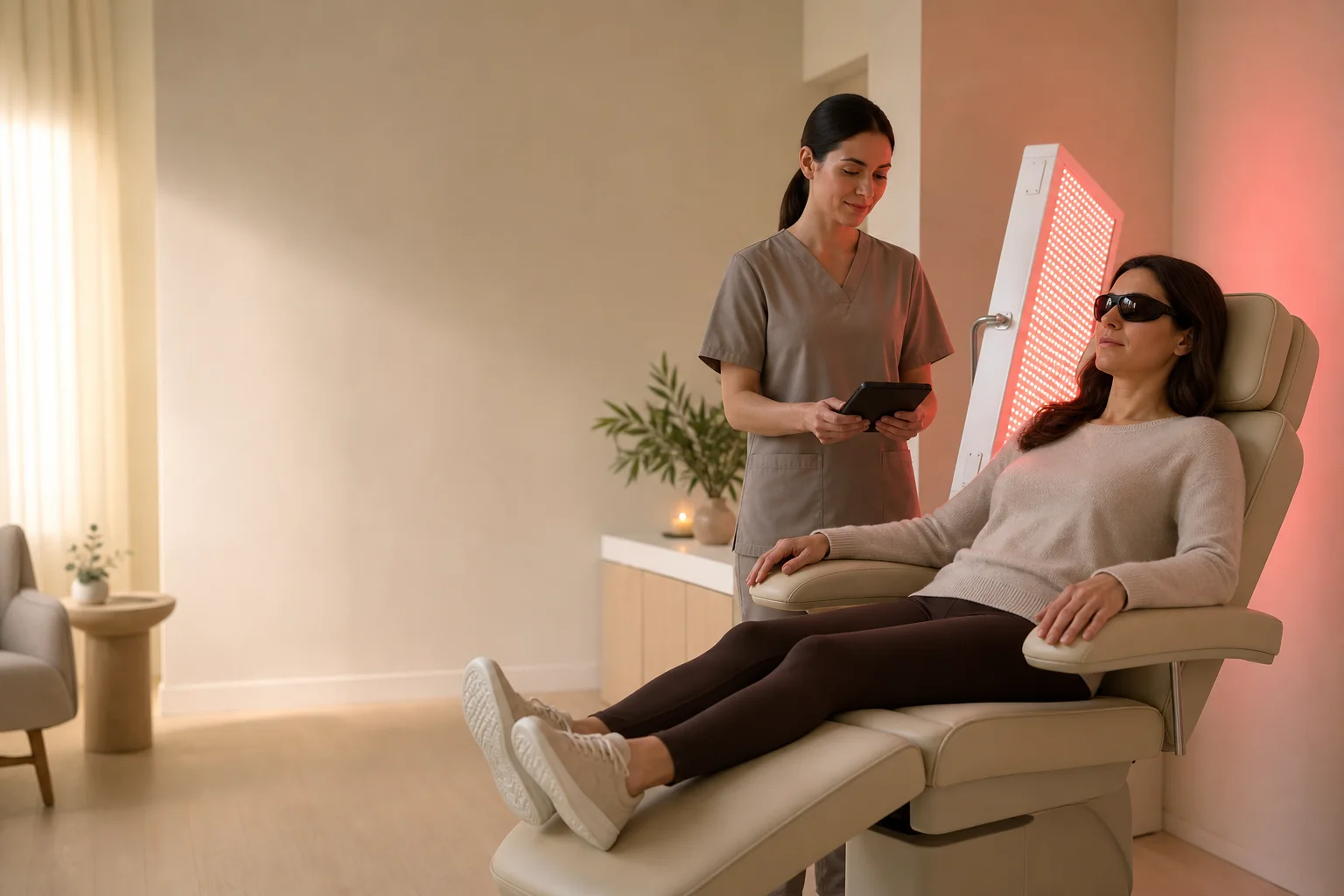
A spa-facing session can be a low-effort recovery amenity paired with quiet time, sauna planning, or another comfort-focused service when appropriate. Its promise should remain modest: a calm experience without claiming to diagnose disease, heal injuries, accelerate every recovery, or replace medical treatment.
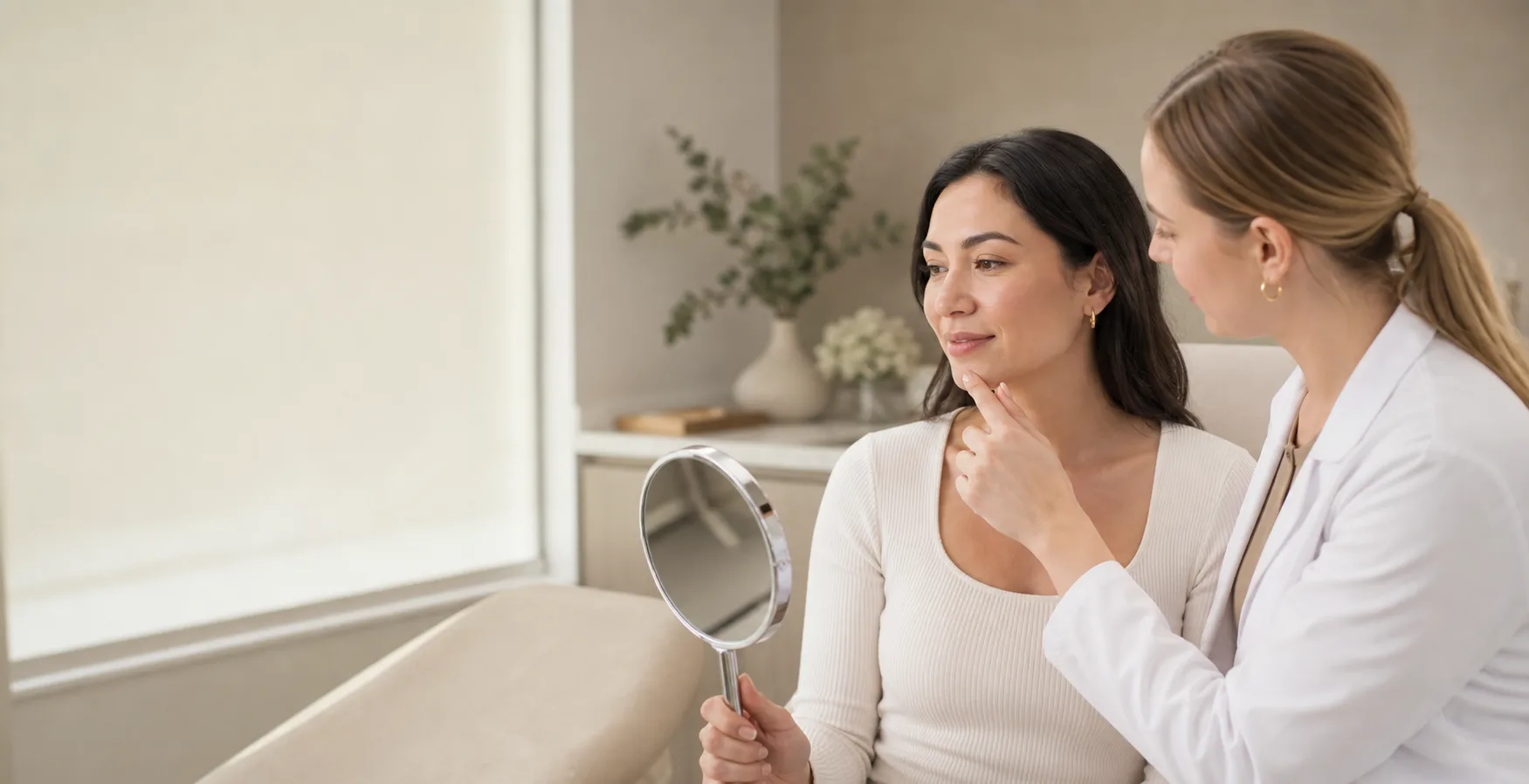
Corrective LED planning starts with a defined concern and skin history. Red, blue, or combined wavelengths may be considered as supportive treatment for selected acne, redness, or skin-quality goals. The clinician should explain why LED is being chosen, whether another therapy is more direct, and how many sessions are reasonable before reassessment.
What Evidence Can and Cannot Promise
The American Academy of Dermatology describes red light as a complementary therapy rather than a universal replacement for standard care. Its red light therapy safety guidance also notes that “FDA cleared” describes a device's regulatory pathway and risk assessment, not proof that every claim made for the device is effective.
Expect gradual, variable change. A series may support a calmer appearance or a skin plan, but it should not promise to erase deep wrinkles, cure cystic acne, remove vessels, rebuild significant laxity, treat cancer, or solve systemic fatigue. Define one measurable goal before committing to a schedule.
Who Needs Screening Before Light Exposure
Tell the clinician about lupus or other photosensitivity disorders, seizure history triggered by light, eye disease, active skin cancer or a suspicious lesion, pregnancy, implanted devices, active infection, and recent procedures. Review prescriptions and supplements that may increase light sensitivity. Do not assume an over-the-counter device or spa setting removes these concerns.
Skin tone matters as well. Visible light can contribute to pigmentation in susceptible skin, particularly when the barrier is irritated or an inappropriate dose is used. If persistent redness or pigment is the main concern, a focused rosacea evaluation or pigment plan may be more useful than adding light without a diagnosis.
Eye Protection and Device Instructions Matter
Do not improvise exposure time or stare into a panel because the light feels gentle. Use the eye protection specified for the device and treatment. Eye safety requirements can differ by wavelength, power, distance, and whether photosensitizing products are involved.
Follow instructions for clean skin, treatment distance, session length, and frequency. More time is not automatically better. Stop and report significant eye discomfort, headache, rash, blistering, persistent pain, or a new pigment change.
Red Light Is Not UV Light, IPL, or Laser Resurfacing
Red and near-infrared photobiomodulation is not ultraviolet tanning. It also differs from IPL phototherapy, which uses broad-spectrum pulses to target certain pigment and vascular concerns, and from resurfacing lasers that create controlled thermal injury to remodel skin. These treatments have different risk, downtime, and candidacy profiles.
If a recommendation uses the words laser, IPL, LED, red light, and photodynamic therapy as if they mean the same thing, pause and ask for clarification. The exact technology and treatment goal should be named before consent.
How Light Therapy May Fit Acne and Redness Plans
Visible blue and red light can reduce some inflammatory pimples, but the AAD notes that light treatment rarely clears acne by itself and does not address every lesion type. Blackheads, whiteheads, cysts, and nodules may need topical, oral, procedural, or combination care.
For active breakouts, compare LED with an acne clarifying facial and medical acne evaluation. For visible vessels or persistent redness, IPL or rosacea care may be a better lead treatment. LED can be supportive without being asked to solve a problem it does not directly target.
What to Expect During a Session
A session usually starts with screening, clean skin or appropriate clothing, eye protection, and positioning at the prescribed distance. The experience is generally quiet and non-invasive. Some devices create gentle warmth, while low-level light itself is not intended to heat tissue substantially.
Afterward, most people return to routine quickly. Temporary warmth, mild redness, dryness, irritation, or headache can occur. If LED is combined with a peel, microneedling, laser, or another procedure, aftercare and downtime are governed by the more intensive treatment.
Choosing the Right NPMD Starting Point
Choose Spa & Recovery when:
Your goal is a calm recovery-lounge experience and you understand that the session is not a corrective medical treatment.
Choose Treatments when:
You want a defined LED protocol for acne-prone skin, redness support, or another skin-quality goal that needs clinical screening and measurement.
What should I ask?
Ask which wavelength and device are used, what the intended goal is, how progress will be judged, and which contraindications apply. When ready, request an NPMD appointment and name the concern rather than booking by device alone.