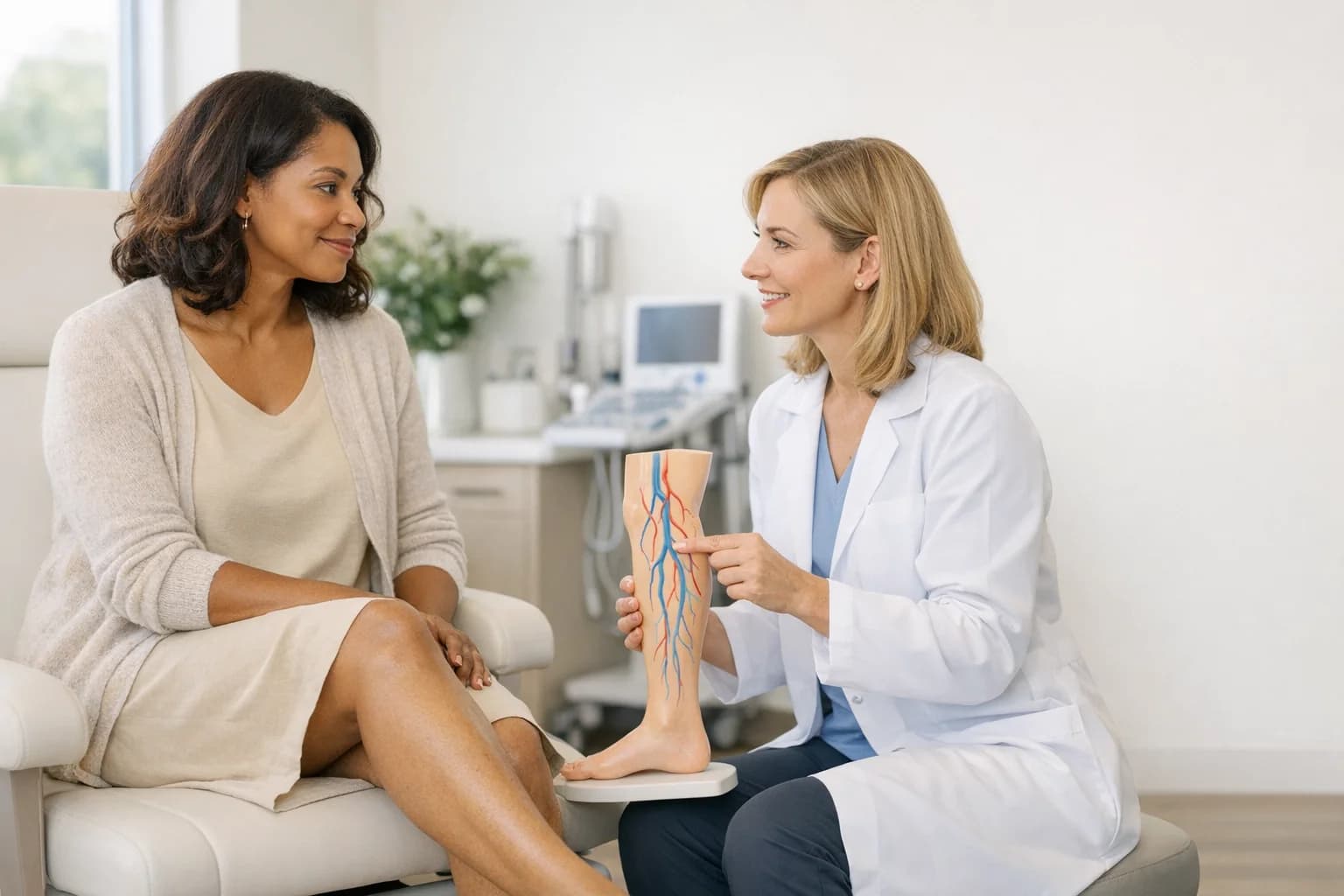
Spider veins and varicose veins can look related, but pain, swelling, skin changes, and clot warning signs change the conversation. Learn when sclerotherapy may fit and when medical evaluation should come first.
Answer First: Not Every Visible Leg Vein Has the Same Meaning
Spider veins are usually small red, blue, or purple vessels near the skin surface. Varicose veins are larger, often raised or rope-like vessels that may ache, throb, itch, or feel heavy. Both can be cosmetic concerns, but symptoms and circulation history determine whether treatment should begin with an aesthetic consultation or a medical vascular evaluation.
NPMD offers sclerotherapy in Encino for selected candidates. An examination is important because a photograph cannot show blood flow, tenderness, temperature, swelling, or deeper venous problems.
How Spider Veins and Varicose Veins Differ
Spider veins form fine branching or web-like patterns and usually lie flat. Varicose veins are wider, may bulge, and can become more prominent while standing. Reticular veins sit between these categories and may feed a visible cluster. The name a patient uses is less important than what the clinician sees and feels.
Genetics, pregnancy, hormonal changes, age, prolonged standing, prior clots, injury, weight changes, and venous valve function can influence visible veins. Having one risk factor does not predict severity, and a cosmetic-looking vessel can coexist with symptoms that deserve medical review.
Symptoms That Change the Priority
Leg heaviness, aching, cramping, itching, burning, restless sensations, ankle swelling, skin discoloration, or a sore near the ankle may suggest more than a surface color concern. Explain when symptoms occur, whether elevation helps, and whether one leg differs from the other.
Sudden one-sided swelling, warmth, redness, significant calf pain, chest pain, coughing blood, or unexplained shortness of breath requires urgent medical assessment because a blood clot must be considered. Do not massage a suddenly painful swollen leg or wait for a cosmetic appointment.
What a Consultation Should Review
The clinician should review pregnancy status, clot history, bleeding disorders, medications, allergies, prior vein procedures, mobility, compression use, skin infections, healing problems, and occupational standing. The examination may compare both legs while sitting and standing and assess vessel size, pattern, tenderness, swelling, pulses, and skin changes.
Some patients need ultrasound or vascular referral before treatment. That does not mean something serious has been found; it means surface treatment should not proceed until deeper circulation questions are answered.
When Sclerotherapy May Fit
Sclerotherapy involves placing a prescribed solution into a selected vein so the vessel closes and gradually becomes less visible. It may be considered for certain spider veins and small varicose or reticular veins. Product choice, concentration, technique, and session size depend on vessel characteristics and medical history.
The goal is improvement, not perfectly vein-free skin. Some vessels respond incompletely, several sessions may be needed, and new veins may appear over time. Ask which visible clusters are realistic targets and which should be left alone or evaluated differently.
When Another Pathway May Be Better
Large symptomatic varicose veins, significant swelling, skin ulcers, recurrent inflammation, suspected reflux, pregnancy, active infection, or certain medical risks may require delay, ultrasound, vascular care, compression planning, or another procedure. Treating tiny branches without addressing a feeding vein can limit results.
A responsible consultation may recommend no injection. Observation is reasonable when vessels are harmless and not bothersome. Referral is appropriate when symptoms or anatomy exceed the setting's scope.
How to Prepare
Provide an accurate medication and supplement list, including hormones, anticoagulants, anti-inflammatory drugs, and prior vein treatments. Do not stop prescribed medication unless the prescribing clinician approves. Ask whether lotion, shaving, tanning, or compression garments should be avoided or planned on treatment day.
Wear loose clothing and bring any recommended compression garment. Arrange the appointment away from intense sun exposure, long travel, and major events if bruising would be difficult. Hydration is reasonable, but special detoxes do not prepare a vein for treatment.
What Treatment and Recovery Can Feel Like
Patients may feel small needle sticks, brief stinging, pressure, or cramping. Afterward, temporary redness, bruising, tenderness, firmness, or darker vessel color can occur. Walking may be encouraged, while heavy exercise, heat, sun, or long immobility may be limited for a period based on the plan.
Follow the written compression and activity instructions provided for your case. Call the clinic for worsening pain, marked swelling, skin breakdown, unusual color change, or symptoms that do not match the expected recovery guidance.
Results Need Time and Consistent Photography
Treated vessels do not disappear instantly. They often look darker before gradually fading over weeks or months. Standardized photographs in the same lighting are more useful than daily inspection. Residual staining, matting of tiny vessels, or incomplete closure can occur.
Schedule follow-up before adding more treatment. The provider should assess healing and determine whether the remaining vessel is untreated, still resolving, or better managed with another approach. Chasing every tiny vessel too quickly can increase irritation.
Compression, Travel, and Long Periods of Sitting
Compression instructions vary with vessel size, treatment technique, circulation, skin sensitivity, and clinician preference. Ask which strength and length are appropriate, how many hours to wear the garment, and how to check that it is not rolling, pinching, or causing numbness. A garment that fits poorly can create a new pressure problem.
Long flights or car trips combine immobility with limited access to follow-up. Tell the clinician about upcoming travel before scheduling. Walking breaks, hydration, and ankle movement may be advised, but personal clot risk and recent treatment determine the safest timing.
Skin Tone, Staining, and Scar History
Post-inflammatory darkening can be more noticeable or persistent in some skin tones, and sun exposure may deepen contrast while treated vessels resolve. Discuss pigment history, tendency to form raised scars, prior laser reactions, and any lingering staining from earlier injections.
Photography should represent your natural skin tone accurately and aftercare should include practical sun protection. A provider should explain that fading is gradual and that temporary discoloration can last longer than bruising, especially around larger or clustered vessels.
Support Leg Health Beyond the Procedure
Regular movement, breaks from prolonged sitting or standing, weight management when appropriate, and prescribed compression can support comfort, but they cannot guarantee that visible veins will not form. Pregnancy and genetics remain important influences.
To compare options, review NPMD's broader body treatments and use NPMD appointments for an individualized consultation. Seek urgent care instead for sudden swelling, severe pain, chest symptoms, or breathing difficulty.