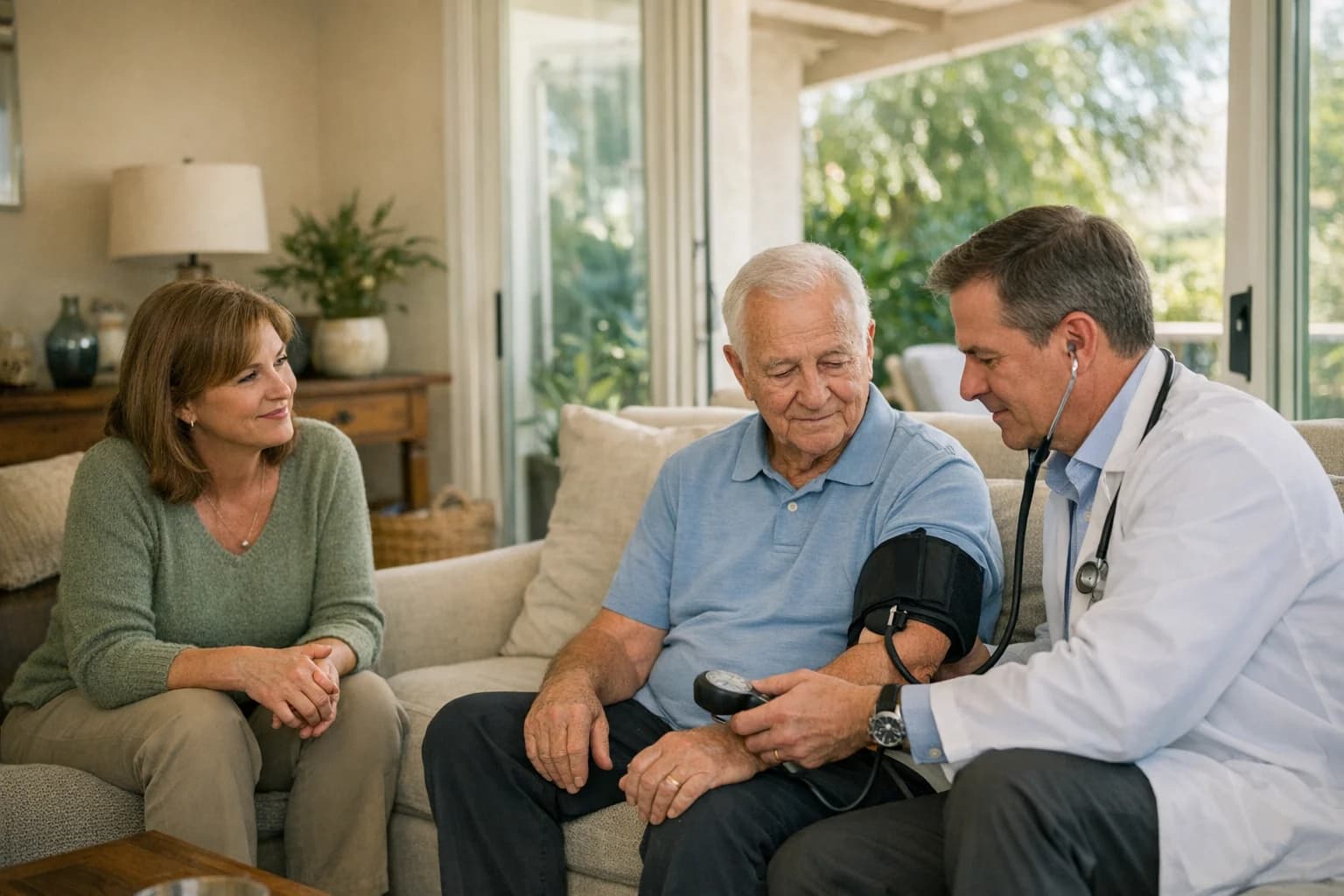
A home medical visit can be convenient, but it is not the right setting for every symptom. Compare concierge home care, urgent care, office visits, telehealth, and emergency care so you can choose a safer starting point.
Answer First: Choose the Setting by Risk and Required Resources
A concierge home visit can remove transportation and mobility barriers, but convenience should not override safety. Emergency symptoms need emergency services. Stable concerns may fit home, office, telehealth, or urgent care depending on how quickly evaluation is needed and whether imaging, procedures, laboratory work, or observation may be required.
NPMD offers concierge home visits within its service model. This guide helps frame the decision, but if you are unsure whether symptoms are emergent, call emergency services or seek immediate medical guidance.
When a Home Visit Can Make Sense
Home care may be useful for patients with mobility limitations, frailty, transportation barriers, recent discharge, caregiver needs, or difficulty reaching an office. It can also support selected medication reviews, stable symptom assessments, wound checks, vital signs, and care-plan coordination when the needed resources can safely travel to the patient.
The home environment adds useful context. A clinician may see medication organization, fall hazards, food access, mobility challenges, caregiver strain, or equipment problems that do not appear in a standard exam room. That context can improve the follow-up plan.
When an Office Visit Is Usually Better
An office visit may be preferable when the concern is stable but likely to require specialized equipment, a procedure, a focused examination setup, or access to a broader clinical team. It is also a strong fit for preventive care and chronic-condition planning that benefits from records and longitudinal follow-up.
For a new but non-emergency illness, NPMD's sick-visit service may be an appropriate starting point. Ask whether the expected examination can be completed at home before deciding.
When Urgent Care Fits
Urgent care is designed for problems that need same-day attention but do not appear immediately life-threatening. Examples may include some minor injuries, uncomplicated infections, worsening but stable symptoms, or conditions that may need on-site testing. Capabilities differ by facility, so access to imaging, laboratory testing, or procedures is not universal.
If a problem may need hospital-level imaging, specialist intervention, or extended monitoring, urgent care may redirect you. Choosing urgent care is not a failure; it is often the correct middle option between a routine appointment and an emergency department.
Emergency Warning Signs
Call emergency services for severe chest pain, major breathing difficulty, signs of stroke, uncontrolled bleeding, severe allergic reaction, loss of consciousness, major trauma, rapidly worsening confusion, seizure, or other symptoms that feel life-threatening. Do not drive yourself when doing so would be unsafe.
Some patients minimize symptoms because leaving home is difficult. Make an emergency plan in advance: accessible medication list, emergency contacts, preferred hospital, door access, and caregiver instructions. A planned home visit cannot substitute for emergency response.
What a Home Evaluation May Include
Depending on the service and concern, a clinician may review history, medications, vital signs, hydration, breathing, circulation, mobility, cognition, skin, wounds, and the home setup. Portable testing may be available in selected cases, while other testing requires an outside facility.
Ask in advance what the visit includes and what it does not. NPMD's broader home health care information can help you frame questions about services and follow-up.
Prepare the Home and Records
Create a clean, well-lit space with a chair, table, electrical outlet, and room for an examination. Secure pets, reduce trip hazards, and make building or gate instructions clear. Have medications, supplements, allergies, pharmacy information, recent discharge papers, and home readings ready.
If the patient uses oxygen, mobility aids, a glucose monitor, wound supplies, or other equipment, keep it nearby. Write down the main question and the timeline. Good preparation preserves more of the visit for clinical decision-making.
Caregiver Participation and Privacy
A caregiver can provide medication history, symptom changes, and functional context, but the patient's preferences and privacy still matter. Decide who should be present and whether the patient wants part of the visit alone. Use an interpreter when language is a barrier rather than relying on a child.
If several family members are involved, choose one contact for follow-up. Clarify who can receive medical information and who is responsible for medications, scheduling, transportation, and monitoring.
Cost, Coverage, and Logistics
Before booking, ask about service area, scheduling window, cancellation policy, visit fee, insurance handling, laboratory charges, and after-hours communication. Concierge or house-call services may have different coverage rules from office or urgent care visits.
Also ask what happens if the clinician determines that imaging or hospital evaluation is needed. A transparent service should explain escalation and follow-up, not promise that every problem can be solved at home.
Medication Reconciliation Is Especially Valuable at Home
Medication bottles often reveal discrepancies that a typed list misses: duplicate prescriptions, old doses, expired products, confusing instructions, or supplements the patient did not consider medications. Set out every routinely used item, including inhalers, creams, drops, injections, and over-the-counter products.
The clinician may not change every prescription during one visit, particularly when other specialists are involved. The immediate goal is an accurate list and a safe coordination plan. Never discard or stop an essential medicine solely because it looks duplicated without confirming instructions.
After Hospital Discharge
The days after discharge can involve new medicines, wound instructions, equipment, dietary changes, and several follow-up appointments. A home visit may help compare the discharge plan with what is actually available, assess function, and identify barriers such as stairs, dizziness, or missing supplies.
Bring the discharge summary and pharmacy paperwork. Write down new symptoms and whether they began before or after a medication change. Worsening breathing, chest pain, confusion, bleeding, inability to take essential medicines, or another serious change should be escalated promptly rather than saved for a scheduled visit.
What Good Follow-Up Looks Like
The visit should end with written next steps: which symptoms to watch, who will order or review tests, medication actions, when to recheck vital signs, and whether the next encounter belongs at home, in the office, or with a specialist. Families should know whom to call during and after business hours.
If the patient has several clinicians, ask which one owns each issue. Clear ownership reduces duplicated testing and prevents a result from falling between systems. Keep one current medication list and update it after every change.
A Simple Decision Framework
- Emergency: call emergency services.
- Same-day and non-life-threatening: consider urgent care or a same-day sick visit.
- Stable with mobility or access barriers: ask whether a home visit can safely meet the need.
- Preventive or ongoing care: use an office or coordinated primary-care setting unless home care is clinically appropriate.
- Minor question without an exam need: ask whether telehealth is suitable.
To ask about availability and fit, use NPMD contact information or request an appointment. Give the scheduler enough symptom detail to help route you safely.