A new mole, bump, cyst, rough patch, or skin tag is often benign, but change, bleeding, pain, or an unusual pattern deserves a clinical look. Learn what to photograph, what not to remove at home, and when referral may be needed.
Answer First: Judge a New Skin Growth by Its Behavior, Not an Online Label
A mole, skin tag, cyst, wart, rough patch, or other bump is often harmless, but appearance alone is not enough to diagnose it from a phone photo. The most useful clues are whether the spot is new, changing, different from your other spots, symptomatic, or repeatedly injured. If you are unsure, a focused clinical examination is safer than trying to name or remove it at home.
NPMD offers skin growth evaluation in Encino for moles, bumps, cysts, tags, rough patches, and other lesions that need a clearer next step. Some findings can be monitored locally; others should be referred to dermatology promptly.
Moles, Skin Tags, Cysts, and Rough Patches Can Look Alike
A typical mole is often round or oval, relatively uniform in color, and stable over time. Skin tags are usually soft, flesh-colored growths in friction areas. Cysts may feel like a lump beneath the skin and can become inflamed or drain. Rough, scaly patches have many possible causes, from irritation to sun-related change.
These descriptions overlap. Pigmented skin cancers can look subtle, and benign lesions can become irritated or dark after trauma. Do not assume that a dangling spot is “just a tag,” that a painless lump is always a cyst, or that a flat mark is safe because it is small. History and examination matter.
Use the ABCDE Pattern Without Treating It as a Diagnosis
The ABCDE reminder stands for asymmetry, irregular border, varied color, diameter, and evolving change. The American Academy of Dermatology emphasizes that melanoma can be smaller than 6 millimeters, so diameter is not a permission slip to ignore a changing spot. “Evolving” and looking different from the rest are especially important.
Review the AAD's visual ABCDE guide to melanoma, then use it to decide what to show a clinician—not to diagnose yourself. Nodular or non-pigmented lesions may not follow the classic checklist.
The Ugly Duckling and Other Changes That Matter
The “ugly duckling” concept means a lesion stands out from your personal pattern. If most of your moles are small and light but one is dark and irregular, or most are stable but one is changing, that difference deserves attention. New spots later in adulthood may also warrant a lower threshold for review.
Watch for increasing size, changing shape, multiple colors, a new raised area, surface breakdown, itching, tenderness, or a lesion that repeatedly forms a crust. A single change does not prove cancer, but waiting for every warning sign to appear can delay evaluation.
Bleeding, Pain, Drainage, and Rapid Growth
A spot that bleeds without clear trauma, will not heal, grows quickly, or repeatedly crusts should be evaluated. Pain, warmth, spreading redness, swelling, pus, fever, or red streaks can suggest infection and may need prompt treatment. A cyst that becomes acutely inflamed should not be squeezed or punctured.
Use urgent care or emergency services for rapidly spreading infection, severe pain with systemic illness, swelling that threatens the eye or airway, or uncontrolled bleeding. Routine cosmetic removal is not the right pathway for an acutely infected or suspicious lesion.
What to Photograph Before the Visit
Take a clear photo in natural light with the date and a size reference such as a ruler. Include one close image and one wider image showing body location. Photograph the lesion again only at sensible intervals; daily images can exaggerate differences in lighting and angle without adding useful information.
Note when you first noticed it, how it changed, whether it itches or bleeds, and any product or injury that affected it. Bring older photographs that happen to show the same area. A photo helps document evolution, but it cannot show texture, firmness, depth, or the full dermoscopic pattern.
Do Not Cut, Burn, or Dissolve an Uncertain Growth at Home
Home removal with blades, nail clippers, string, acids, caustic liquids, or unapproved freezing products can cause bleeding, infection, scarring, chemical burns, and loss of tissue that might have needed diagnosis. Products marketed for warts or tags should not be used on a mole or uncertain lesion.
Avoid picking, squeezing, or repeatedly covering a lesion with harsh adhesive. If clothing catches it, use a simple protective dressing until evaluation. Do not apply steroid, antibiotic, or antifungal medicine simply to “see what happens” unless a clinician recommends it for a reason.
What a Skin Growth Evaluation Reviews
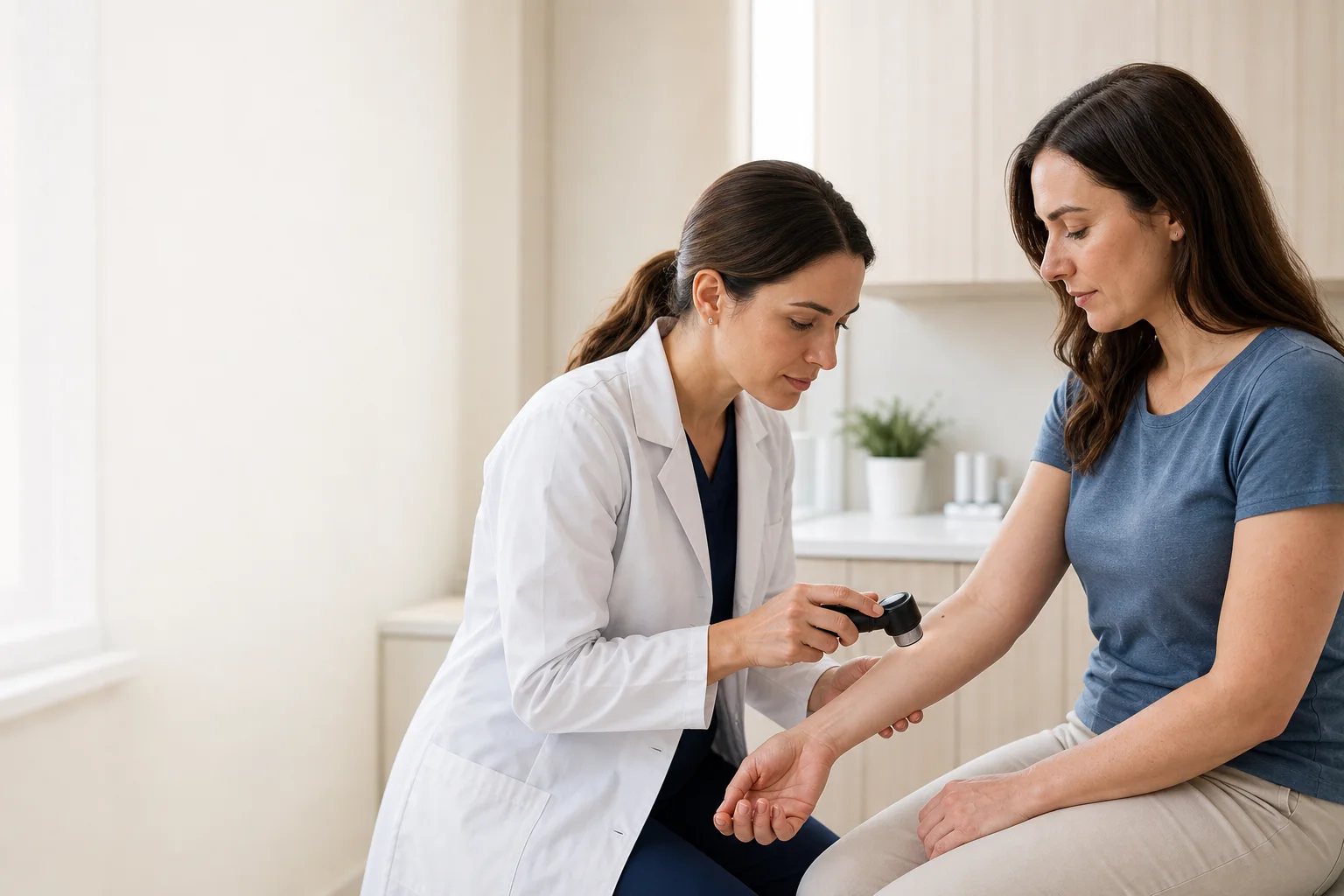
The visit covers duration, change, symptoms, sun exposure, tanning history, immune suppression, medications, previous skin cancers or atypical moles, family history, and past biopsies. The clinician examines the lesion and surrounding skin and may use magnification or a dermatoscope when available.
Bring a list of all spots you want checked and identify the highest-priority one first. A focused growth visit is not always the same as a complete head-to-toe dermatology examination. Ask directly what areas were examined and whether you need a separate comprehensive skin check.
When Biopsy or Dermatology Referral May Be Needed
If a lesion is suspicious, uncertain, difficult to sample in the current setting, or located where technique matters, referral to a dermatologist may be the safest next step. A biopsy removes part or all of a lesion for pathology. The type of biopsy should fit the clinical question and location.
Do not interpret a recommendation for biopsy as proof of cancer; biopsies are used to obtain a diagnosis. At the same time, do not delay because the spot is painless. Ask how results will be delivered, who will explain them, and what follow-up is needed if margins or additional treatment become relevant.
Skin Checks and Preventive Care
Regular self-examination helps you learn your own pattern. Check the scalp, ears, back, nails, soles, and between the toes in addition to obvious sun-exposed areas. A partner or mirror can help with places that are hard to see. Sun protection remains important even if every current lesion is benign.
Skin review can be discussed during an annual physical or alongside preventive screening, but a changing or bleeding lesion should not wait months for the next routine visit. Risk-based dermatology screening schedules should be individualized.
How to Book a Focused Evaluation in Encino
What should I bring?
Bring dated photos, prior pathology or dermatology records, a medication list, and notes about change, bleeding, pain, drainage, sun exposure, and family history.
What should I expect afterward?
The plan may be reassurance and monitoring, treatment for a benign problem, biopsy, or referral. Make sure you know who owns follow-up and how quickly to act on any change.
Where can I start?
Explore NPMD specialty care or request a skin growth evaluation. If the lesion is rapidly worsening or accompanied by serious infection symptoms, seek prompt care rather than waiting for a routine booking.