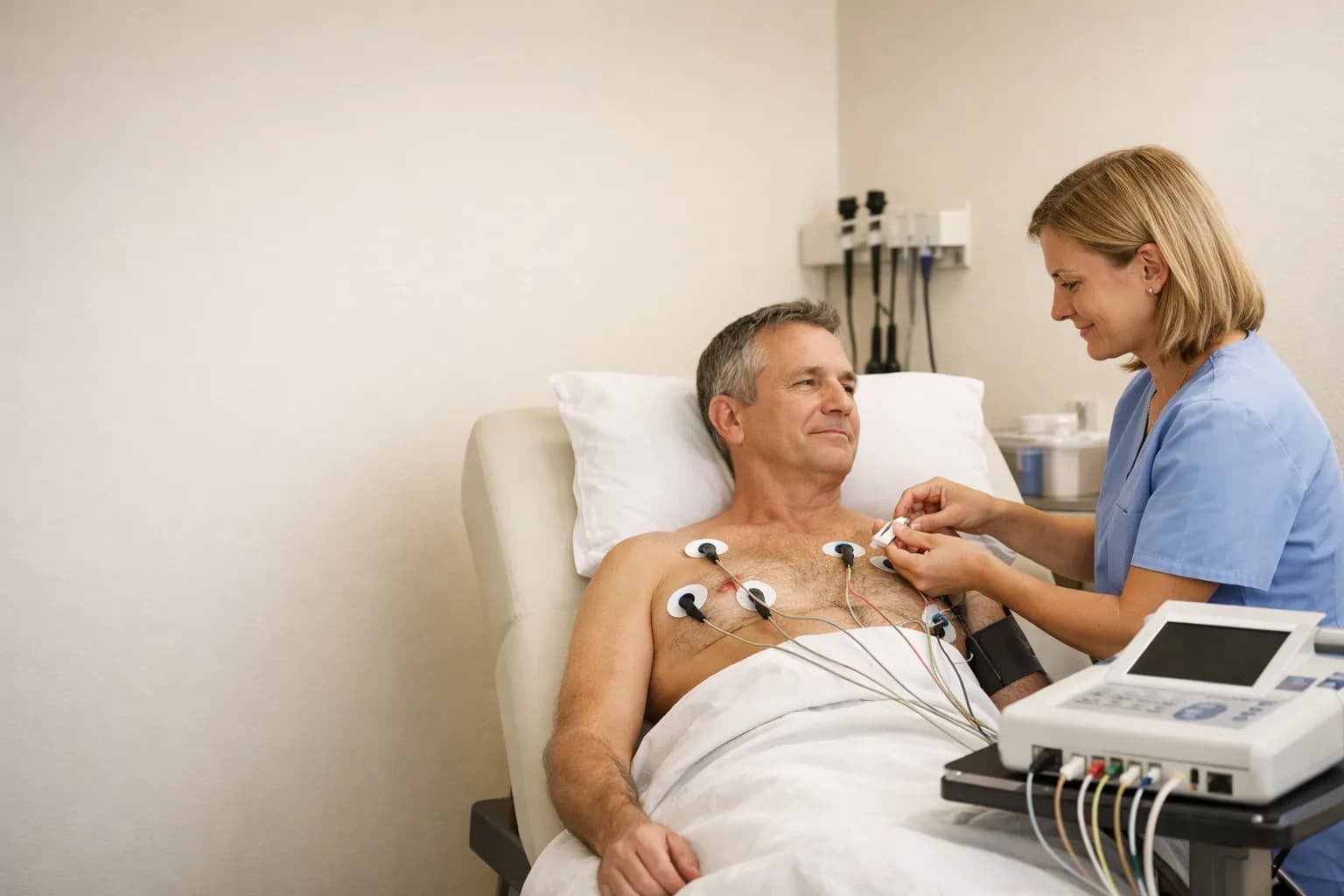
A resting EKG records the heart's electrical activity for a brief moment. Learn what it can show, what it can miss, how to prepare, and why symptoms may still need monitoring, labs, imaging, or emergency care.
Answer First: An EKG Is a Short Electrical Snapshot
An electrocardiogram—called EKG or ECG—records the heart's electrical activity through adhesive electrodes placed on the skin. It shows rate, rhythm, and the timing and strength patterns of electrical signals during the brief recording. It is painless and noninvasive; the machine receives signals and does not send electricity into the body.
NPMD offers EKG testing in Encino as part of symptom and risk evaluation. A tracing becomes useful when it is interpreted with the reason for testing, examination, medicines, prior EKGs, and any additional lab or imaging findings.
What the Tracing Can Show
An EKG can show whether the heart rate is fast, slow, or within an expected range; whether rhythm appears regular or irregular; and whether electrical impulses move through the chambers in an unusual way. It may reveal atrial fibrillation, conduction blocks, chamber strain patterns, or changes associated with current or prior heart injury.
A computer may print an automated interpretation, but that line is not the final diagnosis. Lead placement, movement, body position, normal variants, implanted devices, and other factors can trigger false alarms. A clinician reviews the actual tracing in context.
What a Normal Resting EKG Can Miss
A resting EKG captures only the seconds when it is recorded. Palpitations that occur once a week, an exertional rhythm problem, or a brief overnight event may not appear. Some coronary, valve, structural, and early electrical conditions can also exist with a normal resting tracing.
A normal result therefore does not mean every cause of chest discomfort, fainting, breathlessness, or fatigue has been excluded. It means no diagnostic abnormality was captured on that test at that moment. The next step depends on symptom risk and clinical suspicion.
Symptoms and Histories That Lead to Testing
Clinicians may order an EKG for palpitations, dizziness, fainting, chest discomfort, shortness of breath, a very fast or slow pulse, medication monitoring, electrolyte concerns, preoperative assessment, high cardiovascular risk, or follow-up of a known condition. Screening decisions in people without symptoms should be individualized.
Describe the exact symptom, start and stop pattern, activity, posture, caffeine, alcohol, illness, sleep, stress, and medicine timing. Bring wearable rhythm strips with timestamps when available, but do not assume a watch diagnosis is equivalent to a medical tracing.
How to Prepare for an EKG
Most resting EKGs require no fasting. Wear clothing that allows access to the chest, wrists or arms, and ankles or legs. Avoid applying oily lotion to those areas because it can interfere with adhesion. Tell the team about implanted devices, skin allergies, chest hair, bandages, pregnancy, and any position that causes pain or breathing difficulty.
Take medicines as directed unless the ordering clinician gives different instructions. Bring a complete list, including decongestants, stimulants, inhalers, thyroid medicine, supplements, and recreational substances because they can affect rate or rhythm. Do not create symptoms by consuming extra caffeine before the test.
What Happens During the Test
A technician cleans and dries selected skin areas and may clip or shave small patches of hair so electrodes adhere. Stickers are placed in standardized positions and connected to lead wires. You lie still and breathe normally while the machine records. The tracing itself takes only a short time once placement is complete.
The test should not hurt beyond minor skin preparation or sticker removal. If lying flat triggers symptoms, tell the technician. Afterward, the electrodes are removed and routine activity can usually resume unless the visit includes another test or treatment.
Artifact and Lead Placement
Movement, talking, shivering, loose electrodes, electrical interference, and incorrect placement can create artifact or alter the pattern. Follow instructions to remain still and report tremor or difficulty relaxing. A surprising tracing may be repeated to confirm lead placement and signal quality.
Prior EKGs are valuable because some normal variants remain stable for years while new changes may matter. Bring copies or provide access when testing outside your usual system. Automated statements such as “possible infarct” need clinician review and comparison rather than panic or dismissal.
When Monitoring, Labs, or Imaging Comes Next
A Holter monitor records continuously for a longer period, while event and patch monitors can capture intermittent symptoms over days or weeks. The American Heart Association explains that a standard EKG shows one moment, so longer monitoring can help when abnormal rhythms come and go.
Depending on the question, next steps may include electrolytes, blood count, thyroid testing, cardiac enzymes, an echocardiogram, stress testing, or cardiology referral. An ultrasound evaluates structure differently; it is not a more detailed EKG.
Emergency Symptoms Should Not Wait for an Office Test
Call emergency services for chest pressure or pain with sweating, nausea, severe breathlessness, fainting, or pain spreading to the arm, jaw, back, or shoulder; for sudden weakness, facial droop, speech trouble, or confusion; or for a sustained rapid or irregular heartbeat with severe symptoms. Do not drive yourself when emergency guidance advises an ambulance.
An office EKG may be part of evaluation, but emergency care can provide repeated tracings, continuous monitoring, blood tests, imaging, and rapid treatment. Review the AHA's EKG overview for the test's basic role and limits.
Questions to Ask After an EKG in Encino
Was the tracing normal for me?
Ask about rate, rhythm, conduction, signal quality, comparison with prior EKGs, and whether an automated statement was clinically confirmed.
Could my symptom have been missed?
Discuss whether the event is intermittent and whether a Holter monitor, event monitor, labs, imaging, or referral is appropriate.
Where can I begin?
Explore NPMD diagnostic testing, consider a same-day symptom visit, and request an evaluation for non-emergency concerns.