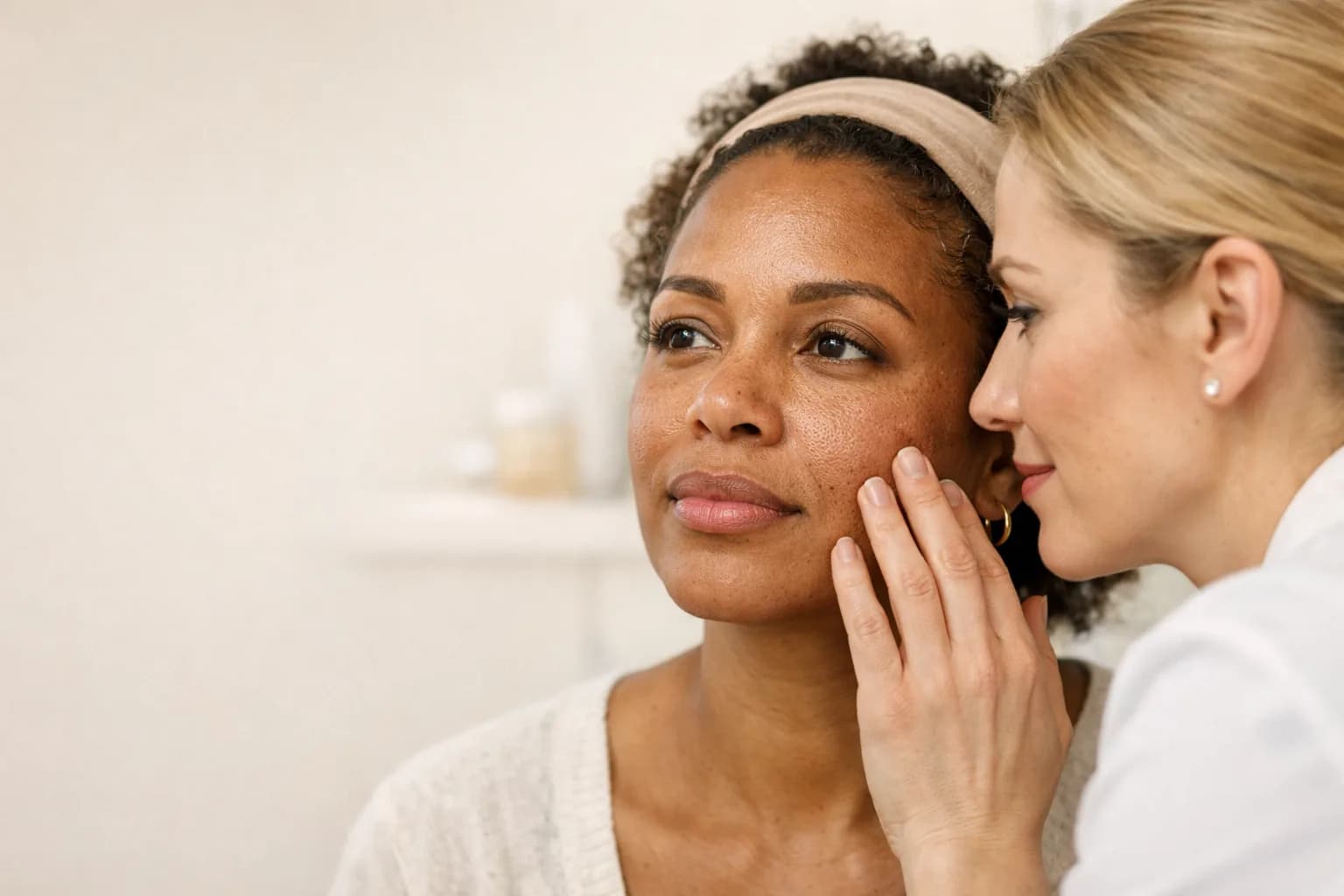
Redness, bumps, sensitivity, and breakouts can look similar but need different starting plans. Learn why rosacea, acne, and irritation should not all be treated with the same routine.
Answer First: Redness Needs Pattern Recognition
Redness is not one diagnosis. It can come from rosacea, acne inflammation, irritation, over-exfoliation, sun damage, allergic reaction, post-inflammatory change, or a combination of several factors. Treating every red bump like acne can backfire when the skin is already reactive.
A beauty or skin consultation should identify the pattern before choosing actives, peels, lasers, facials, or prescription-style planning. The safest first step is often the one that reduces confusion.
Why Rosacea Can Look Acne-Like
Rosacea can involve persistent redness, flushing, acne-like bumps, burning, stinging, and sensitive skin. Some patients notice triggers such as heat, sun, alcohol, spicy foods, intense exercise, stress, or certain products. Others simply notice that their face stays red longer than it used to.
Because rosacea can resemble acne, the consultation should ask about flushing, sensitivity, eye symptoms, triggers, and whether classic acne features such as blackheads are present.
When Acne Treatments Can Make Irritation Worse
Benzoyl peroxide, retinoids, acids, scrubs, and frequent exfoliation can help some acne patterns, but they can also worsen irritation when the barrier is compromised. If products sting, skin feels hot, redness lingers, or breakouts worsen after adding more actives, the routine may be doing too much.
This does not mean acne treatment is wrong. It means the skin may need a calmer starting point before stronger treatment is layered in.
What to Pause Before a Redness Consultation
Bring your full product list, including cleansers, exfoliants, retinoids, vitamin C, acne products, sunscreen, makeup, and recent treatments. If possible, stop introducing new products right before the appointment so the provider can see a clearer pattern.
Avoid aggressive scrubs or at-home peels when the skin is actively burning, peeling, or flaring. The consultation can help decide what should be paused, simplified, or continued.
How a Starting Plan Should Be Staged
The first stage may focus on barrier repair, trigger tracking, gentle skincare, sun protection, and deciding whether medical treatment, facial support, IPL, peel, or other procedures make sense later. Redness plans often work better when the skin is prepared before corrective treatment.
If redness keeps returning, start with NPMD Skin Concerns. The right plan should explain what the redness most resembles before asking your skin to tolerate more.