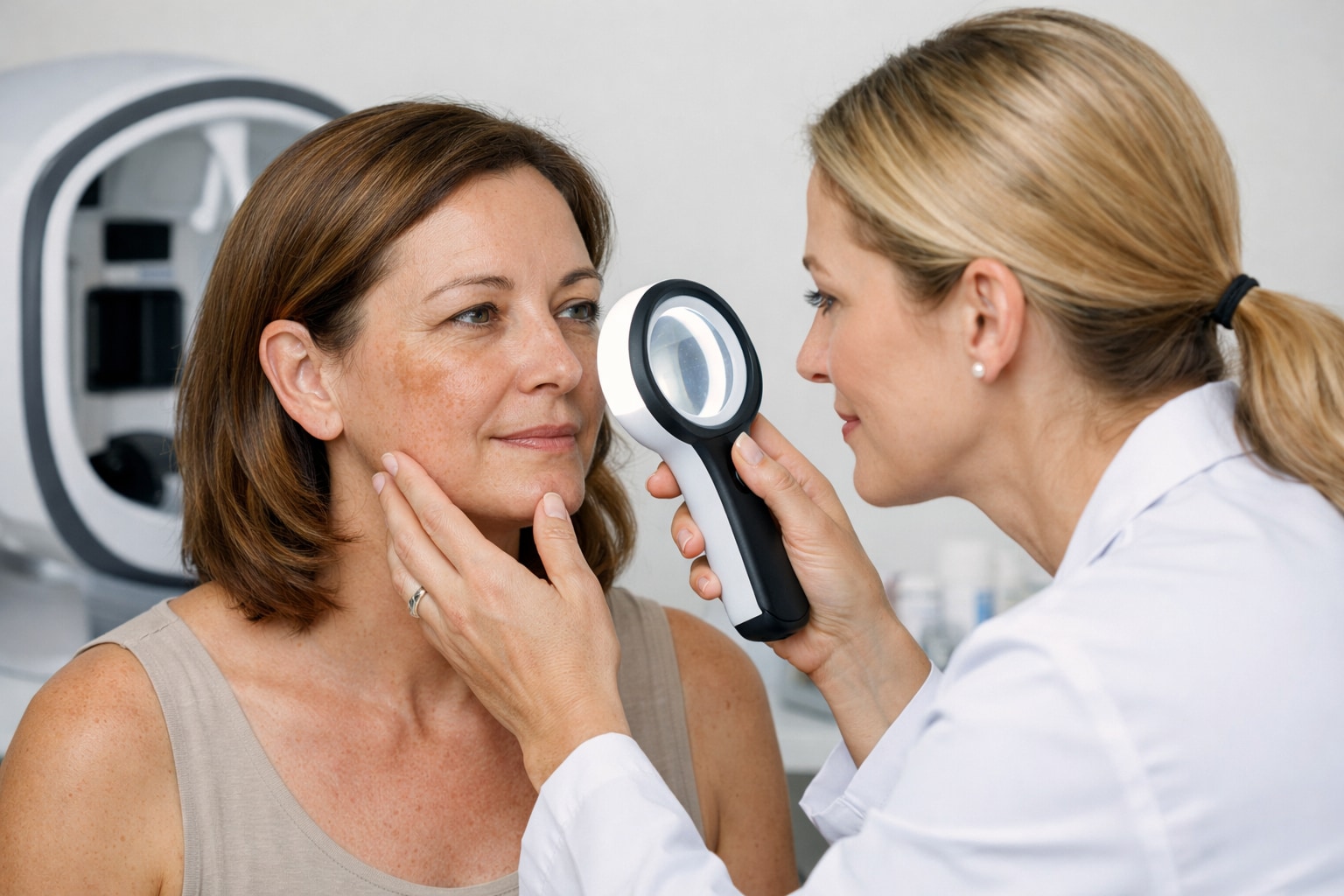
Dark spots, melasma, redness, and uneven tone do not all respond to the same treatment. Learn when discoloration should be evaluated before lasers, peels, or brightening treatments.
Answer First: Discoloration Needs Diagnosis Before Brightening
Skin discoloration is a broad word. It can mean sun spots, melasma, post-inflammatory hyperpigmentation, redness, broken capillaries, acne marks, irritation, or changes that need medical evaluation. Because these concerns can look similar at first glance, choosing a peel, laser, or brightening product without diagnosis can backfire.
A good consultation starts by asking what kind of discoloration is present and why it may be happening. Only then does treatment selection make sense.
Not All Pigment Behaves the Same
Sun spots often behave differently from melasma. Post-inflammatory hyperpigmentation after acne or irritation behaves differently from freckles or lentigines. The depth, pattern, and trigger all matter. A treatment that helps one pigment pattern may aggravate another if the skin is prone to inflammation.
Melasma deserves special caution because heat, hormones, sun exposure, and irritation can all contribute. Aggressive treatment without prep or maintenance can make it more stubborn.
Why Redness Changes the Plan
Redness can come from rosacea, sensitivity, inflammation, broken vessels, acne, irritation, or recent product overuse. If redness is active, the first step may be calming the skin rather than exfoliating it. Treating inflamed skin too strongly can increase burning, peeling, or pigment changes.
Patients often ask for brightening when the real issue is a combination of pigment and inflammation. That combination needs a more careful sequence than a single product or peel.
When to Pause Cosmetic Treatment
Pause and seek evaluation if discoloration is changing quickly, has irregular borders, bleeds, itches, hurts, appears after a new medication, or does not match your usual skin pattern. Cosmetic treatment should not cover up a lesion that needs medical review.
It is also smart to pause if your skin is reacting to products, sunburned, recently waxed, freshly lasered, or actively breaking out. The safest brightening plan often starts with reducing irritation first.
What Evaluation Should Cover
A discoloration evaluation should review sun exposure, sunscreen habits, skincare products, retinoids, acids, recent peels or lasers, acne history, hormonal changes, pregnancy, medications, and whether the pigment worsens with heat. Photos may help track change over time.
From there, the provider can decide whether the plan should involve skincare, sunscreen strategy, chemical peels, IPL, laser resurfacing, prescription support, or referral for dermatology evaluation.
The Goal Is a Safer Sequence
The best discoloration plans are rarely one-step fixes. They usually combine prevention, skin barrier support, pigment control, and carefully selected procedures. That sequencing is what lowers the risk of chasing pigment with irritation.
If you are considering treatment for dark spots, redness, melasma, or uneven tone in Encino, start with evaluation. Brightening works better when the plan understands what it is brightening.