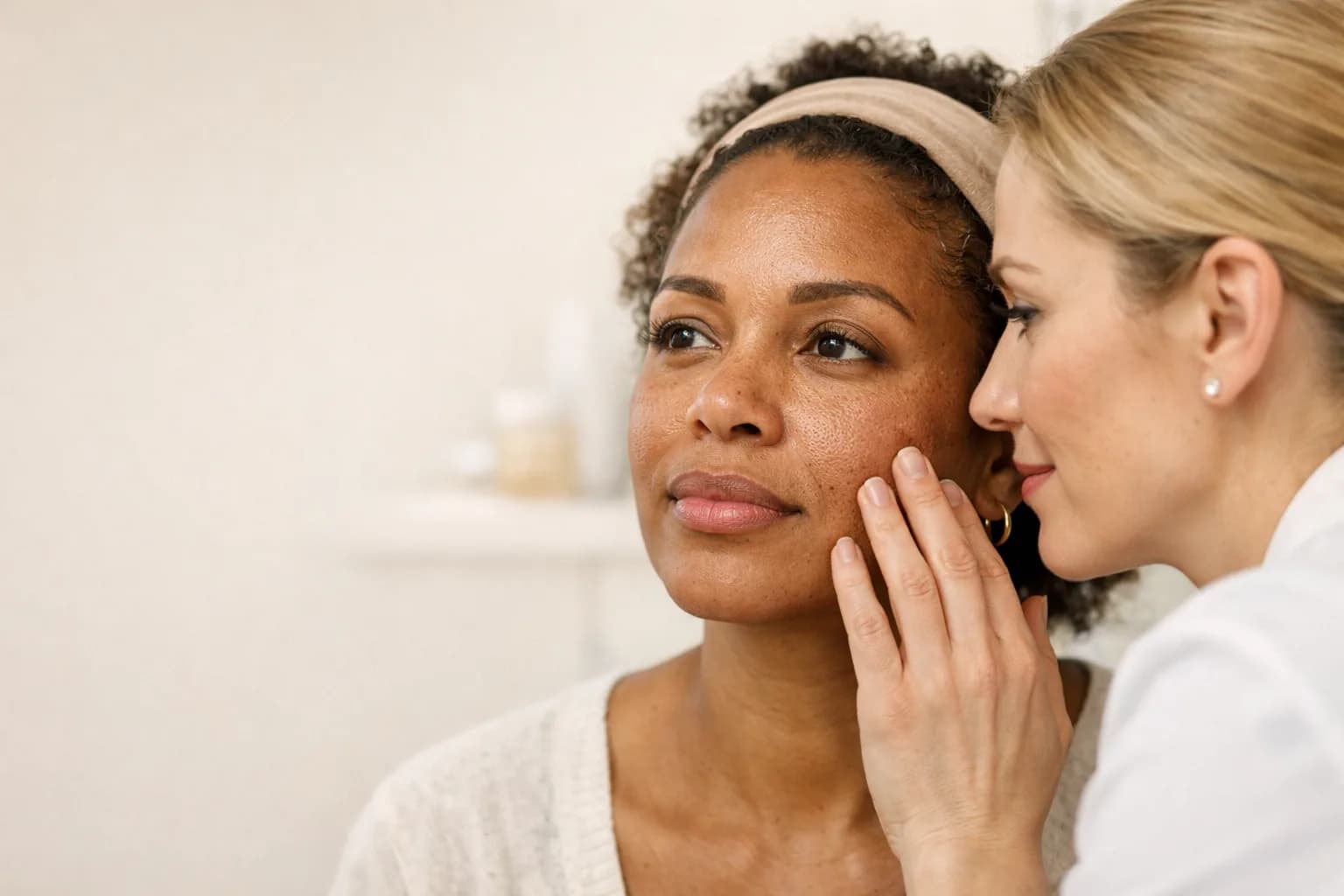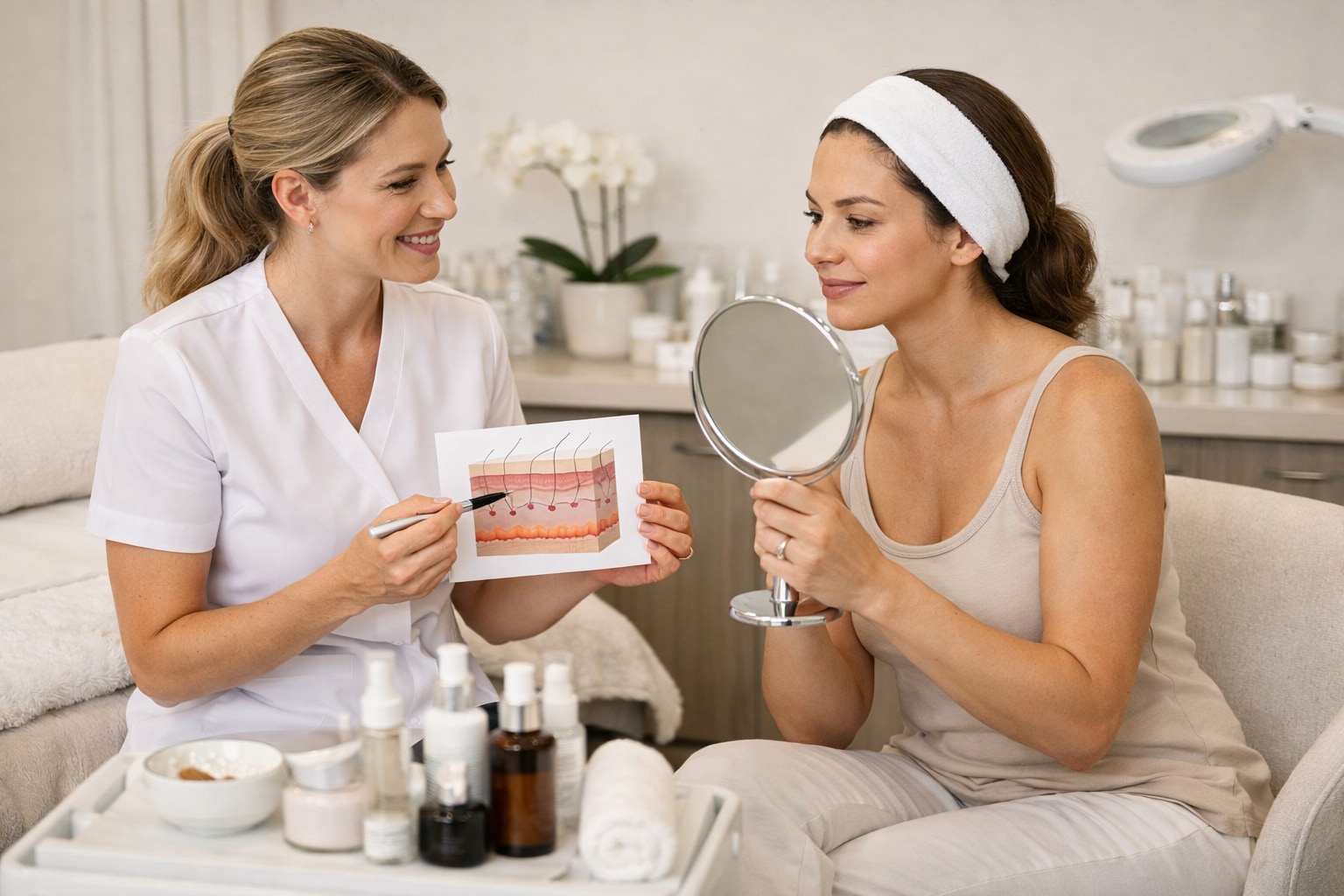
A facial and a chemical peel can both improve skin quality, but they are not interchangeable. The right choice depends on irritation, pigment, acne, texture, and whether your skin barrier is ready for exfoliation.
Answer First: Your Skin Barrier Gets a Vote
A medical-grade facial and a chemical peel can both improve skin quality, but they ask different things from the skin. A facial can cleanse, hydrate, calm, and support the barrier. A peel uses controlled exfoliation to target dullness, pigment, clogged pores, or texture. If the skin barrier is already irritated, choosing the stronger-sounding option can backfire.
The best plan starts with what your skin can tolerate today, not what treatment sounds most impressive on a menu.
When a Medical-Grade Facial May Fit Better
A facial may be the better starting point when the skin feels tight, reactive, dry, inflamed, congested, or overloaded from too many products. It can help reset the routine, remove buildup gently, support hydration, and give the provider a chance to see how your skin responds before escalating.
Facials are also useful before events when you want a fresher look without peeling downtime. They are not a cure for acne, pigment, or scarring, but they can be part of a consistent maintenance plan.
When a Chemical Peel May Fit Better
A chemical peel may be discussed when the main concerns are uneven tone, rough texture, clogged pores, dullness, or certain types of discoloration. Peels vary widely in strength, so the conversation should include what acid blend is being used, how much peeling to expect, and what skin prep is needed.
A peel is not always appropriate for active irritation, recent sun exposure, uncontrolled rosacea, certain medications, or a compromised barrier. Patients with melasma or post-inflammatory hyperpigmentation need especially careful planning.
Why the Skin Barrier Matters
The skin barrier is the outer protective layer that helps keep moisture in and irritants out. When it is compromised, products sting, redness lingers, acne may flare, and treatments can feel harsher than expected. Exfoliating an already angry barrier can create more inflammation.
Barrier repair may include simplifying products, pausing strong actives, using bland moisturizers, and building tolerance before more active treatments. Sometimes the smartest aesthetic plan is a quieter first month.
How to Sequence Treatments
A provider may recommend starting with a facial, routine review, or barrier-support plan before a peel. In other cases, a light peel may be appropriate first, followed by facials for maintenance. Sequencing should match the skin's condition, not a package template.
If acne, pigment, and texture are all present, the plan may need to prioritize. Trying to treat everything aggressively at once can create the exact irritation you are trying to avoid.
What to Ask Before Booking
Ask whether your skin looks ready for exfoliation, what downtime to expect, what products to stop beforehand, and how long to wait before restarting retinoids or acids. Also ask what would make the provider choose a facial instead of a peel that day.
If you are deciding between a medical-grade facial and chemical peel in Encino, let your skin barrier lead the plan. Stronger is not better if the timing is wrong.