Urine leakage has different causes, so Emsella should begin with symptom screening rather than a package promise. Learn what pelvic floor stimulation does, who may be a candidate, and when medical evaluation comes first.
Answer First: Urine Leakage Needs the Right Diagnosis Before the Right Device
Emsella is a non-invasive pelvic floor stimulation treatment used to support bladder-control goals in selected patients. It may be considered when weak or poorly coordinated pelvic floor muscles contribute to leakage, but the word incontinence covers several different patterns. A device cannot replace identifying whether symptoms are related to stress leakage, urgency, infection, medication, pelvic-organ changes, neurologic disease, prostate treatment, or another cause.
NPMD offers Emsella in Encino as a consultation-based body treatment. A responsible visit starts with symptoms, history, and candidacy before it discusses session packages.
Stress, Urgency, and Mixed Incontinence Are Different
Stress urinary incontinence means leakage with pressure such as coughing, laughing, sneezing, lifting, jumping, or running. Urgency incontinence involves a sudden, difficult-to-delay need to urinate followed by leakage. Some people have features of both, called mixed incontinence. Overflow, functional, and post-procedural leakage require different thinking.
Write down what happens immediately before a leak. Include the amount, time, fluid intake, caffeine or alcohol, bathroom frequency, nighttime trips, pain, constipation, and any sensation of incomplete emptying. That record helps the clinician decide whether pelvic floor strengthening is a logical target or whether another evaluation should lead.
What Emsella Is Designed to Do
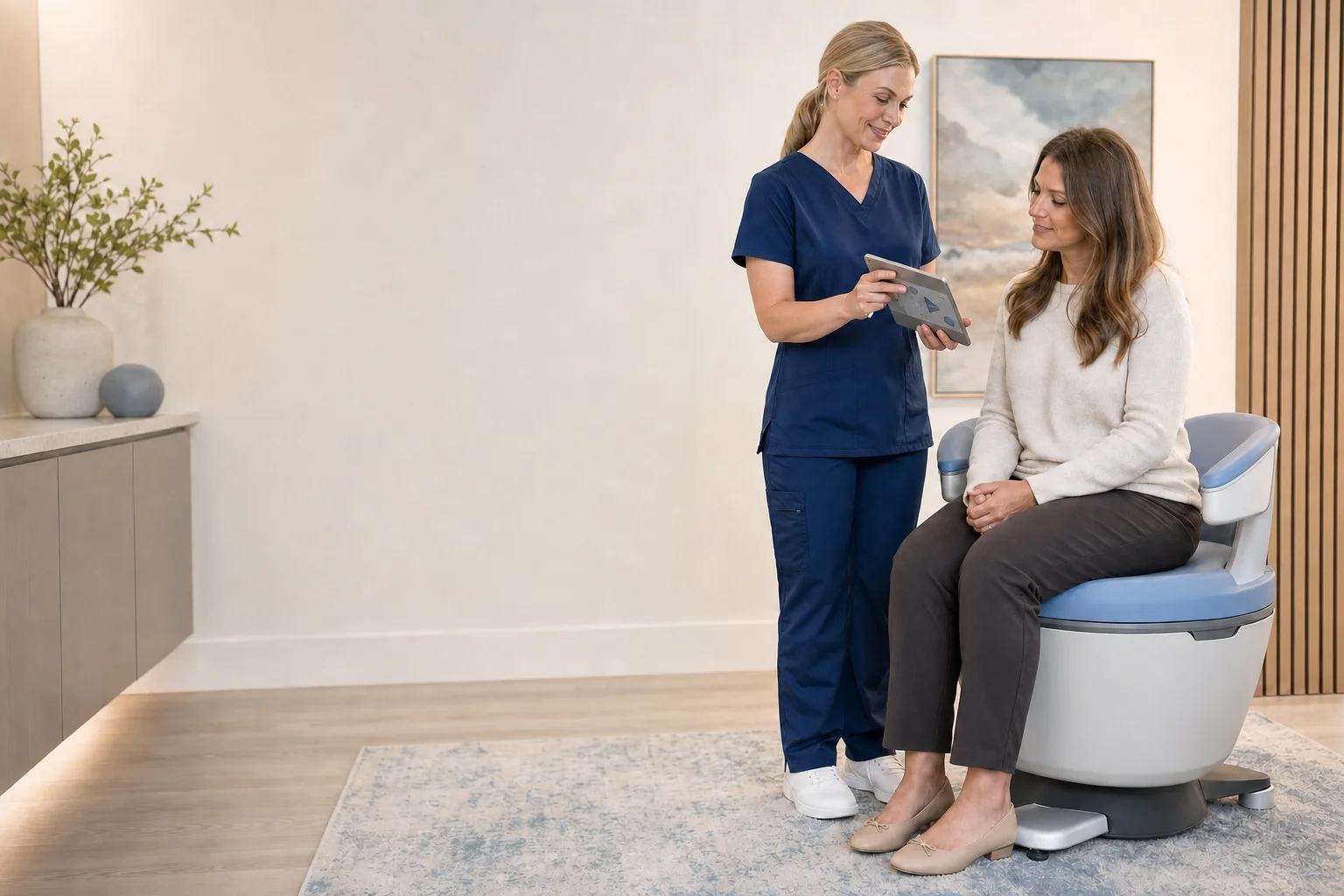
During a session, the patient sits fully clothed on a specialized chair that delivers electromagnetic stimulation to the pelvic floor region. The stimulation causes repeated muscle contractions without an internal probe or surgical incision. Treatment intensity is adjusted for tolerance, and sessions are typically organized as a series.
The practical goal is to improve pelvic floor muscle recruitment and support, which may reduce leakage for some candidates. It should not be described as tightening every pelvic structure, correcting every cause of incontinence, improving sexual function for everyone, or permanently curing bladder symptoms. The exact device indication and the patient's diagnosis both matter.
Who May Be a Reasonable Candidate
Potential candidates may report leakage during exercise, coughing, or daily activity; difficulty identifying pelvic floor contractions; or persistent symptoms despite trying exercises without clear instruction. Men may also have pelvic floor leakage, including after prostate-related care, but their evaluation and expected pathway can differ.
Candidacy depends on the type and severity of leakage, pelvic and neurologic history, prior surgery, current infections, ability to empty the bladder, pregnancy status, implanted devices, and other medical factors. Some patients will benefit more from pelvic floor physical therapy, bladder training, medication adjustment, gynecologic or urologic care, or a combination.
When Symptoms Need Medical Evaluation First
Blood in the urine, fever, flank pain, burning urination, new pelvic pain, inability to urinate, progressive weakness or numbness, loss of bowel control, or a sudden major change should not be routed straight to a wellness device. These symptoms may require prompt medical assessment. Recurrent urinary infections, pelvic pressure, and new leakage after surgery also deserve focused review.
A primary-care sick visit can be an appropriate starting point for new urinary symptoms. Depending on the history, urinalysis, medication review, pelvic examination, residual-volume testing, or referral may be more important than immediate pelvic floor stimulation.
What to Expect During a Session
The treatment is performed while seated and clothed. Patients commonly feel strong, repeated contractions or tapping in the pelvic floor. The sensation should be intense enough to engage the target muscles but remain tolerable. Tell the clinician about pain, numbness, unexpected abdominal symptoms, dizziness, or urinary discomfort rather than assuming every sensation is normal.
There is usually little interruption to routine after a session, but the absence of downtime does not remove the need for screening. Ask whether you should empty your bladder first, what clothing is practical, which medications to disclose, and what symptoms should prompt a pause between visits.
Results Should Be Measured by Daily Function
Useful outcomes include fewer leaks per day, smaller pad use, less urgency, fewer clothing changes, more confidence during exercise, or fewer nighttime interruptions. Keep the same bladder diary before and during treatment so improvement is based on a consistent measure rather than memory.
Response varies, and no ethical plan can promise that every patient will become completely dry. Ask when improvement is typically reassessed, what happens if there is no change, and whether benefits require maintenance. If symptoms worsen or change type, the diagnosis should be reconsidered rather than simply adding more sessions.
Pelvic Floor Physical Therapy and Bladder Training Still Matter
Pelvic floor physical therapy teaches coordinated contraction and relaxation, addresses breathing and pressure management, and can identify when muscles are overactive rather than simply weak. The National Institute of Diabetes and Digestive and Kidney Diseases notes that trained physical therapists can help patients perform pelvic floor exercises correctly and that bladder training may also reduce leakage.
These approaches are not competitors to a device. They may be the first-line plan, a companion to treatment, or the better option when movement, constipation, pain, or poor muscle coordination is part of the problem. Review NIDDK's bladder-control treatment overview for a broader picture of conservative care.
Medication, Fluids, and Other Contributors
Diuretics, sedatives, some diabetes medicines, constipation, high caffeine or alcohol intake, poorly controlled blood sugar, mobility limitations, and sleep disorders can affect bladder symptoms. Do not stop a prescription on your own. Bring a complete medication and supplement list so timing and side effects can be reviewed.
Testing should be selective. A clinician may consider laboratory testing when infection, diabetes, kidney function, or another medical issue is relevant, but not every patient needs the same panel. The goal is to answer a clinical question, not to make a device package look more comprehensive.
Questions About Pregnancy, Implants, and Medical History
Disclose pregnancy or plans for pregnancy, pacemakers, defibrillators, neurostimulators, metal or electronic implants, recent pelvic surgery, cancer history, seizure disorders, bleeding concerns, and significant heart or neurologic conditions. Device-specific contraindications must be checked against the actual equipment used.
Do not rely on a generic online checklist as final clearance. Ask the treating clinician to explain why the treatment is considered appropriate for your diagnosis, what alternatives exist, and how your health history changes the risk discussion.
How to Prepare for an Encino Consultation
What should I bring?
Bring a two- to three-day bladder diary, medication list, prior pelvic or urologic records, dates of surgery or childbirth, and any previous pelvic floor treatment history.
What should I ask?
Ask which type of incontinence the plan is targeting, how progress will be measured, when referral is appropriate, and what happens if the first series does not help.
Where can I start?
Compare the full range of NPMD body treatments, then request an appointment specifically for bladder-control and pelvic floor concerns.