Typical procedure time
2–3 hrs
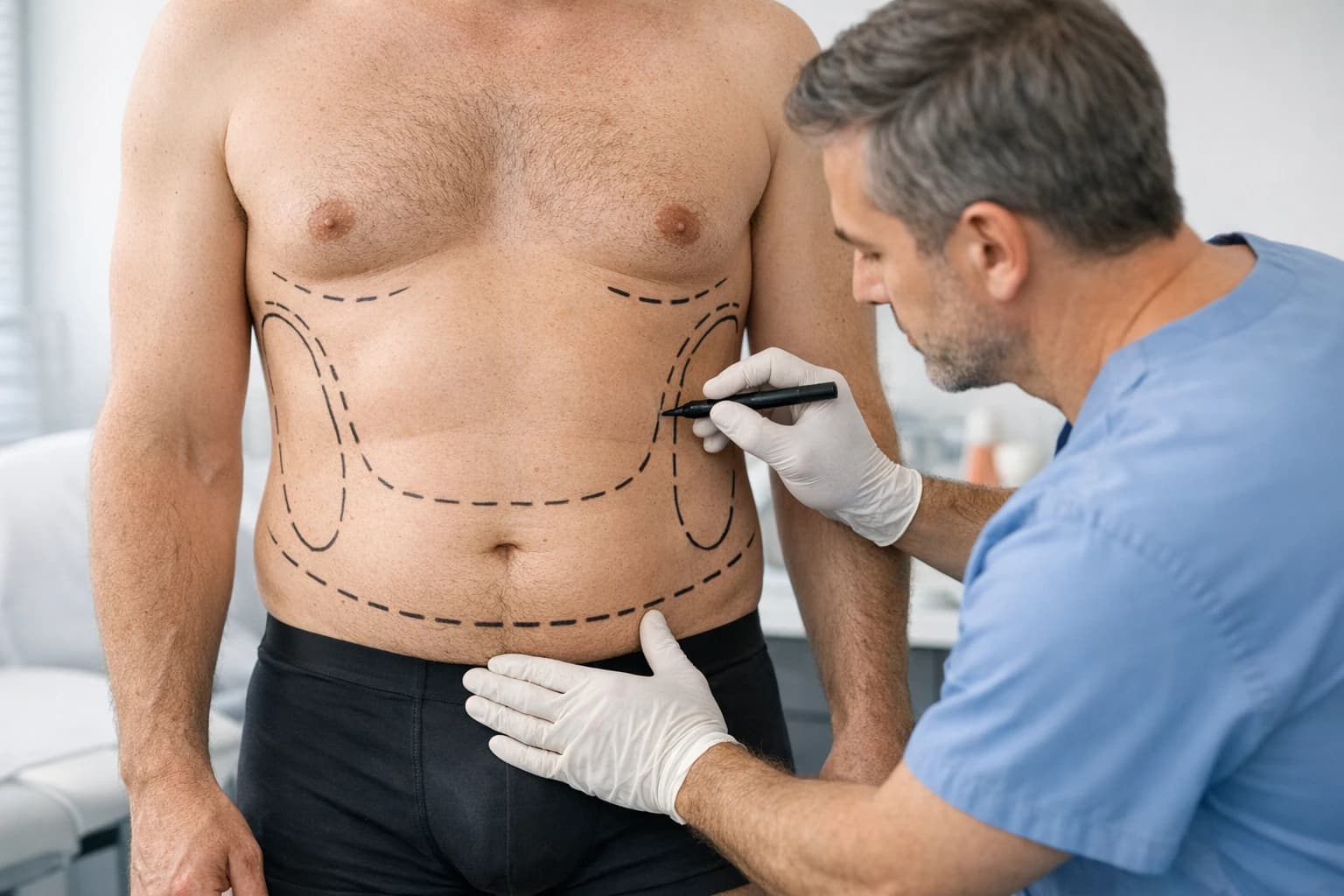
Gynecomastia surgery is usually the right conversation when the chest feels persistently full, projected, or out of proportion despite stable routines and the goal is a flatter, more defined contour.
The consultation should define whether the main issue is glandular fullness, fat distribution, skin looseness, or a combination, because that determines what kind of correction will actually look natural on the body.

Ask about candidacy, recovery, and how any related procedures might affect planning before you make a decision.
A quick orientation to procedure timing, downtime planning, and the way this conversation usually fits into broader surgical decision-making.
Gynecomastia surgery is usually explored when the chest remains full, projected, or soft in a way that does not match the rest of the body and the goal is cleaner male chest definition.
Gynecomastia planning is less about removing fullness in the abstract and more about how the chest should sit on the torso once projection and tissue excess are addressed.
Some patients also look at broader contour work such as Liposuction, especially when the question is how the chest transitions into nearby areas. Others want to understand where gynecomastia fits inside a bigger confidence or body-contouring conversation.
If you want more structure before the visit, begin with these five consultation questions and our recovery planning overview.
The strongest candidates usually want a flatter, more defined chest contour and are open to discussing tissue type, scar tradeoffs, and recovery support honestly.
The right plan usually comes from matching the procedure to your anatomy, tolerance for downtime, and the kind of change you are actually trying to make.
This consultation should define what is creating projection, what the flatter chest should actually look like, and how scars, compression, and recovery will affect the experience.
Review chest fullness, tissue feel, and the contour that feels most out of proportion
Clarify how much flattening or definition is realistic for your frame
Discuss incision and scar placement openly
Plan compression, activity pacing, and recovery support before scheduling
Gynecomastia planning works best when reduction and contour definition are discussed together so the chest looks clean and proportional rather than simply smaller.
The consultation identifies whether gland, fat, skin, or a combination is driving the visual concern.
The surgical goal is refined around what kind of flatter, cleaner chest still looks natural on your torso.
Incisions, compression, and early chest support are outlined up front.
Return to workouts, swelling, and garment wear are planned before you choose a date.
Even when the procedure name is the same, incision strategy, staging, and combination-procedure decisions should be tailored to your proportions and the kind of result you want to live with long term.
Most patients need to plan around compression, chest sensitivity, swelling, and a gradual return to upper-body activity while contour settles.
The early phase focuses on garment use, swelling control, and protecting the chest while healing starts.
Many patients feel more normal in daily life, though the chest still looks early in the settling process.
Upper-body activity usually builds back slowly once support and healing are further along.
The flatter, cleaner chest contour becomes easier to judge as swelling softens.
Gynecomastia surgery often overlaps with nearby contour conversations, especially when the goal is a cleaner upper-body outline.
Patients usually feel best about gynecomastia planning when the consultation is direct about tissue type, contour goals, and the practical realities of compression and healing.
That means candidacy, downtime, staging, and the reasons for choosing surgery should all feel clear enough that you are not relying on marketing language to make a medical decision.
The plan starts by defining what is actually creating the fullness instead of treating every chest concern the same way.
The goal is a flatter, cleaner chest that still looks natural on your torso and shoulders.
Compression, activity pacing, and early healing expectations are part of the initial recommendation.
The strongest male chest-reduction outcomes usually come from understanding tissue type, realistic definition goals, and how garments and healing affect the early contour.
The result should look cleaner and stronger, not disconnected from the rest of your build.
Garment wear and patience are part of why the contour looks better as healing progresses.
The first impression improves as swelling softens and the chest looks more defined.
Consultation, anatomy, and recovery perspectives for gynecomastia surgery.
Illustrative male chest contour consultation

Illustrative person wearing a chest compression vest
These answers are meant to make the first conversation sharper and more useful, not replace a personal consultation.
That is one of the key consultation questions. The visit should clarify whether the issue is mostly glandular tissue, fat distribution, skin looseness, or some combination of all three.
That is the goal. The plan should focus on cleaner male chest definition without creating a chest contour that looks disconnected from your shoulders or torso.
Compression, swelling, chest sensitivity, and patience with the way contour settles are usually the biggest recovery themes to prepare for.
The goal is clarity: what this procedure can improve, what recovery really asks of you, and whether it should stand alone or be part of a broader plan.