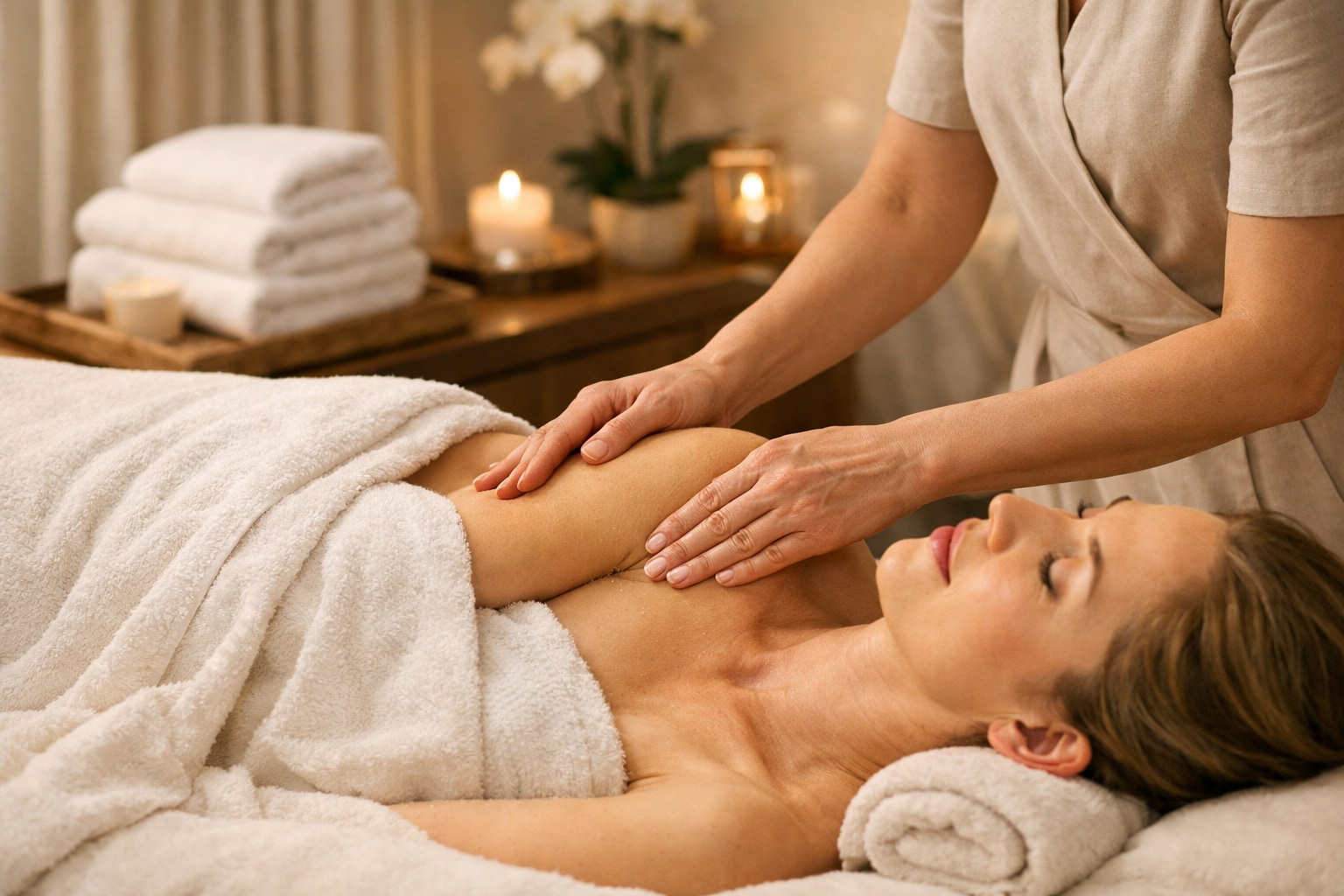
Lymphatic drainage massage is popular for recovery, travel puffiness, and post-procedure support, but it should be explained carefully. Here is what it may help with, what it cannot promise, and when clearance matters.
Answer First: Gentle Does Not Mean Casual
Lymphatic drainage massage is a gentle, directional bodywork technique often discussed for recovery, swelling, travel puffiness, and temporary feelings of heaviness. It is not the same as deep tissue massage, and it should not feel like someone is trying to force fluid out of the body.
At a medical spa or recovery lounge, the best version of lymphatic drainage is calm, conservative, and properly screened. The goal is comfort and recovery support, not dramatic medical promises.
What Lymphatic Drainage Means
The lymphatic system helps move fluid and immune cells through the body. Manual lymphatic drainage uses light pressure and specific pathways to encourage a sense of movement and relaxation. Because the pressure is gentle, patients sometimes wonder whether it is doing anything. In this type of massage, aggressive pressure is not the point.
A thoughtful session should include intake questions, areas of concern, recent procedures, medical history, and whether you have any swelling, infection, clotting risk, or clearance requirements. That intake is what keeps a spa service from becoming careless.
Travel Puffiness and Temporary Heaviness
Many patients ask about lymphatic drainage after flying, long work weeks, high-sodium meals, or periods of low movement. In those cases, the session may help the body feel lighter and more relaxed, especially when paired with hydration, walking, sleep, and gentle stretching.
It is important to keep the language realistic. Lymphatic drainage does not permanently remove fat, cure bloating, or replace medical care for unexplained swelling. If swelling is sudden, one-sided, painful, red, or associated with shortness of breath, that is not a spa problem; it needs medical evaluation.
Post-Procedure Clearance
Post-procedure lymphatic massage can be helpful in some recovery plans, but only when it is timed appropriately and cleared by the surgical or medical team. The right timing depends on the procedure, incision status, swelling pattern, and the provider's instructions.
Patients should not book aggressive bodywork immediately after surgery just because they saw it online. If lymphatic massage is appropriate, it should be gentle and coordinated with the recovery plan. The therapist should know what procedure was performed and what areas are off limits.
What It Cannot Promise
Lymphatic drainage should not be sold as a detox cure, permanent body contouring treatment, or guaranteed swelling solution. Bodies vary, and fluid changes can be affected by hormones, medication, salt intake, inflammation, travel, medical conditions, and surgery.
A responsible clinic frames it as recovery support and relaxation. If body sculpting or skin tightening is the goal, the conversation may shift to treatments such as device-based body contouring, skin tightening, or surgical consultation depending on the concern.
When to Avoid or Delay Treatment
Lymphatic drainage may need to be delayed or avoided with fever, active infection, unexplained swelling, certain heart or kidney conditions, a history of blood clots, open wounds, or lack of post-surgical clearance. Prenatal and oncology-related massage also require properly trained providers and appropriate clearance.
If you want lymphatic drainage massage in Encino, book with a team that asks screening questions before the session. The calmest spa experience is the one that is planned responsibly.