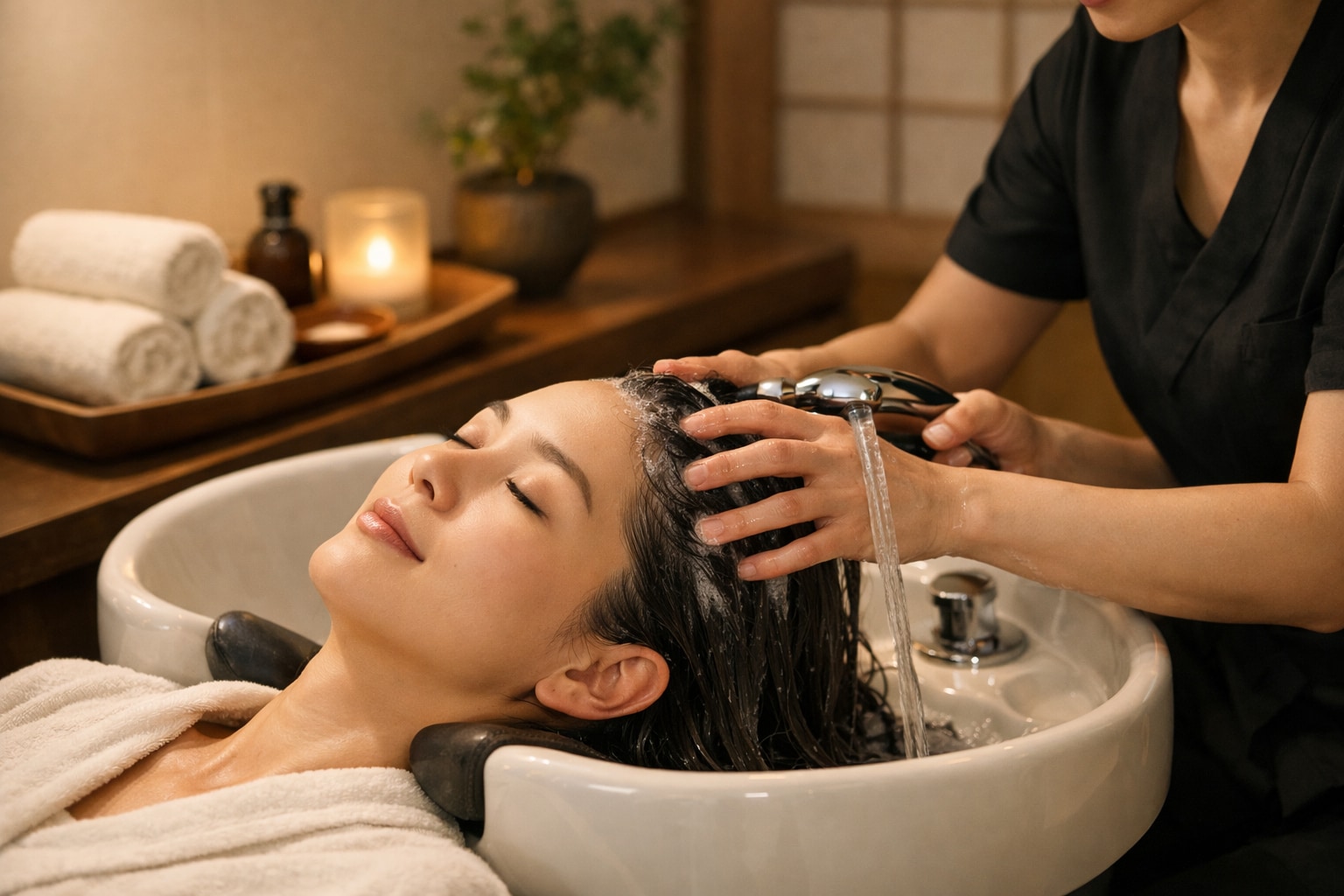
Japanese head spa treatments blend scalp cleansing, massage, steam, and relaxation. Learn what to expect, who may enjoy it, and when scalp symptoms should be medically evaluated first.
Answer First: A Head Spa Is Scalp Care Plus Nervous-System Downtime
A Japanese head spa is a scalp-focused service that usually combines cleansing, massage, water therapy, steam, masks, and deep relaxation. It sits somewhere between a luxury hair ritual and a recovery lounge experience. The goal is a cleaner, calmer-feeling scalp and a deeply relaxed visit, not a guaranteed medical hair-growth result.
For many patients, the appeal is that it feels restorative without being intense. It can be a good entry point into spa care for someone who wants relaxation, scalp attention, and a polished ritual rather than a cosmetic procedure.
What the Visit Usually Focuses On
A head spa typically starts with a conversation about scalp comfort, oiliness, flaking, dryness, product buildup, tension, and hair-care routine. Some spas use visual scalp analysis or magnification, though the details depend on the equipment available.
The provider may then move into cleansing, gentle exfoliation, massage, steam, and a scalp or hair mask. The best sessions are not rushed. They use repeated calming steps to make the treatment feel like a ritual rather than a shampoo with a nicer chair.
Scalp Analysis and Cleansing
Scalp analysis can help identify whether the scalp looks oily, dry, irritated, congested with product, or flaky. It is not a substitute for dermatology evaluation when symptoms are significant, but it can guide a spa-level treatment and product conversation.
Cleansing is often more detailed than a standard wash. The provider may focus on the hairline, crown, and areas where styling products collect. The goal is to leave the scalp feeling refreshed without stripping or irritating it.
Massage, Steam, and Relaxation
Massage is the heart of the experience for many patients. Scalp, neck, and shoulder tension often build up from stress, posture, screens, and jaw clenching. A head spa can create a rare window of stillness where the body has permission to downshift.
Steam and warm water can make the service feel especially calming. Patients who are sensitive to heat, prone to dizziness, pregnant, or managing certain medical conditions should mention that during intake so the session can be adjusted.
Who May Enjoy a Japanese Head Spa
A head spa may be a good fit for patients who want scalp refreshment, relaxation, pre-event hair prep, product-buildup removal, or a calming spa ritual. It may also pair well with massage, facial care, or a recovery lounge visit when the goal is full-body decompression.
Patients interested in hair thinning should understand the difference between a spa scalp treatment and medical hair-restoration planning. Scalp care can support comfort and cleanliness, but hair loss may need evaluation, labs, medication review, or treatments such as PRP hair restoration depending on the cause.
When Symptoms Need Medical Evaluation
Sudden shedding, patchy hair loss, painful bumps, open sores, severe itching, bleeding, scaling, or scalp infection symptoms should be evaluated medically before booking a spa-only treatment. A relaxing ritual should not delay care for a real scalp condition.
If you want a Japanese head spa in Encino, choose a setting that treats the service as both luxury and intake-driven care. The best scalp spa experience feels indulgent, but it should still start with smart questions.