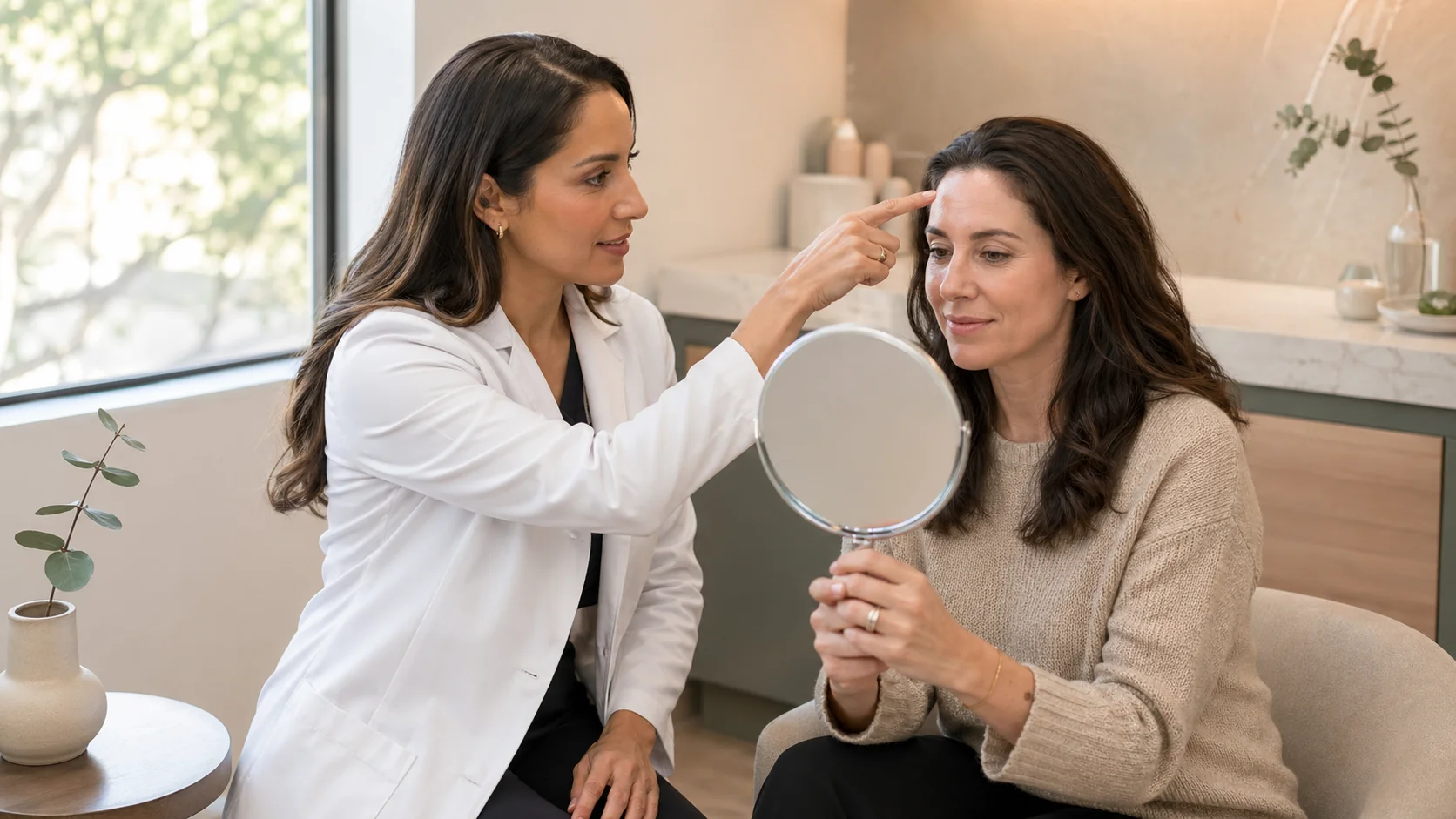
A first Botox visit should not start with a syringe. It should start with a conversation about your facial movement, history, goals, and what a measured first dose should and should not try to do. Here is how to tell whether your consultation is doing that work.
Answer First: The Visit Before the Visit
The most important part of a first-time Botox appointment is not the injection. It is the conversation that determines whether Botox is the right tool, which areas should actually be treated, and how conservative the first dose should be. A thorough consultation protects the result, the budget, and how natural your face looks while the treatment settles in.
If a provider walks you straight to the chair, marks your face, and starts dosing without first watching how you move, asking about your history, and clarifying what you want to change, that is a signal to slow down. A careful first visit should feel like an evaluation, not a sale.
Why the Consultation Matters More Than the Appointment
Botox does one specific thing well: it relaxes targeted muscles so the lines they create soften over time. It does not lift skin, restore lost volume, brighten tone, or replace skincare. Confusing those goals is the most common reason patients feel disappointed after a first treatment.
A consultation is where the provider sorts out which concerns are movement-related and best suited to a neuromodulator, which concerns belong to a different treatment category, and which concerns are better addressed with patience, skincare, or a combination plan over time. Without that filter, units get spent on the wrong problem.
Who This Article Is For
This is for anyone considering Botox, Dysport, Xeomin, or another neuromodulator for the first time. It is also useful if you have had a treatment elsewhere that did not feel right, looked uneven, wore off too quickly, or left you unsure whether the issue was the product, the dose, or the plan.
You do not need to come in with a final answer about what you want done. You need to come in with the concerns that are bothering you and a willingness to talk through what is realistic. The provider's job is to translate that into a plan, not to upsell additional areas before you have seen how your face responds to a measured first treatment.
What a Careful Provider Should Ask Before Recommending Units
A strong first Botox consultation should cover your goals in plain language, the specific lines or expressions you want softened, when you first started noticing them, and whether they are present at rest or only with movement. The provider should also ask about prior cosmetic treatments, recent skincare changes, allergies, current medications, supplements, pregnancy or breastfeeding status, recent illness, autoimmune conditions, and any history of trouble with anesthesia or injections.
Then they should actually watch your face. That means asking you to raise your brows, frown, squint, and smile so they can see how your muscles pull. Two patients with similar lines on day one can need very different plans because their underlying movement patterns are different. A provider who does not study movement is dosing blind.
How a First-Time Treatment Plan Should Be Scoped
For a first treatment, less is usually more. A careful plan often focuses on the most movement-driven area or two, uses a conservative starting dose, and leaves room to refine at a two-week follow-up once the product has fully settled. The point is to learn how your face responds before committing to broader coverage.
The provider should explain which muscles are being targeted, why those areas were chosen over others you mentioned, what a typical dose range looks like for your pattern, and what the trade-offs are if you under- or over-dose. If the recommendation is to treat several areas at once on a first visit with a high unit count, ask why a more measured starting plan would not be safer to evaluate first.
What to Expect During and After the Injection
The injection itself is quick. Most first-time treatments take only a few minutes once mapping is complete. You may feel small pinches, brief stinging, or pressure. Some patients have minor bruising, redness, or temporary bumps at the injection sites that fade within hours to days.
For the first several hours after treatment, most providers recommend staying upright, avoiding heavy exercise, skipping facials or facedown massage, and not rubbing or pressing on the treated areas. Standard aftercare is usually simple, but it should be reviewed in person and provided in writing so you are not guessing at home.
Realistic Results, Timing, and Follow-Up
Neuromodulators do not work instantly. Most patients start to notice changes around days three to five, with the full result settling between days seven and fourteen. Results typically last about three to four months, although that range varies based on the product, the dose, the area treated, your metabolism, and how active the muscles are.
A two-week follow-up is one of the clearest markers of a thorough plan. That visit is the right time to assess symmetry, decide whether a small touch-up is appropriate, and document what worked so the next treatment cycle can be refined rather than repeated blindly. Skipping the follow-up usually means the next visit starts from guesswork instead of from a real baseline.
Signs the Consultation Is Not Thorough Enough
Be cautious if the provider does not ask about your medical history, does not watch your face move before recommending units, pushes more areas or more units than you came in for, cannot explain why a specific dose was chosen, or downplays follow-up as unnecessary. Pressure to decide on the spot, vague answers about expected results, and no written aftercare instructions are also signals worth respecting.
If you are considering Botox for the first time and want a careful, conservative starting plan with a real follow-up built in, book a consultation. The most useful first visit is one that earns your trust before any product is drawn into a syringe.