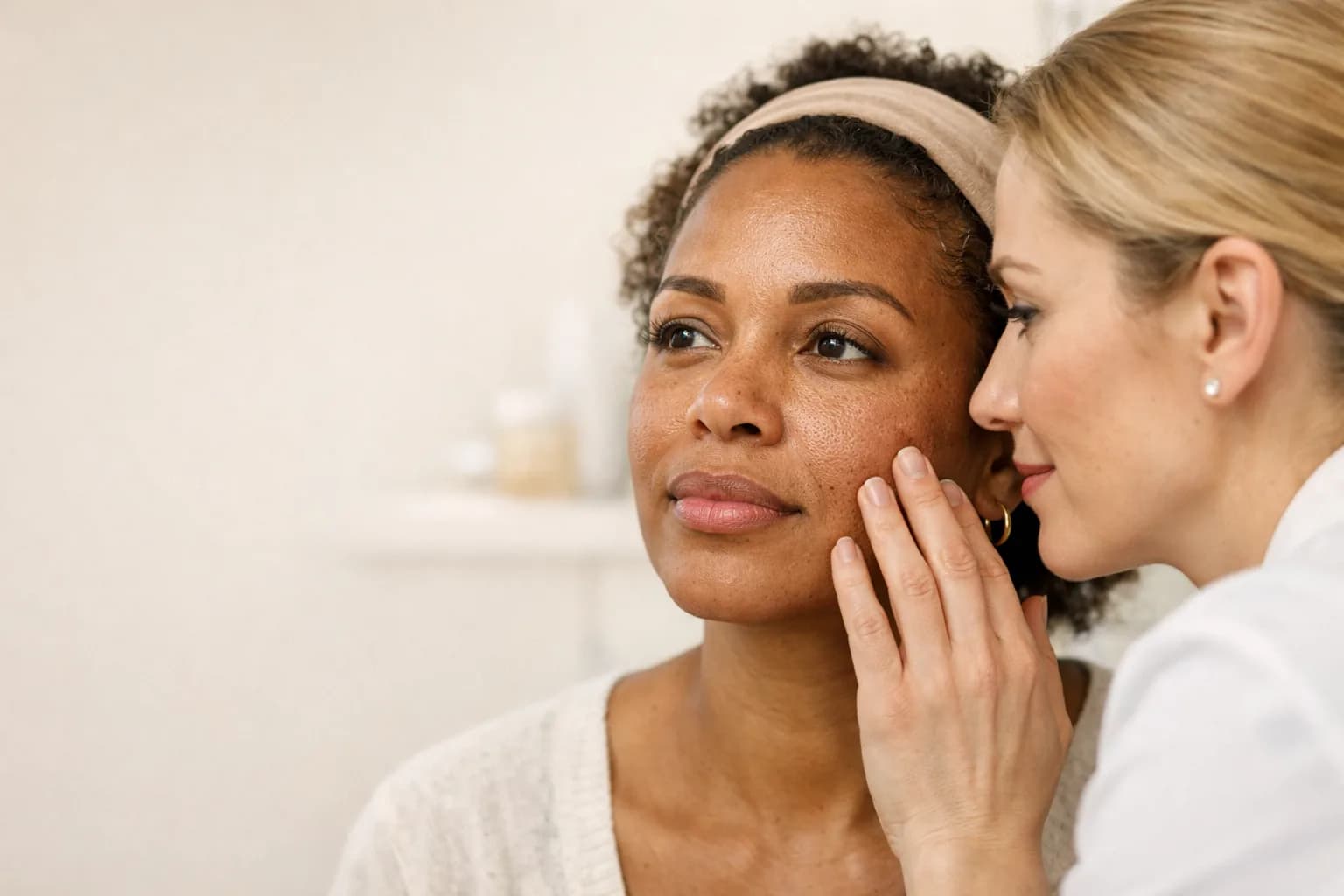
When brow thinning follows over-tweezing, skin irritation, stress, or hair changes elsewhere, the right first step is clarifying cause and regrowth potential before chasing products or cosmetic fixes.
Answer First: Patchy Brows Do Not All Come From the Same Cause
If your brows look thinner, more uneven, or noticeably sparse, the most useful first question is not which serum to buy next. It is whether the thinning looks related to grooming habits, skin irritation, stress, hair changes elsewhere, aging, or another pattern that deserves a closer look.
That is why a medical brow evaluation can matter. Patchy brows are not one diagnosis, and treatment planning gets better when the visit clarifies what changed, how long it has been happening, and whether the brow still appears to have realistic regrowth potential.
Who This Applies To
This article is for patients who have noticed gaps through the brows, a tail that looks thinner than it used to, uneven density after years of tweezing, or a brow shape that suddenly looks harder to fill in with makeup. It is especially relevant if the change followed skin irritation, stress, illness, medication changes, or hair thinning elsewhere.
It also applies if you are not sure whether the issue is true hair loss, breakage, inflammation around the brow, or simply a long-term shaping pattern that has become more visible over time. A consultation helps separate those possibilities before you spend more effort on guesswork.
Why Over-Tweezing, Stress, Skin Irritation, and Hair-Loss Patterns Need Different Conversations
Brows can thin for very different reasons. Some patients have years of aggressive tweezing or waxing behind the change. Others notice thinning after stress, illness, hormone shifts, or broader hair changes. Some have eczema, seborrheic irritation, or another skin issue that affects the brow area. In a few patients, the pattern raises questions that belong in a broader hair-loss evaluation.
Those paths should not be treated like they are interchangeable. Brows that were gradually over-shaped for years need a different conversation than sudden patchy loss or brow thinning that appears along with scalp shedding. The better the pattern is defined, the safer and more realistic the plan becomes.
What a Brow Evaluation Should Review
A useful brow consultation should review when the thinning began, whether it feels sudden or gradual, whether there is itching, scaling, redness, tenderness, or flaking in the area, and what grooming habits may have shaped the pattern over time. It should also cover skin-care products, hair-removal methods, medications, recent illness, stress load, and whether lashes or scalp hair have changed too.
Photos can help here. Patients often notice brow change emotionally before they can describe where the density was lost. Comparing current brows with older photos can make it easier to tell whether the main issue is the tail, the arch, diffuse sparseness, or uneven regrowth after over-tweezing.
When Another Skin or Hair Workup May Matter
If brow thinning is happening with scalp hair loss, lash loss, visible rash, scaling, patchy bald spots, or other skin changes, it may be worth broadening the workup instead of treating the brow as an isolated cosmetic issue. The same is true if the area looks inflamed, symptoms are getting worse, or the pattern seems to be changing quickly.
A physician-led visit should be comfortable saying when the next step belongs in a broader medical or dermatologic conversation. That restraint protects the patient, because not every sparse brow pattern is best managed with a purely cosmetic solution.
What Treatment Planning and Maintenance May Look Like
Not every patient needs the same approach. In some cases, the plan is mostly about protecting the brows from more trauma, calming the skin, and giving the area time while the pattern is monitored. In others, the conversation may include brow-supportive treatments, hair-growth planning, or whether longer-standing over-tweezing has limited how much regrowth is likely.
That is also where expectations need to stay realistic. Brows often improve slowly, and long-term shaping habits can matter as much as any product. A better plan explains what is worth trying, what is less likely to help, and what kind of maintenance is needed if the goal is a fuller but believable brow shape.
When to Book Sooner Instead of Waiting
Book sooner if gaps are becoming more noticeable, the skin around the brow is irritated, the thinning appeared quickly, or you are seeing lash or scalp changes at the same time. Earlier review is also worth it if you keep trying makeup, pencils, or over-the-counter growth products without understanding whether the brow is even in a regrowth-friendly phase.
If your brows are becoming patchy after over-tweezing, stress, or skin irritation, the most useful first step is a measured evaluation of the pattern, the brow skin, and whether a medical or aesthetic plan fits best. That kind of review usually gives patients a clearer path than another round of trial and error.